Best Materials for Private Roads Compared
A private road that breaks up after one wet winter is rarely a material problem alone. More often, it is the result of choosing a surface that does not suit the traffic, ground conditions or budget. When people ask about the best materials for private roads, the right answer depends on how the road will be used, how much maintenance is acceptable, and how long it needs to last.
For some sites, a cost-effective gravel finish is perfectly suitable. For others, especially where regular vehicle traffic, drainage concerns or a cleaner appearance matter, tarmac or asphalt is the more dependable option. The best choice is the one that matches the job properly from the start, rather than the cheapest material on day one.
What matters when choosing the best materials for private roads
Before comparing surface types, it helps to look at the practical demands of the road itself. A lightly used country access track has very different requirements from a private estate road, farm road, business park access route or shared lane serving several properties.
Traffic volume is one of the biggest factors. Cars and light vans place less stress on a surface than regular delivery vehicles, agricultural machinery or refuse lorries. If heavier vehicles will use the road, the surface and sub-base both need to be designed for that load.
Drainage matters just as much. Standing water is one of the main reasons private roads fail early. Even a strong surface can deteriorate quickly if water is allowed to sit, wash out edges or penetrate the structure below. In many cases, the long-term performance of the road depends as much on the ground preparation and drainage as on the visible finish.
Appearance also plays a part. A private road at a residential development or large home often needs to look neat and finished. A utility road on private land may only need to be safe, stable and economical. There is no point paying for a premium finish where function is the priority, but there is also no saving in choosing a lower-cost material that needs constant repair.
Tarmac and asphalt for private roads
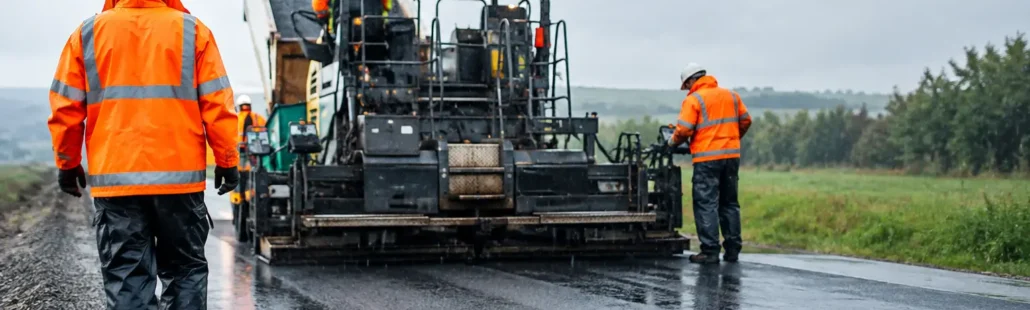
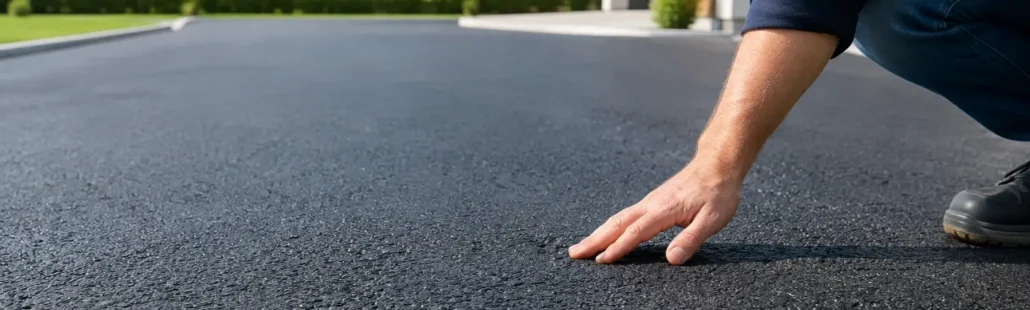
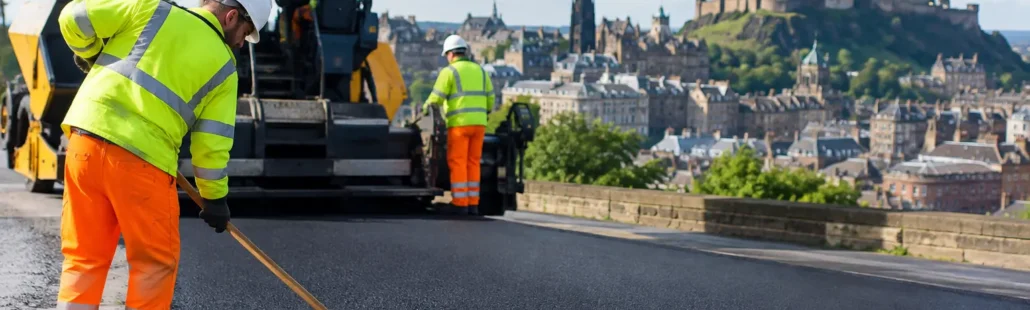
For many private roads, tarmac or asphalt is the strongest all-round option. It gives a smooth, hard-wearing finish, copes well with regular traffic and creates a more professional appearance than loose aggregate surfaces. It is especially well suited to shared access roads, private estates, business premises and roads where dust, loose stone and rutting would be a problem.
The main advantage is reliability. When laid properly on a suitable base, asphalt and tarmac surfaces provide a durable road that is easier to maintain than gravel and generally quicker to install than concrete. They also handle the British weather well, which is a major consideration in areas with frequent rainfall and freeze-thaw conditions.
There are small differences in how people use the terms tarmac and asphalt, but for most private clients the key point is performance. Both provide a bound surface that resists movement better than loose stone. They also offer a cleaner finish for vehicles and pedestrians, which matters on residential roads and commercial access routes.
The trade-off is upfront cost. A surfaced road costs more than gravel at installation stage, particularly if the existing base is poor and needs substantial groundwork. However, in many cases the lower maintenance requirement and longer service life make it better value over time.
Is gravel one of the best materials for private roads?
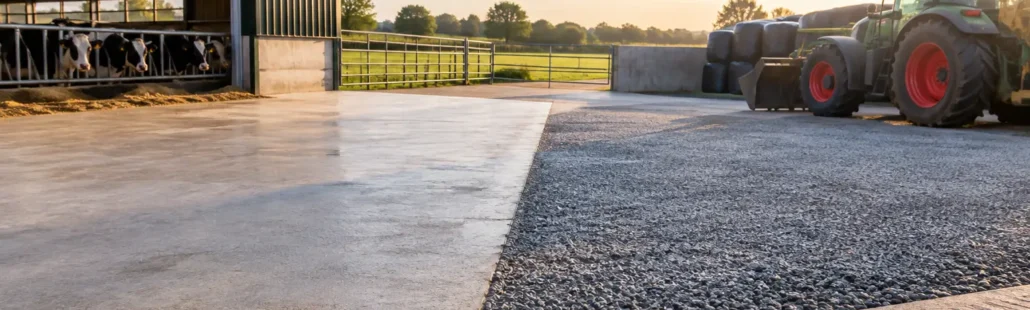
Gravel remains a common choice, and in the right setting it works well. For long rural roads, lower-traffic private lanes and sites where a formal blacktop finish is unnecessary, gravel can be the most economical option. It is also relatively quick to lay and easier to top up in sections.
The problem is that gravel demands ongoing attention. Stones migrate, potholes can form, edges spread, and heavy rain may wash material away. If the road has regular turning movements, braking points or gradients, wear tends to show up quickly. Dust can also be an issue in dry weather, while loose stones may be less suitable where children, pedestrians or cyclists use the road regularly.
A gravel road is only as good as its foundation. If the sub-base is weak or drainage is poor, adding more gravel usually becomes a short-term fix rather than a proper solution. For landowners who are happy to maintain it routinely, gravel can still be a practical answer. For those who want a lower-maintenance road, it is often a false economy.
Concrete roads and where they fit
Concrete is sometimes considered for private roads because of its strength and long lifespan. It can be a sensible choice in areas that see very heavy loads, slow-moving commercial vehicles or frequent point loading. On some agricultural and industrial sites, concrete has clear benefits.
That said, it is not always the best fit for general private road use. It tends to cost more upfront, takes longer to install and cure, and can be less forgiving if ground movement occurs. Repairs can also be more obvious and more disruptive than patching a bituminous surface.
From an appearance point of view, concrete can look quite stark in residential settings unless there is a specific design reason to use it. For most private access roads, tarmac or asphalt gives a better balance of durability, cost and visual finish.
Surface dressing and tar and chip
Surface dressing, sometimes described as tar and chip, can be a useful middle ground in some situations. It involves applying a bitumen binder and covering it with aggregate, creating a sealed surface that can improve grip and appearance while keeping costs below a full asphalt construction.
This option can work well for existing roads that have a sound base and structure but need a refreshed wearing surface. It is often used to extend service life rather than rebuild a failing road from scratch.
The limitation is that it is not a cure for deeper structural issues. If the road is already suffering from significant potholes, edge failure, poor drainage or base movement, surface dressing on its own will not solve the problem. It is best viewed as a maintenance treatment for the right road, not a one-size-fits-all answer.
The sub-base matters as much as the surface
When clients compare materials, they often focus on what they can see. In practice, the hidden layers underneath are just as important. A private road needs a properly prepared sub-base that matches the traffic load and ground conditions. Without that, even the best surface material will fail too soon.
Soft ground, poor drainage and existing damage all need to be addressed before surfacing begins. This may involve excavation, geotextile membranes, additional stone layers, edge support or drainage improvements. These are not optional extras added to increase cost. They are often what makes the difference between a road that lasts and one that starts breaking up within a year or two.
This is why private road projects should be assessed on site rather than priced on surface material alone. A gravel road over a strong base may perform better than a poorly laid asphalt road over weak ground. Equally, a properly constructed tarmac road will usually outperform repeated cheap patching of an unsuitable surface.
Which material is best for your site?
If the priority is low upfront cost and the road carries light traffic, gravel may be suitable. If the priority is a cleaner finish, lower maintenance and better durability, tarmac or asphalt is usually the stronger choice. If the road serves industrial use or heavy loading in a fixed area, concrete may be worth considering.
For many residential and commercial private roads, asphalt-based surfacing offers the most balanced result. It looks neat, performs well in British conditions and provides a dependable surface for regular use. That is why it is often the preferred option for estates, shared drives, commercial approaches and private access roads that need to stay serviceable year after year.
It also helps to think beyond installation day. A road that is cheaper to lay but expensive to maintain is not necessarily the better buy. The right material should support safe access, reduce disruption and hold up under real use, not just look acceptable when it is first finished.
A professional site assessment is usually the quickest way to narrow down the right solution. An experienced contractor will look at drainage, loading, levels, access requirements and the existing condition of the road before recommending a surface. That avoids over-specifying the job, but it also prevents under-specifying it and paying twice.
If you are weighing up options for a private road, the best decision is usually the one based on use, ground conditions and long-term value rather than headline cost alone. A road should be built to cope with the traffic it will actually see, not the budget figure that looks easiest on paper.