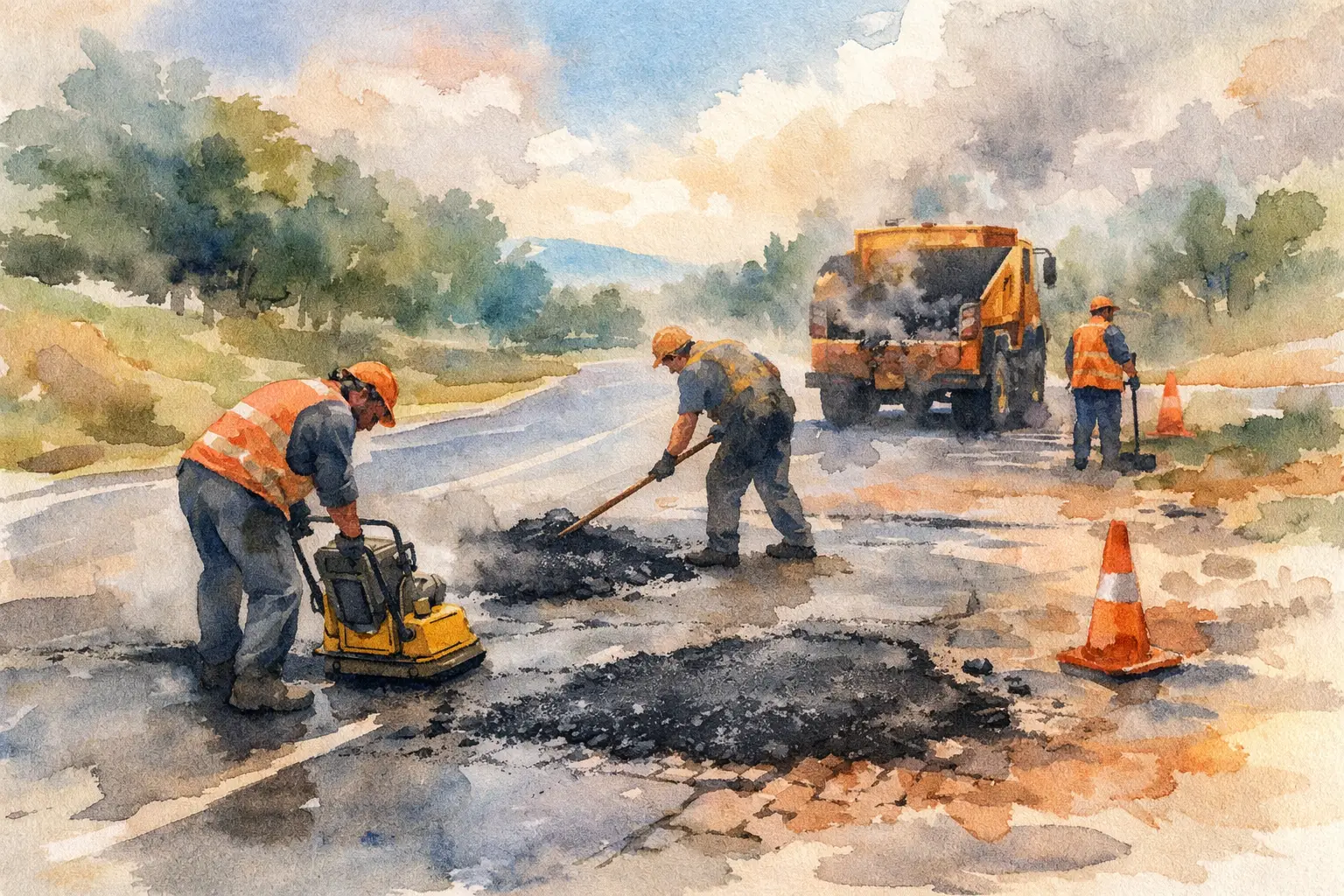
Asphalt Road Repairs That Last
A road rarely fails all at once. It starts with a crack that holds water, a shallow dip where vehicles brake, or an edge that begins to crumble under regular traffic. Left alone, those small defects turn into bigger and more expensive problems. That is why asphalt road repairs matter – not just for appearance, but for safety, drainage, access and long-term cost control.
For site managers, developers, landlords and homeowners alike, the challenge is usually the same. You need a repair that fits the condition of the surface, holds up under traffic, and can be completed without unnecessary delay. A quick patch has its place, but it is not always the right answer. Good repair work starts with understanding what has caused the damage in the first place.
When asphalt road repairs are needed
The most obvious sign is potholes, but they are only one part of the picture. Surface defects often begin earlier with fretting, cracking, rutting, loose aggregate, standing water or worn sections where traffic repeatedly turns or stops. In access roads, car parks and private lanes, these issues can quickly become trip hazards, vehicle hazards and a poor reflection on the property as a whole.
Weather plays a major part in the UK. Water gets into cracks, temperatures drop, and the surface weakens. Add frequent vehicle movement, heavy loads or poor drainage, and the asphalt begins to break down faster. On some sites, the problem is simply age. On others, it points to a deeper issue in the base layer or the original installation.
That is why no reliable contractor should treat every repair the same way. A pothole caused by surface wear can often be cut out and reinstated effectively. A pothole caused by base failure may keep returning unless the lower structure is repaired as well.
The main types of asphalt road repairs
There is a clear difference between short-term and long-term repairs. Temporary patching can make an area safe quickly, which is useful when immediate action is needed. It suits emergency situations, high-risk defects or periods when a full repair cannot yet be scheduled. The trade-off is lifespan. Temporary work is not designed to perform like a properly prepared permanent repair.
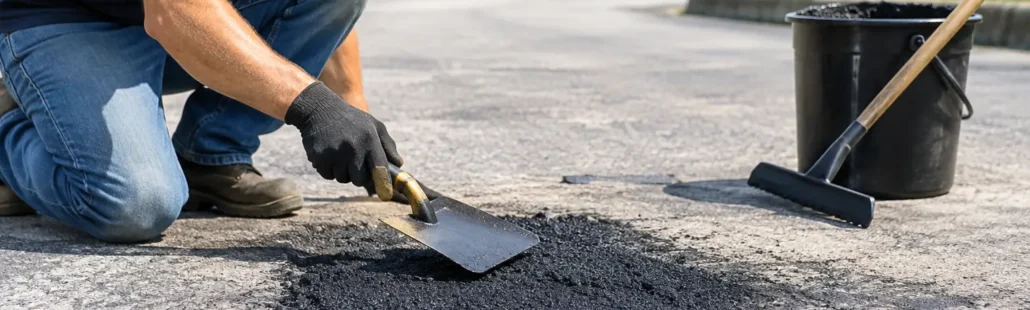
Permanent patch repairs are more durable because the damaged area is cut back to sound material, cleaned out, prepared correctly and resurfaced with suitable asphalt. When done properly, the finished section sits level with the surrounding surface and restores safe use without leaving weak edges that break away again.
Crack sealing is another useful option when deterioration is caught early. If the asphalt is still structurally sound, sealing the cracks can stop water getting in and slow further damage. It is cost-effective, but timing matters. Once cracking has spread too far or the edges start moving, a more substantial repair is usually needed.
For roads or parking areas with widespread wear, resurfacing may make more sense than repeated local patches. If multiple repairs are scattered across the same section, patching can become poor value. In those cases, planning a larger resurfacing scheme often gives a better finish, longer service life and lower maintenance burden.
Why some repairs fail too soon
Most failed repairs come down to preparation, not just materials. If loose material is left in place, if water remains in the repair area, or if the new asphalt is laid onto an unstable base, the problem will return. It may not happen straight away, but traffic will expose weaknesses quickly.
Poor edge preparation is another common issue. Repairs need clean, defined edges so the new material bonds properly and does not unravel around the perimeter. This is especially important on busy access routes and commercial sites where repeated turning movements put extra stress on repaired sections.
Drainage is often overlooked as well. If water is allowed to sit on the surface or flow into the repaired area, even good workmanship will be under pressure. A proper assessment should consider whether gullies, falls, kerbs and channels are doing their job. Sometimes the visible defect is only the symptom.
There is also the question of traffic loading. A repair suitable for light residential use may not be strong enough for delivery vehicles, plant or constant commercial traffic. Matching the repair method to real site use is what gives the result a chance to last.
Choosing between patching and resurfacing
This is where practical judgement matters. If the damage is isolated and the surrounding asphalt is still in good condition, local patch repairs are usually the right call. They are faster, more cost-effective and less disruptive than resurfacing a whole area that does not need it.
If the surface has extensive cracking, repeated potholes, drainage issues or visible unevenness across a wider section, resurfacing is often the better investment. It costs more upfront, but it can save money over time by reducing repeat call-outs and ongoing safety concerns.
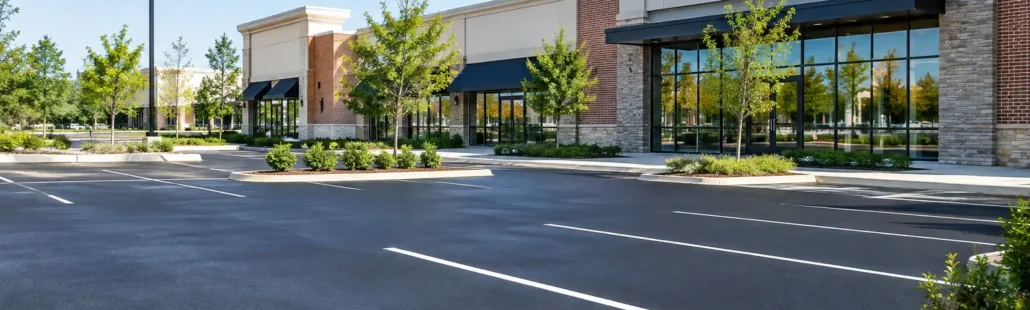
For commercial premises and public-facing sites, appearance also matters. A heavily patched road or car park can look neglected even if individual defects have been repaired. A fresh surface gives a cleaner, more consistent finish and can improve first impressions as well as function.
There is no one-size-fits-all answer. The right decision depends on the extent of the damage, the condition beneath the surface, the type of traffic using the area and the budget available.
Asphalt road repairs for commercial and domestic sites
Commercial clients usually need repairs that minimise disruption. Distribution yards, retail parks, schools, industrial estates and office developments cannot afford long closures or poorly planned access restrictions. In those settings, the value of an experienced contractor is not just in the surfacing itself, but in organising the work efficiently and keeping the site safe while it is being done.
Domestic customers tend to focus on safe access, kerb appeal and value. A private road, driveway entrance or shared access route still needs proper repair standards, especially if water damage or edge failure is already visible. Cutting corners on small domestic asphalt repairs often leads to larger bills later.
This is one area where a contractor with experience across both public-style road maintenance and private surfacing work offers a real advantage. The repair needs to be technically sound, but it also needs to suit the property, the traffic level and the practical use of the space.
What a proper repair process should include
A dependable repair process starts with a straightforward site assessment. The aim is to identify what has failed, how far the damage extends and whether the issue is limited to the surface or includes the base beneath it.
From there, the damaged section should be cut out cleanly, not simply filled over. Unsound material must be removed, the area prepared properly and the repair completed with the correct asphalt for the location and use. Compaction matters. Levels matter. Weather conditions matter too, because laying materials in poor conditions can affect the result.
Good contractors also think beyond the patch itself. If line marking needs reinstating, drainage needs attention, or adjoining edges need making safe, that should be addressed as part of the repair plan rather than left as an afterthought.
H2: Getting better value from asphalt road repairs
The cheapest repair is not always the lowest-cost option over time. A patch that fails after one winter is rarely a bargain. Better value comes from doing the right level of repair at the right time, before deterioration spreads further.
Early action usually keeps costs down. Sealing cracks, repairing local failures and correcting drainage issues before they become major defects can extend surface life significantly. Delay often turns a manageable repair into a larger resurfacing project.
It also helps to work with a contractor that is clear about what is needed and what is not. Straight answers matter. If a section can be repaired effectively, you should be told that. If resurfacing is the sensible route, you should know why. That level of honesty is what helps buyers make practical decisions with confidence.
For customers across Scotland and the North of England, that often means looking for a team that can handle anything from urgent pothole work to planned resurfacing, without overcomplicating the process. EB Road Surfacing works with both domestic and commercial clients on that basis – reliable workmanship, clear pricing and repairs designed to last.
A worn surface will not improve on its own. If you have cracking, potholes, standing water or edge failure, dealing with it early gives you more options and usually a better result. The right repair at the right time keeps people safe, protects the surface underneath and saves unnecessary expense later.