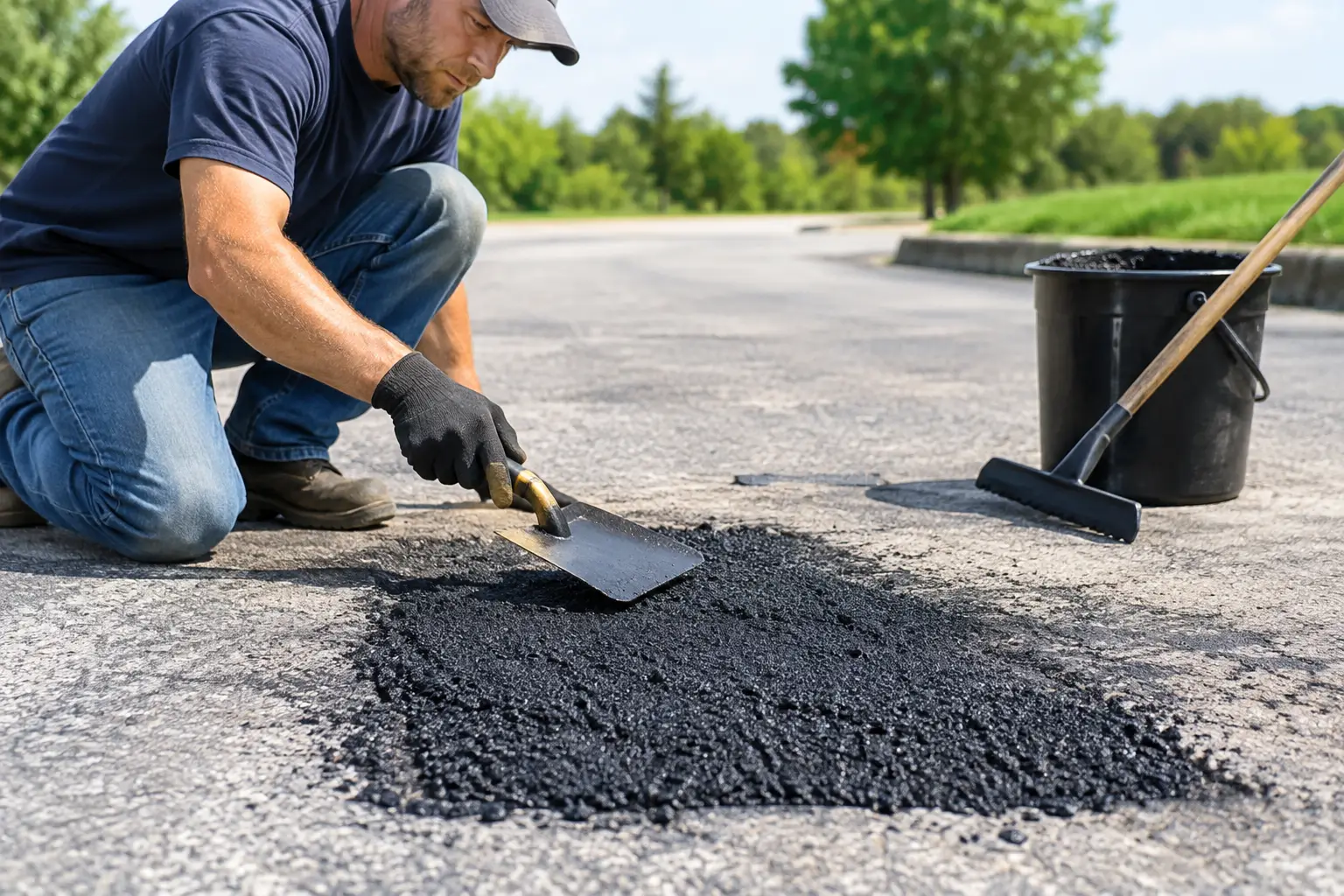
Asphalt Patch Repair Review: What Really Lasts?
A failed patch is rarely caused by the patch itself. It is usually the result of water beneath the surface, weak edges, poor compaction or a repair that was too small for the damage around it. This asphalt patch repair review explains what separates a short-term cover-up from a repair that remains safe, tidy and serviceable through British weather, traffic and regular use.
For a homeowner, the concern may be a crumbling driveway entrance or a pothole that damages tyres. For a site manager, it may be a trip hazard, standing water, delivery vehicle damage or an access route that gives visitors the wrong first impression. In both cases, the right repair starts with an honest assessment of why the asphalt failed.
What a proper asphalt patch repair should achieve
A good asphalt repair does more than fill a hole. It restores a stable, level and properly drained section of surface, with edges that are tied into the existing asphalt. The repaired area should carry the expected traffic without moving, breaking away or allowing water back into the base.
That matters because asphalt is a flexible surface. It performs well when the sub-base beneath it is sound, but it cannot hide ongoing movement or drainage problems for long. If the foundation is soft, saturated or broken down, a thin layer of new material on top will often fail at the same point.
A lasting patch should be flush with the surrounding surface, or finished with a suitable fall to direct water away. It should not leave a raised lip that catches tyres, creates a trip point or holds puddles around its perimeter. Appearance is important, but safety and structural strength come first.
Asphalt Patch Repair Review: the work behind a durable result
The most reliable patch repairs follow a clear process. The exact method depends on the location, size of the defect and traffic loading, but the principle stays the same: remove unstable material, repair what sits underneath and install fresh asphalt correctly.
Cutting back to sound material
The damaged section should be marked out beyond the visible crack or pothole, then cut to form clean, firm edges. A square or rectangular cut is often more durable than trying to follow an irregular broken edge. It gives the new asphalt a defined boundary and stops loose material at the edge from contaminating the repair.
Simply placing material into a pothole without cutting out the failed asphalt can be acceptable as a very temporary emergency measure, particularly where an immediate hazard needs controlling. It is not usually the best answer for a busy driveway, car park or road. The weak edge remains in place, and vehicle movement can quickly pull the new material apart.
Checking the base, not just the surface
Once the old asphalt has been removed, the condition of the base becomes clear. If it is firm and dry, the repair may only need cleaning, a bonding coat and new asphalt. If there is soft ground, loose aggregate, pumping water or deeper subsidence, that material should be excavated and rebuilt before surfacing.
This is where quotations can differ. A cheaper price may assume a straightforward surface patch, while a more detailed proposal allows for excavation and base repairs where needed. Neither approach is automatically wrong, but customers should understand what is included and what happens if concealed defects are found after opening the area.
Using the right material for the job
Hot-lay asphalt is generally the preferred option for permanent repairs where access, quantity and weather conditions allow. It is laid warm, worked into the repair and compacted to create a dense, durable finish. It is particularly suitable for vehicle routes, commercial yards, parking areas and larger driveway repairs.
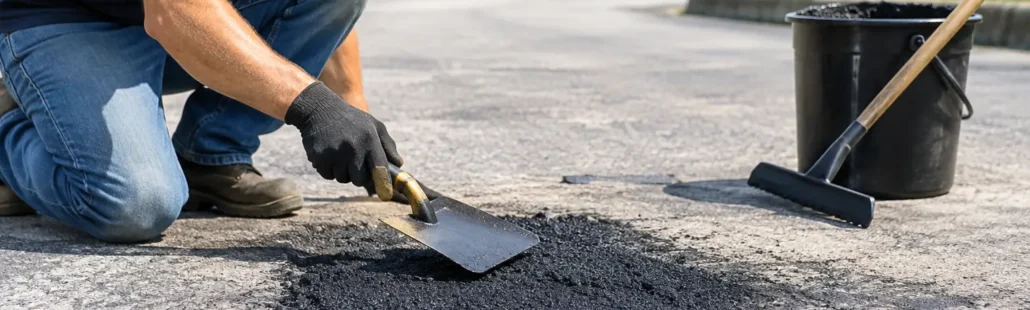
Cold-lay asphalt has a useful place in maintenance. It can be installed quickly and is practical for smaller jobs, remote locations or urgent make-safe repairs. However, its performance depends heavily on preparation, compaction and the level of traffic. It should not be presented as identical to a properly installed hot asphalt repair on a heavily used area.
The best choice depends on access, repair size, programme, traffic and budget. A small domestic patch may not justify bringing hot material to site, whereas a loading bay or access road often benefits from a more substantial hot-lay repair from the outset.
Compaction and sealing the edges
Compaction is one of the clearest indicators of workmanship. New asphalt needs to be compacted evenly to remove voids and create a tight surface. Poor compaction leaves the patch vulnerable to water penetration, tyre scuffing and early settlement.
The joints around the patch also need attention. A tack coat or bonding layer helps the new and existing surfaces adhere, while properly finished edges reduce the chance of water entering the joint. Water is the persistent enemy of asphalt. Once it reaches the base, freeze-thaw cycles and traffic loading can turn a small defect into a larger failure.
When a patch is the right answer – and when it is not
Patch repair is cost-effective when damage is localised and the surrounding surface remains structurally sound. Typical examples include isolated potholes, utility reinstatement areas, edge damage, small areas of ravelling and sections damaged by oil contamination or heavy point loading.
It becomes less economical when defects are widespread. A car park covered in cracking, repeated potholes and ponding water may need local base repairs followed by resurfacing rather than dozens of separate patches. The same applies to driveways where the surface is tired across most of its area. Repeated reactive repairs can cost more over time and leave a visibly uneven finish.
There is also a middle ground. In some cases, targeted patching followed by a new surface course is the sensible route. This addresses weak areas first, then provides a consistent finished surface across the whole area. It can be a practical option for commercial sites that need to control costs without ignoring the underlying defects.
Drainage often decides how long the repair lasts
If water repeatedly sits in the same place, the issue is unlikely to be solved by new asphalt alone. The cause may be inadequate falls, blocked drainage channels, damaged gullies, low spots, failed kerbs or runoff from nearby land.
A repair should always consider where water goes after rainfall. On a driveway, this may mean adjusting levels so water does not collect at the garage, entrance or property boundary. On a commercial site, it may involve checking gullies and falls around loading areas, parking bays and pedestrian routes.
Ignoring drainage can make a new patch look disappointing within a short time, even when the material and installation were otherwise sound. Addressing the water source is usually the better long-term investment.
What to look for in a repair quotation
A clear quote should explain the extent of the repair rather than relying on vague wording such as “fill potholes”. Customers should be able to see whether the work includes cutting out failed asphalt, excavation, sub-base replacement, disposal of waste, new asphalt, compaction and edge treatment.
It is also worth checking how access and disruption will be managed. A residential repair may require vehicles to stay off the area for a period. A business or public-facing site may need work planned around deliveries, staff parking, pedestrian routes or out-of-hours access. The lowest figure is not always the best value if it leaves important preparation or traffic management unresolved.
For larger works, ask how the contractor will deal with unexpected weak ground and whether workmanship is insured and guaranteed. A professional contractor should be straightforward about the scope, likely timescales and any factors that could affect the final cost.
Maintaining a repaired asphalt surface
A well-installed repair needs little day-to-day attention, but early action prevents minor issues becoming expensive ones. Keep gullies and channels clear, remove standing water where possible and deal with oil or fuel spills promptly. Avoid allowing heavy skips, plant or delivery vehicles to sit repeatedly on a small repaired section if the area was not designed for that load.
Inspect repairs after winter and after periods of heavy rain. Fine cracks at the joint, loss of edge material or new ponding are worth addressing early. Small remedial works are faster and more affordable than allowing water to reach the foundation again.
At EB Road Surfacing, the focus is on repairs that suit the condition of the surface and the way it is used, whether that is a private driveway, a car park or a working access route. A proper site assessment avoids spending money on a patch that was never going to last.
The most useful question is not “How quickly can this hole be filled?” but “Why did this section fail, and what will stop it failing again?” Answer that properly, and an asphalt patch repair becomes a dependable part of a longer-lasting surface.