Asphalt Resurfacing Review Guide for Property Owners
A surface can look tired long before it has failed completely. Fading, shallow cracks and worn patches are often suitable for a new asphalt layer, while deep movement, standing water and widespread potholes may point to more substantial repairs. This asphalt resurfacing review guide helps property owners, site managers and facilities teams decide what work is needed, what a sound quote should include, and how to assess the finished result.
When resurfacing is the right answer
Resurfacing involves laying a new layer of asphalt over a prepared existing surface. It is usually a cost-effective option when the lower layers remain stable and the damage is mainly within the top course. A correctly resurfaced driveway, private road or car park improves appearance, restores grip and protects the underlying construction from further water ingress.
It is not a cure for every defect. If the surface has sunk around gullies, broken away at the edges, or developed long cracks caused by movement in the base, simply covering it can leave the same problem beneath the new layer. The defects may then return sooner than expected.
A contractor should inspect the area before recommending a solution. They need to consider traffic levels, drainage, the condition of kerbs and edges, and whether vehicles regularly turn, brake or stand in one place. A domestic driveway carrying family cars has different requirements from a delivery yard used by vans, lorries or refuse vehicles.
Signs a new surface layer may be suitable
Resurfacing is commonly appropriate where the existing asphalt is generally firm but has become oxidised, worn smooth or lightly cracked. Localised repairs can be completed first, followed by a new wearing course across the full area. This produces a more consistent finish than patching an ageing surface repeatedly.
It can also be a sensible choice where a car park needs to remain operational. A planned resurfacing programme can often be phased to keep access available, provided the site layout and traffic management allow it.
When full reconstruction is likely to be better value
Standing water after normal rainfall is a warning sign, particularly if it sits in the same places for hours. Water weakens the structure below the surface and encourages potholes, cracking and edge failure. Resurfacing without correcting falls, drainage channels or gullies will not solve that cause.
Full excavation may also be needed where there is widespread rutting, soft areas, severe alligator cracking or evidence that the sub-base has failed. It costs more at the outset, but it avoids paying for a new top layer that cannot perform as intended. A dependable contractor will explain this clearly rather than selling resurfacing as the answer to every problem.
Asphalt resurfacing review guide: what a quote should cover
The lowest figure is not always the best comparison. Asphalt resurfacing quotes can look similar while allowing for very different levels of preparation, material depth and edge work. Ask each contractor to set out the scope in plain language so you know what is included.
A useful quote should identify the areas to be resurfaced, the preparation required, the proposed asphalt type and compacted depth, and how the finished surface will meet existing thresholds, kerbs, drainage points and manholes. It should also state whether damaged sections are being cut out and repaired before the overlay is laid.
For commercial sites, ask how access, pedestrian safety and vehicle movements will be managed during the works. A short closure may be preferable to weeks of disruption caused by poor sequencing. For homeowners, clarify where plant and materials will be placed, whether gates or drainage covers need adjustment, and how the site will be left at the end of each day.
Price should include the full job, not just the visible black surface. Depending on the project, this can include cleaning and preparation, tack coat, levelling courses, local base repairs, asphalt installation, compaction, waste removal and line marking. If an item is excluded, it should be clear from the quotation.
Check the proposed depth and materials
There is no single correct asphalt depth for every site. The right specification depends on the existing construction and expected loading. A lightly used residential driveway may require a different approach from a service yard or access road carrying frequent commercial traffic.
The critical point is that the contractor specifies a suitable, compacted thickness rather than promising a vague layer of tarmac. An overly thin layer can cool too quickly during installation, compact poorly and be more vulnerable to cracking. Equally, adding material without considering drainage levels can create ponding or prevent doors, gates and covers from operating properly.
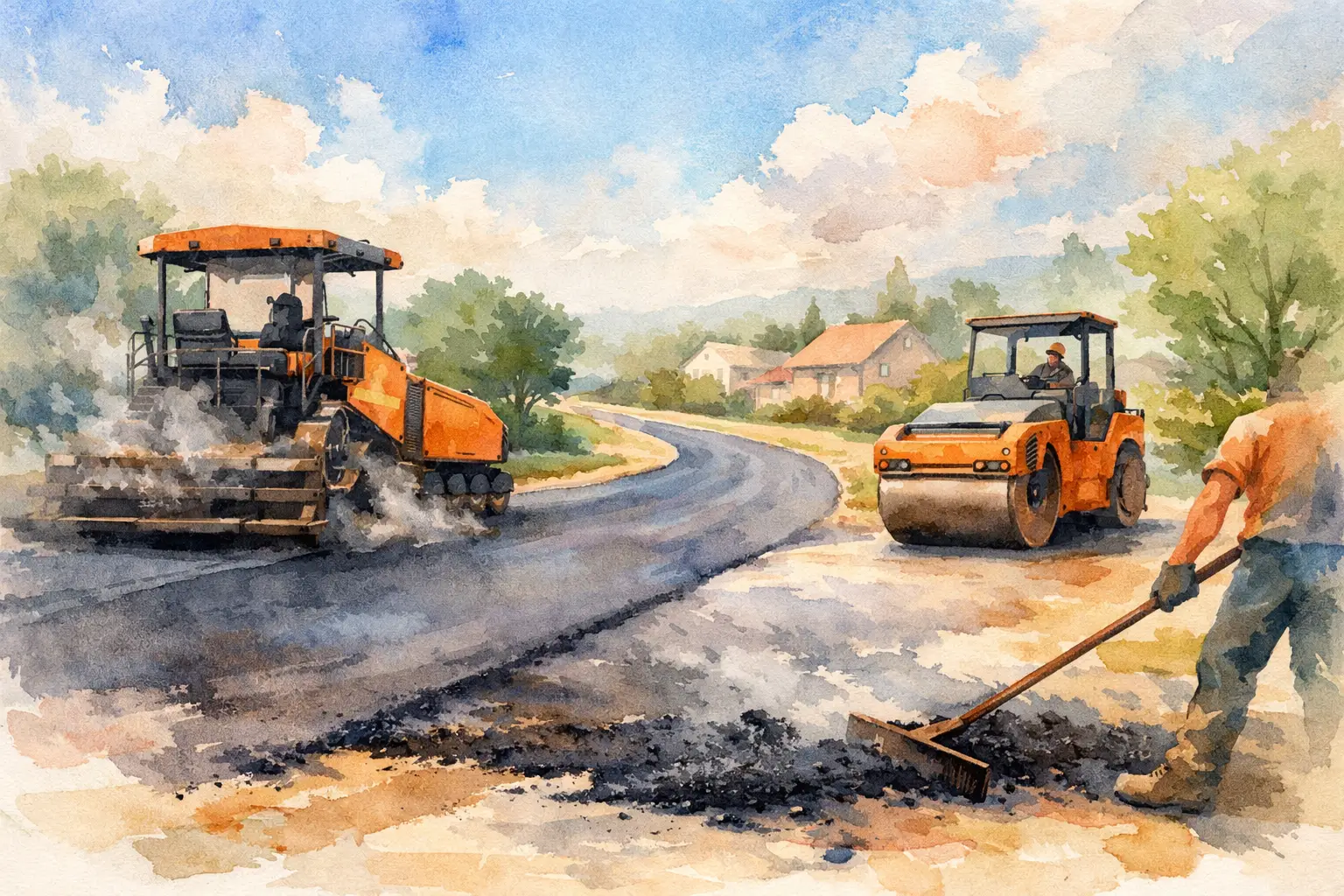
Ask whether the new course will be machine laid or hand laid. Both methods have a place. Larger roads and car parks generally benefit from machine laying for consistency, while smaller areas, tight access points and detailed edging may need skilled hand work. What matters is proper preparation, controlled levels and thorough compaction.
Reviewing workmanship before and after completion
The best time to review a resurfacing job is not only after the crew has left. Before work begins, walk the area with the contractor and agree the boundaries, drainage issues and any features that need protecting. Take photographs of adjoining paving, walls, gates and existing kerbs. This creates a clear record and reduces uncertainty for both sides.
During the work, a professional team should remove loose material, address agreed repairs and ensure the surface is clean and dry enough for the new layer to bond. A tack coat is often used to help the new asphalt adhere to the existing surface. Edges should be neatly cut and properly tied into adjoining areas, rather than feathered into weak, crumbling asphalt.
Once complete, look first at the practical details. The surface should drain in the intended direction, with no obvious dips around gullies or entrances. It should meet covers and kerbs neatly and should not create trip points where pedestrians leave a footpath or cross a threshold.
A new asphalt surface can show minor roller marks or a slight variation in texture, especially in hand-laid sections. That does not automatically indicate poor workmanship. More concerning signs include open joints, loose aggregate, visible segregation, unsealed edges, obvious low spots or areas that move under vehicle weight. Raise any concerns promptly while the scope of the work is still fresh.
Durability depends on use and maintenance
A resurfaced area is not maintenance-free, but straightforward care protects the investment. Keep drainage channels and gullies clear so water does not sit on the surface. Deal with fuel or oil spills promptly, particularly in car parks and service areas, as prolonged contamination can soften asphalt.
Avoid turning heavy vehicles sharply while stationary, especially in warm weather. This action places high stress on the surface and can cause scuffing. Where this type of movement is unavoidable, such as at loading points or tight refuse vehicle turns, the area should be considered during specification rather than treated as a standard driveway or access route.
Small defects should be repaired before water reaches the lower layers. A timely patch or crack repair is usually far less disruptive and less expensive than allowing a local failure to spread across an access road or car park.
Choosing a contractor with confidence
Ask about relevant surfacing experience, insurance, workmanship guarantees and the equipment that will be used on site. A contractor should be willing to explain the proposed method without hiding behind technical jargon. They should also be realistic about weather, access and curing time, rather than making promises that compromise the quality of the work.
For larger commercial jobs, references from comparable sites can be useful. Look beyond the appearance of a newly completed surface and ask whether the contractor managed access, communicated clearly and completed the work to the agreed programme. Those details matter when a road, school entrance, retail car park or industrial yard cannot be closed for long.
EB Road Surfacing works across Scotland and North England on domestic and commercial surfacing projects, with practical advice based on the condition and use of each site. The right recommendation may be resurfacing, targeted repairs or a full rebuild – and knowing the difference is where long-term value begins.
A sound surface should make access safer, drainage more reliable and daily use easier. Start with an honest assessment of what is underneath the damage, then choose a specification that suits the traffic it will carry.