8 Best Ways to Prevent Potholes
A pothole rarely starts as a pothole. It starts as a small crack, a weak edge, poor drainage, or a surface that has simply taken one too many hits from traffic and weather. If you are responsible for a road, car park, access route or driveway, the best ways to prevent potholes are nearly always simpler and cheaper than dealing with repeated patch repairs once the surface has already failed.
Prevention comes down to protecting the surface, keeping water out, and dealing with early signs of wear before they turn into a safety issue. That applies whether you manage a commercial site, maintain a private estate road or want to keep a domestic driveway in good order.
Why potholes form in the first place
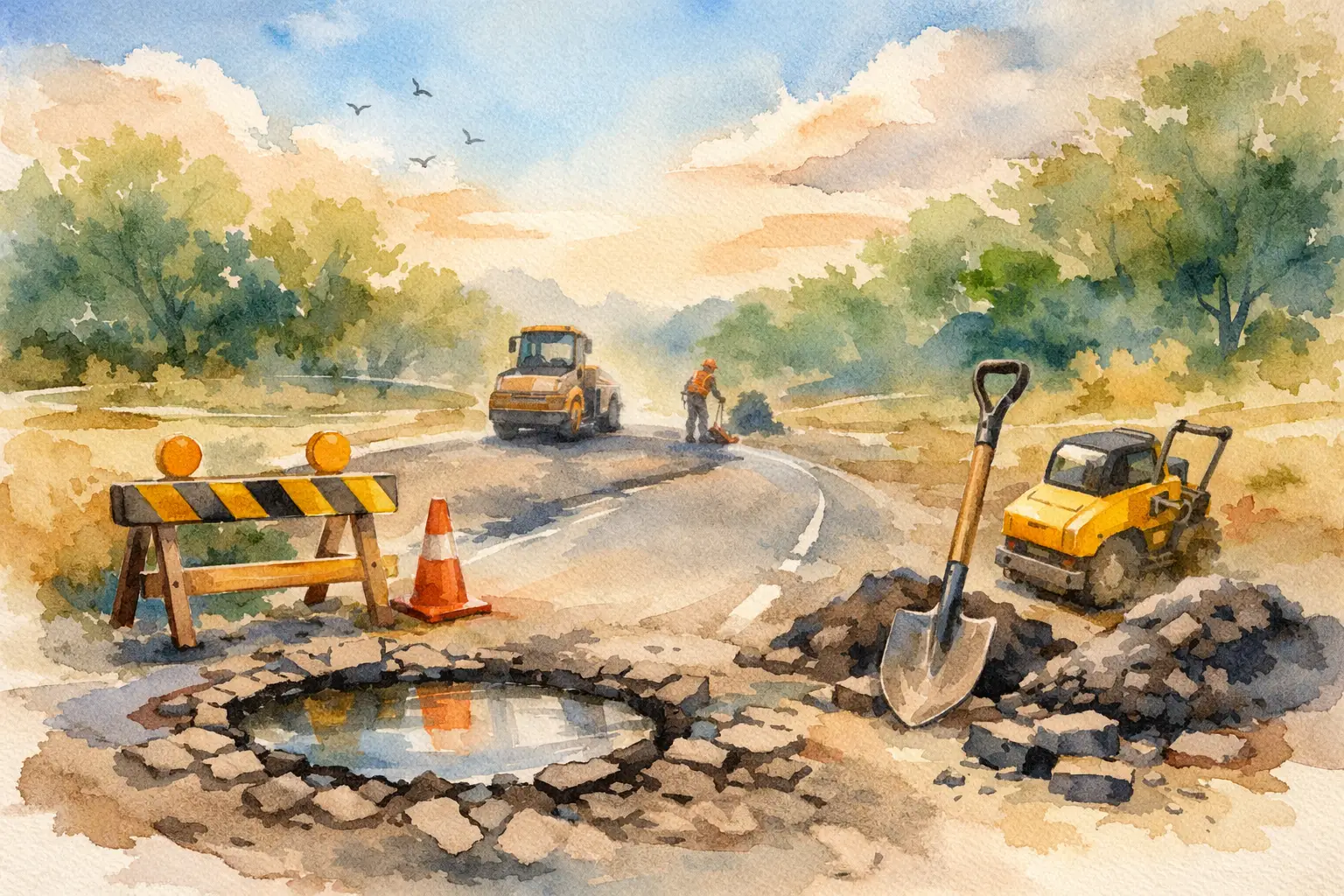
Potholes develop when the surface and the layer beneath it begin to break down. Water enters through cracks or weak points, traffic puts pressure on the affected area, and the material starts to loosen. In colder conditions, freeze-thaw cycles can make the problem much worse. Even without freezing weather, standing water and regular vehicle loading will steadily weaken an already vulnerable surface.
This is why pothole prevention is not just about the top layer. A surface may look fine from above while the base is losing strength underneath. Once that happens, patching becomes more frequent and the cost of maintenance climbs quickly.
1. Keep water off the surface
If there is one issue that causes more potholes than any other, it is water. Poor drainage allows rainwater to sit on the surface, seep into joints and cracks, and soften the structure below. Over time, traffic forces that weakened area apart.
Good drainage starts with proper falls, channels and gullies, but it also depends on maintenance. Blocked drains, silt build-up and standing water around kerbs all create pressure points. On driveways and smaller private roads, even a slight low spot can hold enough water to speed up deterioration.
If water is not moving away from the surface quickly, it is worth addressing before any resurfacing or repair work is planned. Otherwise, the same defect often returns.
2. Repair cracks early
One of the best ways to prevent potholes is to treat cracks while they are still minor. Small surface cracks may not look urgent, but they are often the starting point for larger failures. Once water gets through them, the surface starts to weaken from within.
Early crack sealing is far more cost-effective than waiting for sections to break up. The right approach depends on the type and extent of the cracking. Fine surface crazing may indicate ageing, while wider linear cracks can point to movement, edge weakness or issues in the base.
This is where timing matters. Leave repairs too long and a simple maintenance job can turn into cut-out repairs or full resurfacing.
3. Use the right surface for the traffic load
Not every asphalt or tarmac surface is suited to every job. A lightly used domestic driveway has different demands from a commercial yard, delivery route or busy car park. If the specification is too light for the traffic using it, premature failure is far more likely.
Heavy vehicles, repeated turning movements and braking in the same area all place extra stress on a surface. Entrances, loading bays, junctions and bin collection points often fail first for that reason. In these locations, stronger construction and the right wearing course make a noticeable difference.
Trying to save money by under-specifying the surface usually costs more later. The better option is to match the build-up and finish to the actual use of the area.
4. Make sure the base is properly constructed
A sound surface depends on a sound foundation. If the sub-base is poorly compacted, too thin, contaminated or already unstable, the top layer will not last as it should. This is one of the most common reasons newer surfaces begin to dip, crack or break up sooner than expected.
For roads, access routes and car parks, the base must be designed around expected traffic levels and site conditions. On domestic driveways, the same principle applies, especially where vehicles are parked in the same position every day.
There is no shortcut here. A quality finish laid over a weak base may look good at handover, but it will not stay that way for long. Proper preparation, correct materials and thorough compaction are what give the surface long-term strength.
5. Act quickly on edge deterioration
Surface edges often fail before the middle does. This is common on narrow lanes, rural access roads, car parks without clear kerb support, and driveways where vehicles regularly run over the sides. Once the edge starts to crumble, water enters more easily and the damaged area spreads inwards.
Edge breakdown is easy to overlook because it may seem localised at first. In reality, it often signals that the surface is unsupported or taking traffic where it was not intended to. Reinforcing edges, repairing weak sections and improving run-off can stop a small defect becoming a line of potholes.
For larger sites, routine inspections should always include the perimeter and not just the main wheel tracks.
6. Schedule regular inspections and maintenance
Preventing potholes is easier when someone is actively looking for the warning signs. Surface wear, fretting, shallow depressions and drainage issues are all easier to put right early. Leave them unattended and they develop into more disruptive repairs.
A planned inspection schedule is particularly useful for commercial premises, industrial estates, schools, housing developments and public-facing sites where safety matters and traffic is constant. Domestic customers benefit too, especially with older driveways or private roads that have seen several winters.
The aim is not to overcomplicate maintenance. It is simply to spot problems at the stage where repair is still straightforward and affordable.
7. Carry out proper patch repairs, not temporary fixes
Not all pothole repairs are equal. A quick fill might make an area safe for the short term, but if the loose material is not removed properly or the surrounding structure is already weak, the repair will fail again. Repeated temporary patching often ends up costing more than doing the job correctly the first time.
A proper repair usually means cutting back to sound material, cleaning out the area, reinstating with suitable material, and compacting it fully. In some cases, if the surrounding surface is deteriorating as well, a larger patch or local resurfacing section is the more sensible option.
The trade-off comes down to condition and budget. Temporary repairs have their place in emergency situations, but they should not be mistaken for long-term prevention.
8. Resurface before failure becomes widespread
There comes a point where patching is no longer the best answer. If cracks, potholes and surface wear are appearing across multiple areas, a planned resurfacing programme is often more cost-effective than constant reactive repairs. This is especially true on roads, forecourts and car parks that need to stay safe, tidy and operational.
One of the best ways to prevent potholes over the longer term is to renew ageing surfaces before they reach the point of structural failure. A new wearing course, or a deeper resurfacing scheme where required, restores the integrity of the area and reduces maintenance demand.
It depends on the condition of the existing construction. Some surfaces only need the top layer replaced, while others need more extensive reconstruction because the problem runs deeper.
What this means for driveways, car parks and roads
The same principles apply across most surfaced areas, but the priorities can differ slightly. On driveways, drainage and edge support are often the main issues, along with ageing materials. On commercial car parks, turning traffic, oil contamination and heavy use around entrances tend to create early wear. On roads and access routes, traffic loading, drainage performance and base strength usually decide how well the surface holds up.
That is why prevention works best when it is based on actual site use, not assumptions. A surface that is right for a small residential property may not cope with service vehicles or regular van traffic. Equally, a car park that looks sound from a distance may already be showing the first signs of failure around drains, kerb lines or bay entrances.
For property owners and site managers, the practical approach is straightforward. Keep water moving, deal with cracks and weak areas early, and do not ignore signs that the surface is no longer suited to the traffic using it. Where repairs are needed, make sure they are carried out to a proper standard. Where wear is more general, planned resurfacing is usually the smarter investment.
If you stay ahead of the damage, potholes become far less likely – and the surface lasts longer, looks better and stays safer for everyone using it.