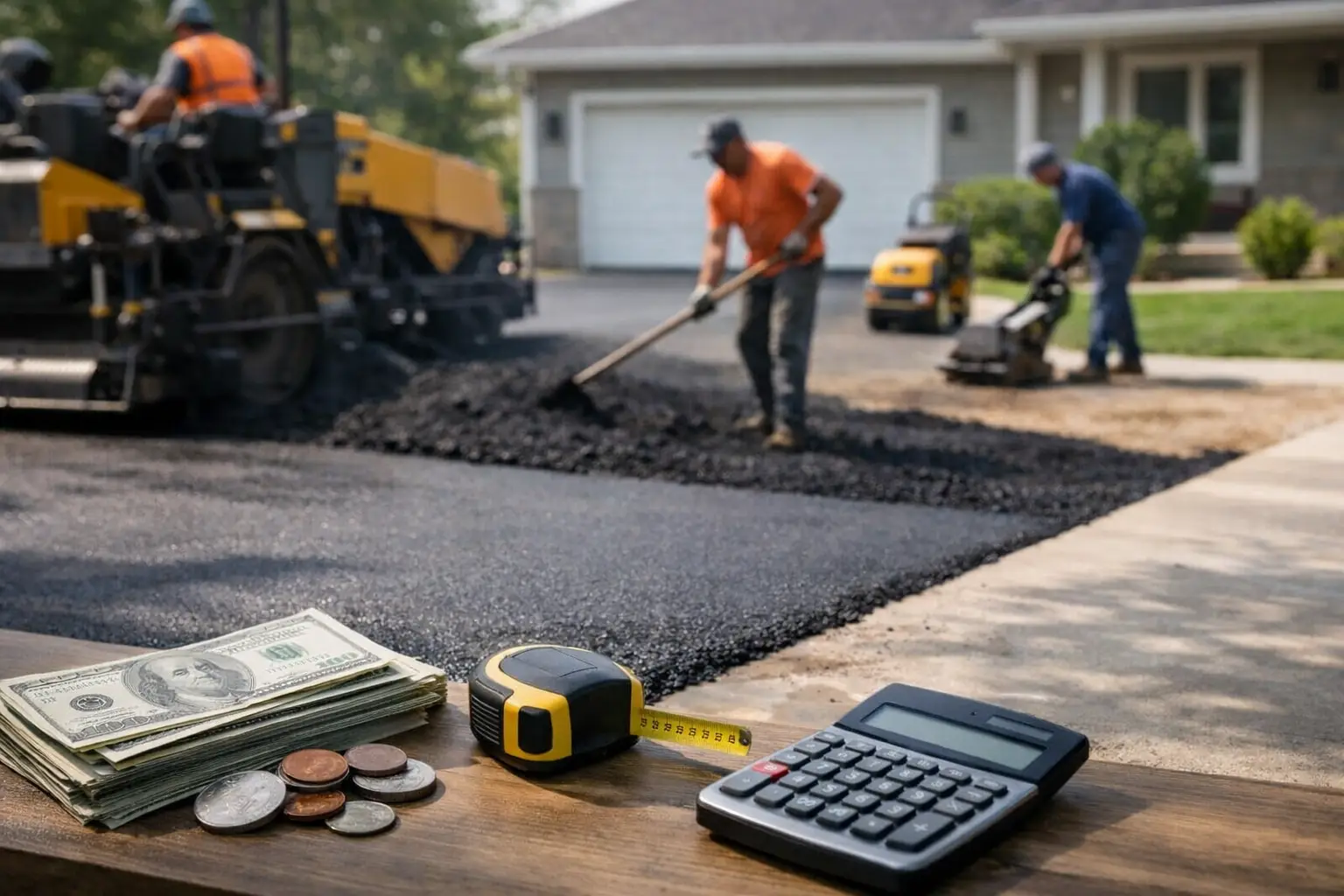
Asphalt Driveway Installation Cost Explained
If you have had one quote for £2,500 and another for £6,000 for what looks like the same driveway, the gap can feel hard to make sense of. The truth is that asphalt driveway installation cost is not just about the black surface you see at the end. It is shaped by the condition of the ground underneath, the access to your property, the thickness of the build-up and how much preparation is needed to make the driveway last.
For homeowners, landlords and site managers, the right question is not simply what asphalt costs per square metre. It is what you are getting for the price, and whether the finished surface will still be performing well years down the line.
What affects asphalt driveway installation cost?
The biggest factor is size, but size alone never tells the full story. A straightforward rectangular driveway with easy access and a sound existing base will usually cost less per square metre than a small, awkward site that needs excavation, edging and drainage work.
Ground preparation often makes the biggest difference. If the old surface is breaking up, the sub-base is unstable, or the area holds water after rain, more work is needed before new asphalt is laid. That can include excavation, removal of spoil, installation of fresh aggregates and proper compaction. Cut corners here and the surface may look good briefly, then crack, dip or rut earlier than it should.
Thickness also matters. A driveway designed for one domestic vehicle has different requirements from a surface used by vans, heavier 4x4s or regular delivery traffic. The specification should match the use. Thicker asphalt and stronger foundations cost more upfront, but they are often the better value choice if the driveway takes frequent weight.
Access is another pricing factor people overlook. If machinery and wagons can reach the area cleanly, the job is quicker and more efficient. If materials must be moved in stages, or if the site is tight, sloped or difficult to work around, labour time rises.
Typical asphalt driveway cost in the UK
As a rough guide, asphalt driveway installation cost in the UK often falls between £45 and £90 per square metre for a professionally installed domestic driveway. On more complex jobs, or where extensive preparation and drainage are required, the figure can go beyond that.
That range exists for good reason. A basic overlay onto a stable, well-prepared base is very different from a full dig-out and rebuild. If a contractor is pricing for proper excavation, geotextile membrane where needed, fresh sub-base, edging, drainage adjustments and a quality asphalt finish, the cost will reflect the full structure rather than just the top layer.
For smaller driveways, the per-square-metre price is usually higher. There is a minimum level of labour, plant and material handling involved whether the area is 20 square metres or 80. Larger driveways often achieve a better rate because the fixed setup costs are spread across more area.
Why some driveway quotes are much cheaper
A low quote is not always a bad quote, but it should be examined carefully. In surfacing, cheap prices often come from reducing the parts of the job you cannot easily see once the work is finished.
That might mean less excavation, a thinner sub-base, poor compaction, inadequate edging or asphalt laid too thin. It may also mean no proper allowance for drainage. Those savings can make the initial price look attractive, but they often lead to sinking areas, edge failure or standing water.
A dependable quote should explain what is included. You want to know whether the old surface is being removed, how deep the excavation will be, what aggregate is being used underneath, how the edges will be retained and whether waste disposal is part of the price. A professional contractor should be clear about the specification rather than relying on vague promises.
Groundworks and drainage can change the price quickly
If there is one part of the job worth taking seriously, it is the groundwork. Asphalt performs well when it sits on a properly built foundation. It performs badly when it is laid over movement, weak spots or trapped water.
Drainage is especially important in the UK climate. If water sits on the driveway or runs towards the property, the surface will be under more stress. In some cases, a simple fall in the driveway is enough. In others, channels, soakaways or more involved drainage adjustments may be needed.
These additions do increase the cost, but they usually protect the investment. A driveway that sheds water properly is safer, cleaner and less likely to suffer from premature deterioration.
Size, shape and layout all matter
A long straight driveway is usually simpler to price and construct than one with curves, tight turns, split levels or decorative borders. Every complication adds labour and sometimes waste material.
Edging is a good example. Some driveways need kerbs, block edging or another restraint system to keep the asphalt secure and tidy. Without proper edge support, the sides can begin to crumble over time, especially where vehicles regularly turn their wheels near the perimeter.
If you are comparing quotes, make sure the layout assumptions are the same. One contractor may have included edging and a neat tie-in to paths or garage thresholds, while another may have priced only the main surface area.
Is asphalt cheaper than block paving or resin?
In many cases, yes. Asphalt is often more cost-effective than block paving and resin-bound surfacing, particularly on larger driveways. It is quick to lay, durable and practical, which is why it remains a popular choice for both domestic and commercial surfacing.
That said, the right material depends on what matters most to you. Block paving offers more decorative variation, but it can require more maintenance over time as joints move or weeds appear. Resin can give a cleaner decorative finish, but installation standards need to be high and the price is often greater.
Asphalt tends to appeal to property owners who want a hard-wearing surface, a smart clean appearance and sensible whole-life value rather than the most decorative finish available.
How to budget properly for an asphalt driveway
The safest way to budget is to assume that site conditions will decide the final figure. Start with the area in square metres, then allow for the fact that excavation, sub-base replacement, drainage and edging may all be needed once the site is assessed properly.
It also helps to think beyond the installation day. A well-installed asphalt driveway should offer good service life with relatively modest maintenance. Occasional sealing, prompt repair of isolated damage and keeping the surface clean can all help extend its lifespan. Paying slightly more for a proper installation usually costs less than repairing a failed driveway early.
If your driveway is used heavily, slopes towards the house or has a history of puddling or movement, it is worth saying that upfront when asking for a quote. Accurate information leads to a more accurate price.
Questions worth asking before you accept a quote
You do not need technical jargon to judge whether a proposal is sound. Ask what preparation is included, what depth of sub-base is planned, whether drainage is part of the design and how the edges will be finished. Ask how long the surface should be left before use and whether the workmanship is guaranteed.
A reliable contractor will answer directly. They should also be realistic. Every site has its own conditions, and any honest assessment will reflect that rather than offering a one-price-fits-all promise.
For customers across Scotland and the North of England, where weather, gradients and existing ground conditions can vary widely from one property to the next, that practical approach matters. A driveway in a sheltered suburban plot is not priced the same way as one on poor ground or with difficult access.
The real value behind the price
Asphalt driveway installation cost is only useful when it is tied to the quality of the finished job. A lower price can be good value if the specification is right. A higher price can be poor value if it includes extras you do not need. The aim is not to chase the cheapest number. It is to get a driveway that is built properly, drains correctly and stands up to daily use.
That is why the best quotes are usually the clearest ones. If you know exactly what sits beneath the surface, you are in a far better position to judge the price fairly.
When you are planning a new driveway, think of cost as part of the decision, not the whole decision. A surface that is laid once and laid properly is usually the one that saves the most trouble later.