How to Repair Tarmac Rutting Before It Spreads
A pair of wheel tracks across a driveway or car park may look like a minor cosmetic issue at first. Left alone, however, rutting holds water, weakens the surrounding surface and can quickly become a trip hazard, ponding problem or pothole. To repair tarmac rutting properly, the damaged area needs more than a layer of material tipped into the depression. The cause of the movement must be addressed before the finished surface is laid and compacted.
For homeowners, site managers and property owners, acting early is usually the most cost-effective option. A sound repair restores a safe, level surface and prevents a small defect from spreading through the rest of the tarmac.
What causes tarmac rutting?
Tarmac rutting is a permanent depression in the surface, usually following the path taken by vehicle tyres. It commonly develops where vehicles regularly brake, turn, queue or park in the same position. Delivery areas, car park entrances, bin lorry routes and driveways used by heavier vehicles are all frequent trouble spots.
The visible rut is only part of the issue. In many cases, the tarmac has deformed because the layers below it are moving, holding water or were never designed for the weight now using the area. Simply covering the low point may improve the appearance briefly, but it will not stop the rut returning.
Common causes include inadequate base construction, poor drainage, insufficient compaction during installation, and repeated loading from vehicles that are heavier than the surface was designed to carry. Water is particularly damaging in the Scottish climate. Once it reaches cracks or weak edges, it can soften the foundation, wash out fine material and make the surface less stable under traffic.
Assess the damage before choosing a repair
A professional assessment starts by checking how deep and widespread the rutting is. Shallow surface deformation with a firm, stable base may only require local treatment. If the tarmac flexes under a vehicle, the depression has broken up, or water remains in the same area after rainfall, the problem is more likely to extend below the surface course.
Look closely at the edges of the rut. Cracking, loose aggregate and crumbling tarmac indicate that the repair should extend beyond the obvious wheel track. The same applies where several ruts, potholes or depressions are appearing across a larger section of road or car park. At that stage, patching individual spots can become false economy compared with resurfacing the affected area.
Drainage should also be checked before any work begins. Water running towards the rut, blocked gullies, failed channels and poorly set levels will all shorten the life of a repair. A level surface is not always the right outcome – a properly finished tarmac area needs enough fall to direct water to a suitable drainage point.
How to repair tarmac rutting correctly
The right method depends on the depth of the defect and the condition of the underlying construction. The aim is to create a repair that ties into the existing surface, carries expected traffic and sheds water effectively.
Shallow ruts with a stable foundation
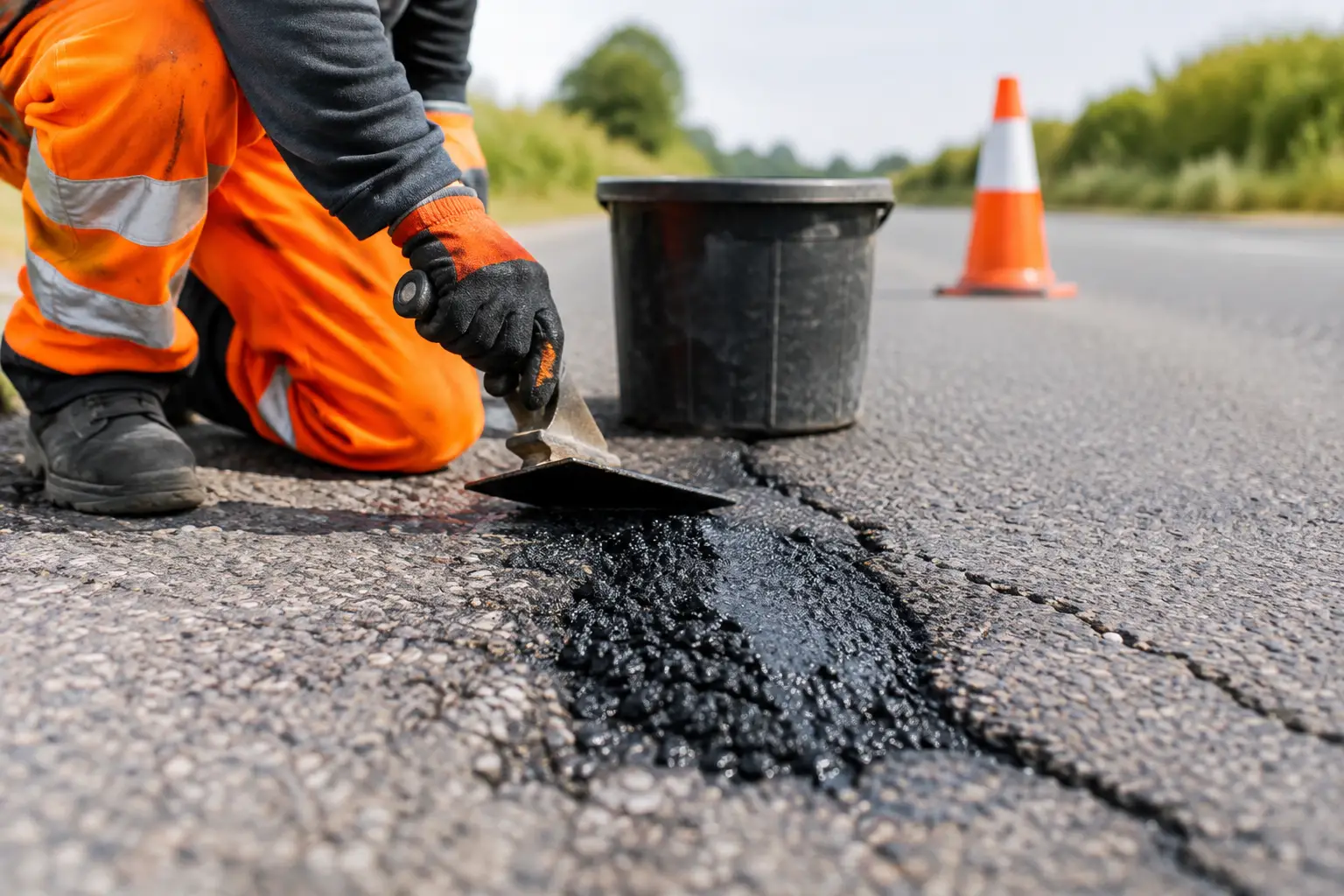
Where rutting is slight and the base remains firm, the damaged tarmac can be cut out to a clean, regular shape. The exposed area is cleaned, treated with a suitable bonding coat and reinstated with hot-lay tarmac. The new material is levelled to the correct profile and mechanically compacted so that it sits tight against the surrounding surface.
The repair must not be feathered thin at the edges. Thin tarmac breaks down quickly, particularly where tyres cross it. Cutting back to a sound edge gives the new material enough depth to remain durable.
Deeper rutting and failed sub-base
If the rut has formed because the foundation is weak, the damaged tarmac and any unstable base material need to be excavated. The formation is then assessed, re-levelled and rebuilt with a properly compacted aggregate sub-base before new binder and surface layers are installed.
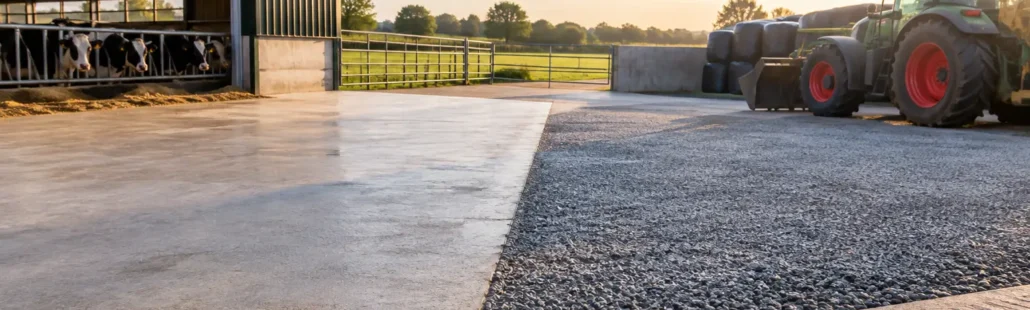
This approach involves more work, but it deals with the actual failure. It is often necessary on commercial yards, access roads and car parks where vans, forklifts, delivery vehicles or refuse lorries place regular loads on the same route.
The new construction should suit the traffic expected on site. A domestic driveway used by family cars does not need the same specification as a service yard receiving loaded vehicles. Using an unsuitable material or an inadequate layer depth may reduce the initial price, but it is unlikely to deliver a lasting result.
Larger areas with repeated deformation
Where rutting is widespread, local patches can leave a surface looking uneven and difficult to maintain. Planing out and resurfacing the affected section often provides a cleaner, stronger finish. The contractor can correct levels, address drainage falls and install a continuous new wearing course rather than creating multiple joints across a traffic route.
This is especially worth considering when the surrounding tarmac is already cracked, polished or nearing the end of its service life. A wider repair costs more upfront, but it may prevent repeat call-outs and reduce disruption to customers, residents or site operations.
Why cold-lay material is rarely a permanent answer
Cold-lay tarmac has a place for temporary filling and emergency making-safe work, particularly when weather or access prevents a full repair. It can reduce an immediate hazard while a permanent repair is arranged.
It is not normally the best long-term answer for rutting, though. Cold material is harder to compact to the same standard as hot-lay asphalt, and it may struggle where there is regular turning traffic, standing water or a weak foundation. If the rut exists because the layers below are failing, no bagged material applied at surface level will solve that problem.
For a durable repair, hot-applied tarmac, correct preparation and proper compaction are usually required. Timing also matters. Repairs carried out in very wet or cold conditions may need additional planning to achieve a sound bond and finish.
Keeping traffic off the repair long enough
A repaired section needs protection while it cools and gains stability. The precise waiting time depends on the material used, weather conditions, repair depth and the weight of traffic. Light foot traffic may be possible sooner than vehicle use, but heavy vehicles should not be allowed onto fresh tarmac until the contractor confirms it is ready.
On active commercial sites, access can often be managed in stages. Work can be scheduled around deliveries, opening times or quieter periods to keep disruption down. Clear barriers and traffic management are essential where staff, customers and vehicles share the same area.
Preventing rutting from coming back
A good repair should be followed by sensible maintenance. Keep gullies, channels and drainage runs clear so water cannot sit on the surface. Deal with small cracks before water gets beneath the tarmac, and avoid allowing repeated heavy loading on a surface built for lighter use.
If delivery vehicles regularly use a domestic-style driveway or a lightly constructed parking area, it may be time to strengthen that route rather than repeatedly repairing it. Similarly, wheel tracks at gates, tight turning points and loading bays may benefit from a more suitable construction or a redesigned traffic route.
Regular inspections are particularly useful after winter, prolonged rainfall and periods of heavy site traffic. Early action is less disruptive than waiting until rutting develops into broken tarmac and potholes.
When to call a surfacing contractor
Professional help is advisable when ruts are deep, water is pooling, cracks are spreading or heavy vehicles use the area. A contractor can identify whether the issue is limited to the surface or whether excavation and sub-base repairs are needed. They can also set correct levels and drainage falls, match the repair to the traffic load and complete the work with appropriate plant and compaction equipment.
EB Road Surfacing carries out tarmac repairs for driveways, car parks, private roads and commercial access routes across Scotland and Northern England. A clear site inspection and properly specified repair give you a far better chance of avoiding the same problem next season.
Rutting rarely improves with time. Repairing it while the damage is contained protects the surface around it, keeps access safer and helps your tarmac deliver the service life it was built for.