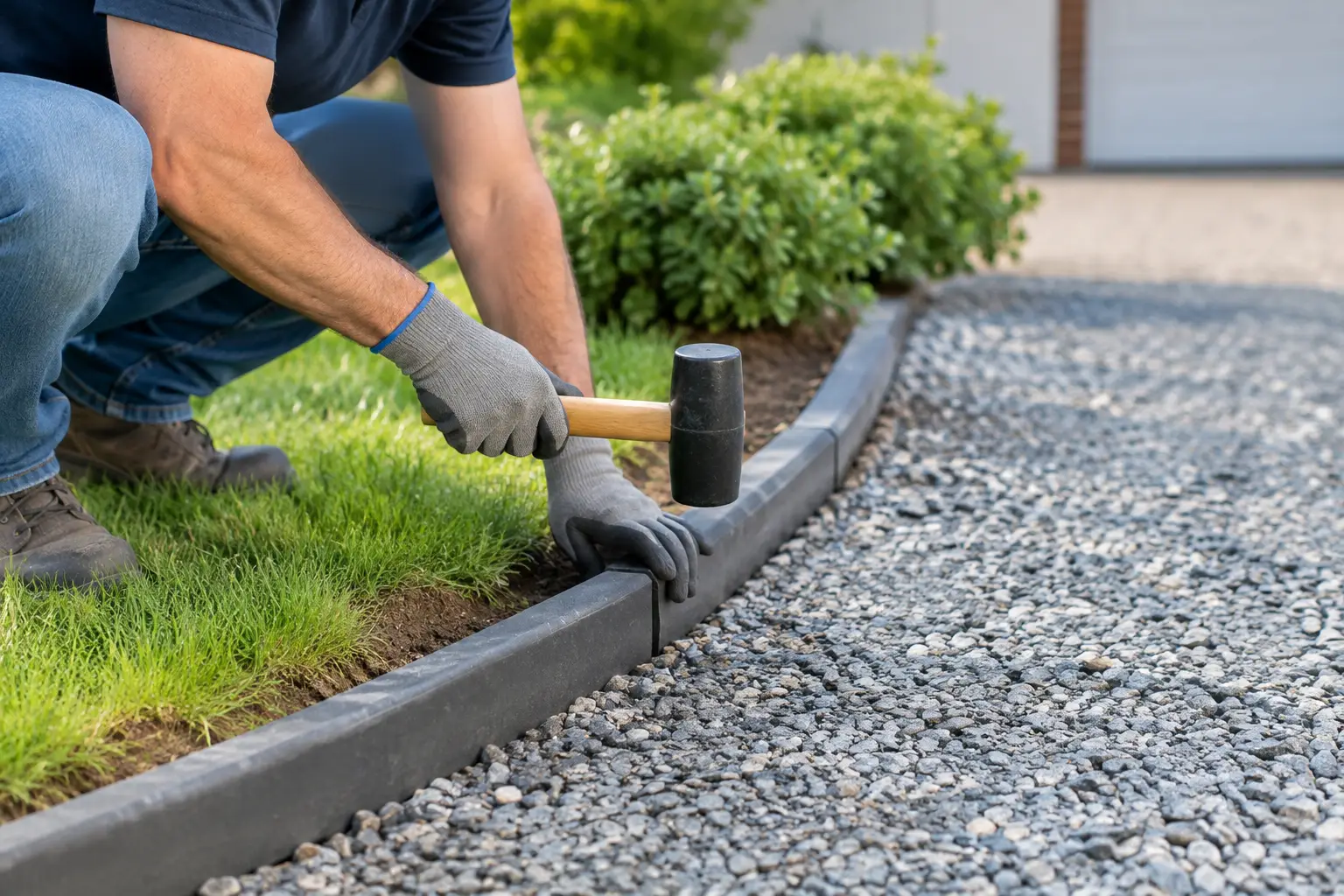
Repairing Loose Driveway Edging Properly
A driveway can look sound at first glance while its edges are quietly starting to fail. Repairing loose driveway edging early prevents the surface from cracking outwards, protects the base beneath it and removes a trip or tyre-damage hazard before it becomes a larger job.
Edging is not simply a decorative border. Whether your driveway has concrete kerbs, block pavers, stone setts or a raised tarmac edge, it holds the surface in line. When that restraint moves, water enters gaps, vehicles push the material aside and the driveway begins to lose its shape from the outside in.
Why driveway edging becomes loose
Most edging failures have an underlying cause. Replacing or re-bedding a loose kerb without addressing that cause may improve the appearance briefly, but the same section can move again after a wet winter or repeated vehicle use.
Water is one of the most common problems. Poor drainage allows rainwater to sit alongside the driveway edge or wash beneath it. In Scotland and North England, freeze-thaw cycles can then widen small gaps and disturb the bedding material. Water can also soften poorly compacted ground, particularly where the driveway meets a grass verge, planting bed or sloping access.
Vehicle loading matters too. Cars regularly cutting a corner, delivery vans mounting the edge, or larger vehicles turning in a confined area place pressure exactly where the surface is least supported. This is particularly common on narrow driveways and commercial access routes where vehicles need extra room to manoeuvre.
Other causes include an inadequate foundation, weak or deteriorated mortar, tree roots, and movement in the surrounding ground. On tarmac driveways, the edge may crumble because the asphalt was laid without sufficient side support. On block-paved areas, failed edge restraints allow the blocks to spread and dip over time.
Signs that loose edging needs prompt repair
A single slightly loose block does not always mean the whole driveway needs rebuilding. However, it is worth acting before movement extends into the main surface. Look for several signs rather than judging the problem by appearance alone:
- Kerbs, blocks or setts that rock when stepped on or touched.
- Open joints, missing mortar or visible gaps between the edging and driveway.
- Cracked, crumbling or sunken tarmac along the outer edge.
- Paving blocks beginning to fan out, sink or lose their straight line.
- Standing water beside the driveway after rainfall.
- A lip that catches tyres, creates a trip risk or makes access uncomfortable.
If the affected area is growing, the driveway edge is no longer doing its job. Early repair is normally more cost-effective than waiting for surface cracking, base failure or a wider section of paving to move.
Repairing loose driveway edging: the right approach
The correct repair depends on the type of edging, the condition of the base and what has caused the movement. A proper job is more than adding fresh mortar around a loose unit. The damaged section needs to be lifted, the foundation checked and the edging reset to the correct level and line.
Assess the surface and foundation
First, establish whether the issue is isolated. A loose concrete kerb beside otherwise stable tarmac may only require local excavation and re-bedding. If several kerbs have shifted, water is pooling, or the driveway surface has cracked for metres along the edge, the problem may extend below ground.
The foundation should be firm, well compacted and deep enough for the traffic using the driveway. Soft ground, loose aggregate or washed-out material has to be removed and reinstated before the edging goes back. Simply packing mortar into a void leaves the weakness underneath.
Lift damaged edging carefully
Loose kerbs, blocks or stone setts should be removed without damaging sound neighbouring material. On a paved driveway, this can involve lifting a small number of blocks behind the edge restraint to reach the bedding layer properly. On tarmac, the failed edge may need to be neatly cut back so there is a clean, stable line to work from.
Any cracked units should be replaced rather than reused. Matching the existing size, colour and profile helps the repair blend in, although older materials can be difficult to source exactly. A competent contractor will explain the available options before work begins.
Rebuild the support and reset the line
The excavation is then rebuilt with suitable sub-base material, compacted in layers. Concrete kerbs are commonly set on a firm concrete bed with haunching at the rear to resist sideways movement. The level and fall need to be checked carefully so water drains away from buildings and does not collect at the edge.
Block-paved edging is generally installed on a solid concrete restraint rather than loose sand alone. This is what prevents the paving from spreading under vehicle weight. Stone setts may require a different bedding depth or mortar finish depending on their size, the surrounding surface and the intended use.
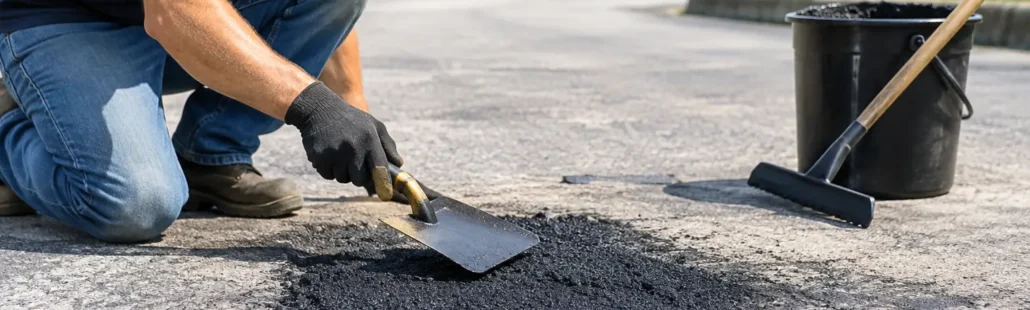
For tarmac driveways, the asphalt should be reinstated tightly against the repaired edging and compacted correctly. Where an unrestrained tarmac edge has broken away, installing kerbs or another suitable edge support may provide a longer-lasting solution than repeatedly patching the same crumbling strip.
Finish joints and protect drainage
Once the edging is secure, joints can be pointed or finished as appropriate to the material. The surrounding surface should be checked for small gaps that could allow water to reach the base. Drainage channels, gullies and falls should also be kept clear, because a well-installed edge will still struggle if water has nowhere to go.
When a local repair is enough – and when it is not
A local repair is usually suitable when the issue is limited to one short section, the driveway remains level and the foundation is sound. This is often the case after accidental impact or the failure of a small area of old mortar.
More extensive work should be considered when the edging has moved across several metres, the tarmac is cracked or depressed, or block paving has spread beyond the immediate border. Persistent standing water is another warning sign. In these cases, repairing the visible edging alone can be false economy because the base or drainage arrangement may be the real problem.
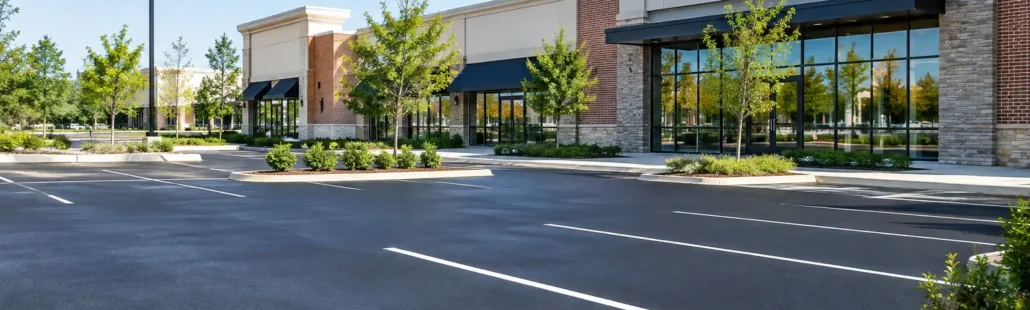
Commercial premises need particular care. Loose edging on a car park, service yard or access road can damage vehicles, create a liability issue and allow potholes to form along the perimeter. The repair should account for expected traffic, including refuse lorries, delivery vehicles and frequent turning movements, rather than being specified for domestic car use.
Can you repair loose driveway edging yourself?
A homeowner may be able to reset a single lightweight block where the base is clearly intact and there is no drainage issue. Even then, accuracy matters. The unit must sit at the right height, remain aligned with the existing run and be supported well enough to resist movement.
DIY repairs become less suitable where concrete kerbs are heavy, tarmac needs cutting and reinstating, multiple blocks have spread, or excavation is required beside utilities, walls or drainage. Poor levels can direct water towards a property, while inadequate compaction often leads to a repeat failure within months.
Professional repair also offers a cleaner finish on visible driveways. Experienced surfacing teams have the equipment to excavate, compact, cut asphalt neatly and match levels across the repaired area. For customers who need the work completed with minimal disruption, this is often the practical choice.
Preventing edging from working loose again
Once the repair is complete, protect it from the conditions that caused the failure. Keep drainage routes clear and avoid allowing soil, leaves or gravel to block channels at the driveway edge. If vehicles regularly overrun one corner, consider widening the entrance, adding a stronger kerb detail or altering the layout so tyres are not forced onto the border.
Check edges after winter, after major groundwork nearby and following any impact from a vehicle. Small gaps and loose mortar are far easier to deal with before water reaches the sub-base. Where mature trees are close to the driveway, monitor root-related movement rather than repeatedly patching the same area.
For a driveway that is starting to crack, spread or lose its edge, a site assessment gives a clearer answer than a quick cosmetic repair. EB Road Surfacing can identify whether a local edging repair will provide a durable result or whether drainage and foundation work should be included. A secure edge keeps the whole driveway performing as it should, not just looking tidy from the road.