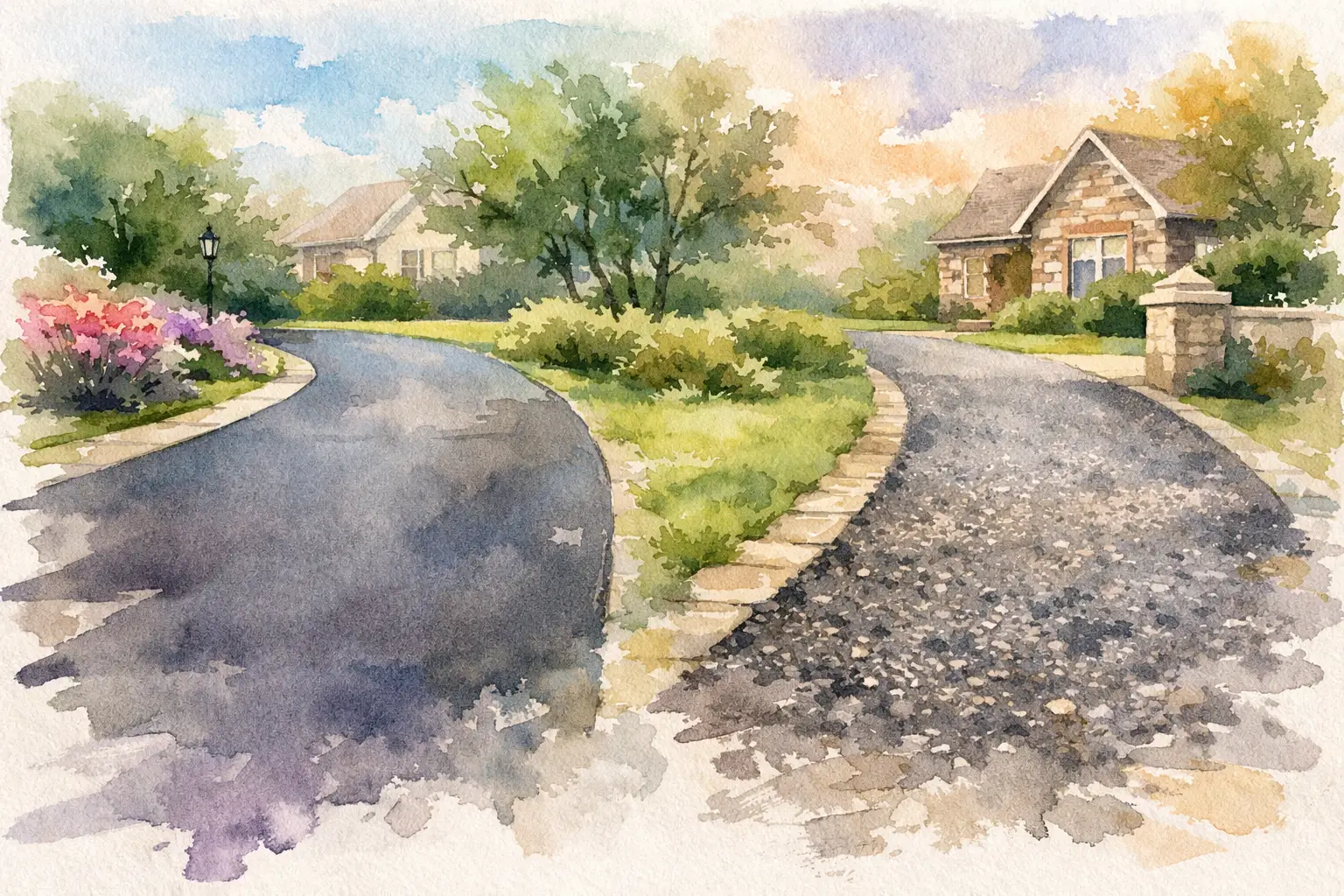
Asphalt Versus Tarmac Driveways
If you are weighing up asphalt versus tarmac driveways, the right answer usually comes down to traffic, budget, appearance and how long you want the surface to last before major maintenance is needed. Many people use the two terms as if they mean exactly the same thing, but in practical driveway work there are differences that affect performance, finish and long-term value.
For homeowners, the choice often starts with kerb appeal and price. For commercial buyers, facilities teams and developers, it is more often about durability, safe vehicle access and keeping future repair costs under control. Either way, choosing the wrong surface can leave you paying twice.
What is the difference between asphalt and tarmac?
Tarmac is short for tarmacadam, a surfacing material originally made by mixing crushed stone with tar. Asphalt is made with bitumen rather than tar and is now the more common modern surfacing material for roads, car parks and driveways. In everyday conversation, many people still call black driveways tarmac even when the installed surface is technically asphalt.
That matters because asphalt is generally the more advanced and widely used option today. It is designed to give a smoother finish, good flexibility under traffic and reliable weather resistance when laid properly. Traditional tarmac has its place, but in most modern domestic and commercial settings, asphalt is usually the stronger all-round choice.
Asphalt versus tarmac driveways for domestic properties
If you want a clean, neat driveway that stands up well to regular car use, asphalt is often preferred. It tends to provide a smoother and more refined finish, which suits front drives where appearance matters alongside function. It also copes well with the freeze-thaw conditions that can be a real issue across parts of Scotland and the North of England.
Tarmac can still work well for domestic driveways, particularly where a straightforward, cost-conscious surface is the main priority. It is practical, familiar and capable of handling normal household vehicle traffic. That said, it may not always offer the same finish quality or long-term wear performance as a well-laid asphalt driveway.
For most homeowners, the real question is not whether one material is good and the other bad. It is whether the surface matches the way the driveway will actually be used. A small private drive with light traffic has different demands from a sloping entrance, a shared access route or a property with frequent van movements.
Cost: what are you really paying for?
Initial cost is where many decisions are made, but it should not be the only factor. Tarmac has often been seen as the more budget-friendly option, especially for basic surfacing work. Asphalt can cost more upfront depending on specification, thickness, groundwork and site access.
However, upfront cost only tells part of the story. If asphalt lasts longer, needs fewer repairs and keeps a better surface finish over time, the overall value can be stronger. On busy driveways or access areas, that difference becomes more obvious. A surface that starts cheaper can become more expensive if it degrades early or requires patching sooner than expected.
Ground preparation also has a big effect on price. Poor sub-base work causes failures whatever material is chosen. If a quote seems unusually low, it is worth checking exactly what is included – excavation depth, edging, drainage, base layers and final surfacing all affect how the driveway performs.
Lifespan and durability
Durability is one of the main reasons asphalt is so widely used in modern surfacing. It performs well under repeated traffic loads and generally provides strong resistance to cracking when laid on a properly prepared base. That is useful for both family homes and sites where vehicles are moving in and out throughout the day.
Tarmac is also durable, but it can be more vulnerable to wear in certain conditions, especially if the driveway sees heavier vehicles or frequent turning movements in the same spot. Warm weather can soften some surfaces, while colder weather and standing water can expose weak areas if drainage is poor.
In real terms, lifespan depends less on the sales label and more on the full build quality. The thickness of the surface, the strength of the base, site drainage and the standard of installation all matter. A properly installed surface should feel solid, drain effectively and remain stable under daily use.
Appearance and finish
For many domestic customers, appearance is where asphalt pulls ahead. It usually gives a smoother, more uniform finish that works well on modern properties and refurbished entrances. The overall look is clean and practical without trying too hard.
Tarmac often has a slightly coarser appearance. Some customers are perfectly happy with that, especially on larger rural drives, farm entrances or utility areas where function matters more than presentation. In those settings, a more basic look is not a drawback.
If the driveway sits at the front of a property and is visible every day, the finish quality may be worth paying attention to. The difference is not just cosmetic. A more even surface can also improve usability for pedestrians, bins, cycles and vehicles.
Grip, drainage and safety
A driveway needs to do more than look tidy. It has to stay safe in wet weather, handle turning vehicles and avoid surface water problems. Both asphalt and tarmac can offer good grip when installed correctly, but the final result depends on surface texture, gradient and drainage design.
Poor drainage is a bigger issue than many people realise. Water that sits on the surface or runs back towards a building will shorten the life of the driveway and create avoidable hazards. This is one reason professional installation matters. The right falls, levels and edge details are just as important as the surfacing material itself.
For sloped driveways, shared access roads and commercial entrances, surface performance in poor weather should be considered from the start. A reliable contractor will assess the site rather than recommending the same build-up for every job.
Maintenance and repairs
No driveway is completely maintenance-free. Dirt, fuel drips, moss growth and weathering will affect any surface over time. The good news is that both asphalt and tarmac are relatively straightforward to maintain if the base installation is sound.
Small repairs can usually be dealt with before they become bigger failures. Cracks, edge breakdown and localised depressions should be addressed early, especially where water can get in. Leaving these issues too long often leads to wider deterioration.
Asphalt tends to hold up well with routine care, and many customers find its long-term upkeep manageable. Tarmac can also be repaired, but depending on age and condition, patching may become more visible or more frequent. If low maintenance is a priority, the quality of the original workmanship matters as much as the surface choice.
Which is better for commercial and heavier-use sites?
For car parks, access roads, loading areas and mixed-use sites, asphalt is often the better fit. It is commonly specified because it offers dependable performance under regular traffic and can be laid to suit a range of commercial demands. For site managers and developers, that reliability is usually more important than shaving the lowest possible amount off the initial quote.
Tarmac may still be suitable for lighter-use commercial areas or temporary priorities where a practical surface is needed quickly and cost-effectively. But where vehicles are heavier, movements are constant or presentation matters to visitors and tenants, asphalt usually makes more sense.
This is where experience counts. A contractor used to both domestic and infrastructure-style surfacing work will normally give more practical advice on specification, traffic loads and expected lifespan. That matters far more than choosing a name from a brochure.
So which should you choose?
In the asphalt versus tarmac driveways debate, asphalt is often the stronger long-term option for customers who want a smooth finish, good durability and dependable performance in British weather. It suits most modern domestic driveways and many commercial applications where appearance and lifespan both matter.
Tarmac still has value where budget is tight, usage is lighter or a more basic surface is perfectly acceptable. It is not the wrong choice by default. It is simply a choice that should be made with the site conditions and expected traffic in mind.
If you are comparing quotes, look beyond the surface name. Ask what build-up is proposed, how drainage will be handled, what traffic the driveway is designed for and what guarantee is included. A driveway should not just look right on day one. It should still be doing its job properly years down the line.
A good surface is the one that fits the site, the budget and the way the space is used every day. That is the standard worth aiming for.