A Retail Park Resurfacing Case Done Properly
A retail park resurfacing case is never just about laying fresh tarmac. It is about keeping customers moving, protecting tenants’ trading hours and restoring a surface that can cope with constant cars, delivery lorries, shopping trolleys and changing weather. When the work is planned properly, a tired car park becomes safer, clearer and easier to manage without creating unnecessary disruption for the businesses on site.
For retail park owners, managing agents and facilities teams, the visible condition of the site matters. Cracked asphalt, potholes, faded bays and standing water quickly make a busy location look neglected. More importantly, they can create trip hazards, vehicle damage risks and avoidable complaints. Resurfacing is an investment in safety, access and the day-to-day performance of the whole site.
What a Retail Park Resurfacing Case Should Prove
A worthwhile retail park resurfacing case should show how the contractor dealt with the practical pressures of a live commercial environment. The finished black surface is only one part of the job. The real measure is whether the works were organised around customer access, tenant requirements, traffic flow and the existing condition of the ground.
Before any surfacing starts, the site needs a proper assessment. This identifies whether the issue is limited to the top layer of asphalt or whether there are deeper failures in the base. Surface cracks can sometimes be repaired locally before an overlay is installed. Where there is movement, widespread potholing or soft areas beneath the surface, simply covering the problem may lead to an early failure.
Drainage must also be considered from the outset. Water is one of the main causes of deterioration in paved areas. If gullies are blocked, falls are poor or water is getting beneath the asphalt, a new surface alone will not solve the underlying problem. Levels around entrances, kerbs, manholes and drainage channels need careful attention so water is directed where it should be.
A good case also demonstrates that the contractor understood the site’s traffic. A retail park access road used by delivery vehicles needs a stronger construction than a lightly used parking bay. Busier routes, service areas and turning points are subject to heavier loads and repeated braking. Material choice and layer thickness should reflect that use, rather than applying the same specification across every part of the site.
Planning Works Around a Trading Site
Closing an entire retail park for resurfacing is rarely realistic. Most projects need to be completed in phases, with clear separation between working areas and areas that remain open to traffic. This keeps disruption controlled and gives retailers, customers and delivery drivers a clear route through the site.
The programme should be agreed before plant arrives. That includes which sections will be closed, how long each phase is expected to take, where temporary parking will be available and how deliveries will be handled. Signage is especially important. Drivers need early, simple instructions, not confusing notices at the point where they have already committed to a route.
The best approach depends on the layout and the condition of the surface. A smaller retail park may be resurfaced in sections over a short period, while a larger location may need evening, overnight or weekend working to reduce the impact on peak trading. Out-of-hours work can be the right decision for a busy site, but it can add cost and requires careful coordination around noise, lighting and site security.
Access for emergency vehicles must remain available throughout. Pedestrian routes also need to be considered, particularly around shop entrances, disabled bays and trolley areas. Temporary ramps, barriers and safe crossing points may be needed while excavations or planing works are under way.
The Right Scope: Repair, Overlay or Full Reconstruction?
There is no single answer for every retail park. The right solution depends on the extent and cause of deterioration, the expected traffic and the budget available.
Localised repairs are suitable where the rest of the surface remains sound. Failed areas are cut out, rebuilt and reinstated to provide a stable repair. This is often a sensible option for isolated potholes, damaged service routes or small areas where water has caused local failure.
An asphalt overlay can provide a cost-effective improvement where the existing base is stable but the wearing course is worn, cracked or uneven. The surface may be planed first to maintain levels at kerbs, drainage points and entrances. This creates room for new asphalt and helps avoid raised edges that can affect access and drainage.
Full reconstruction is the more substantial option. It is required where the base has failed, where there are widespread soft spots or where the existing surface was not designed for the level of traffic now using it. It costs more initially and takes longer, but it can be the most economical decision over the life of the site. Repeated patching on a failing foundation is rarely good value.
A clear quotation should explain what is being repaired, what materials will be used and why that approach is appropriate. It should not hide essential preparation beneath a low headline price. On commercial surfacing projects, proper groundwork is what supports a durable finish.
Surface Water and Levels Cannot Be Treated as an Afterthought
Standing water in parking bays or on access roads is more than an appearance issue. In colder conditions it can become a slip or skid risk. Over time, water entering joints and cracks can weaken the surface beneath and accelerate pothole formation.
During resurfacing, existing falls should be checked and corrected where necessary. Gullies may need cleaning, repairing or adjusting to suit the finished level. Manhole covers and inspection chambers should be reset accurately so they sit flush with the new surface. Poorly finished ironwork can create noise, discomfort for drivers and an early point of failure.
There is a balance to strike. Correcting drainage levels across a large car park may require more excavation and additional material, particularly where the existing layout has longstanding design issues. A competent contractor will identify this early, explain the options and avoid promising that a simple overlay will resolve problems it cannot realistically fix.
Line Marking Is Part of the Finished Job
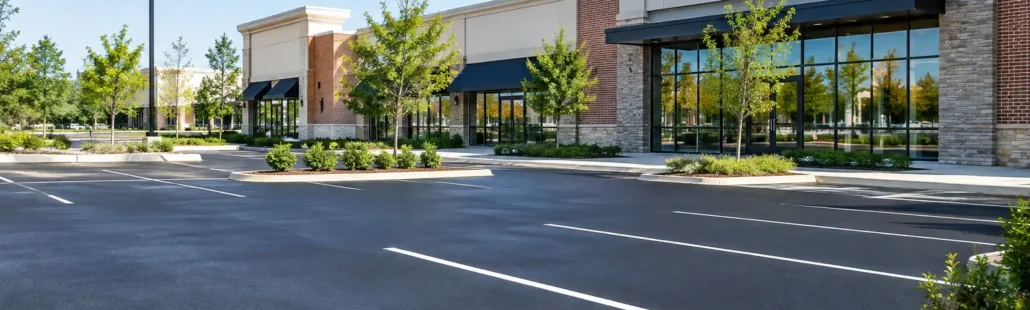
Fresh asphalt can make a retail park look transformed, but the site is not ready for use until the markings are clear and correctly set out. Parking bays, disabled spaces, parent-and-child bays, pedestrian crossings, directional arrows, loading areas and hatched zones all help traffic move safely and predictably.
Where possible, the layout should be reviewed before markings are reinstated. This is an opportunity to correct faded or poorly positioned bays, improve vehicle circulation or make pedestrian routes more obvious. Any changes should be agreed with the site operator and should account for accessibility requirements, fire routes and delivery access.
Line marking should be applied only once the new surface is ready. Rushing this stage risks poor adhesion and a shorter service life. Equally, leaving a newly surfaced site without clear markings creates confusion at the moment it should be easiest to use.
What Good Delivery Looks Like
A well-managed resurfacing project leaves more than a smooth finish behind. It leaves a site that is clean, safe and ready to trade. Loose debris should be removed, drainage points checked, transitions at entrances inspected and all reopened areas clearly signed.
Communication is equally important. Site management needs to know what will happen each day, which sections are reopening and whether weather or unforeseen ground conditions have affected the programme. Asphalt works are weather-sensitive, and unexpected defects can be uncovered once planing begins. A realistic contractor addresses these issues promptly rather than allowing uncertainty to build.
For a busy commercial location, the lowest initial price is not always the lowest cost. Poor drainage, inadequate preparation or weak construction in high-traffic areas can result in repeat closures and further repairs. A properly specified surface, installed by an experienced contractor, provides better value because it is built around the way the retail park actually operates.
EB Road Surfacing delivers commercial resurfacing, repairs and line marking with practical planning at the centre of every job. For retail park managers, the aim is straightforward: keep the site accessible while the work is under way, then hand back a hard-wearing surface that supports safer, more reliable daily use.
If your car park or access roads are showing early signs of failure, acting before defects spread gives you more control over cost, programme and disruption. A clear site survey and a sensible phased plan are often the difference between a manageable improvement project and an urgent repair that disrupts trading.