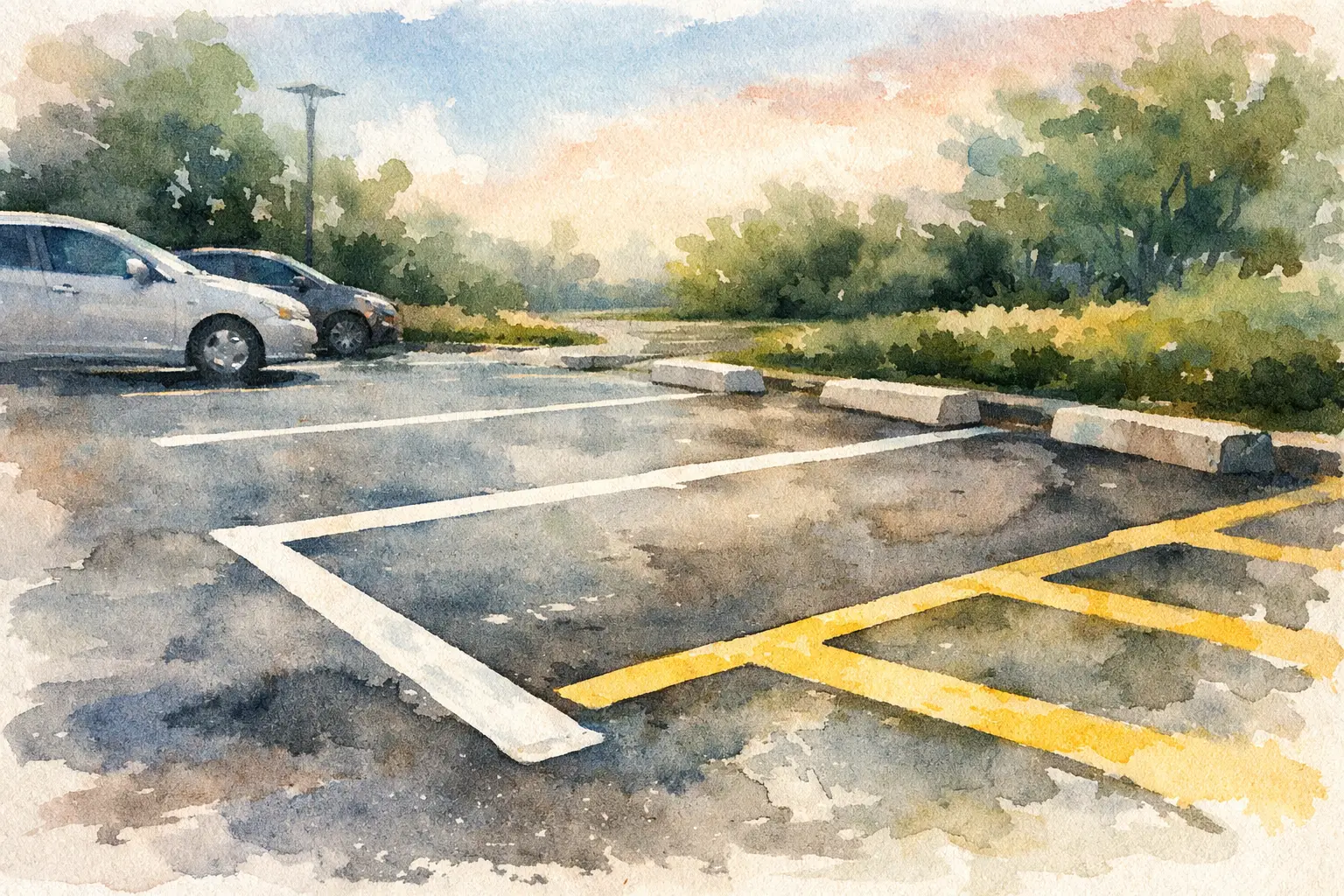
Best Car Park Line Markings That Last
Freshly laid bays can make a car park look sorted. Poor markings do the opposite. They confuse drivers, waste space, create avoidable safety issues and quickly make a site look tired. Choosing the best car park line markings is not just about neat white lines on tarmac. It is about using the right layout, the right materials and the right finish for how the site is actually used.
For site managers, landlords, developers and business owners, that matters more than most people realise. A well-marked car park helps traffic move properly, protects pedestrians, supports accessibility and reduces wear from poor vehicle movement. It also makes a stronger first impression for customers, staff and visitors.
What makes the best car park line markings?
The best result comes from balancing visibility, durability and layout. Bright lines matter, but they are only one part of the job. If the bays are the wrong size, the arrows are unclear or pedestrian routes are missing, the car park will still underperform.
Good line markings should be easy to read in daylight, under artificial lighting and in wet conditions. They also need to suit the surface underneath. A newly surfaced asphalt car park gives a different finish from older, worn tarmac with patches and repairs. The marking system should work with the condition of the surface, not fight against it.
There is also a practical question of traffic type. A small private car park behind offices needs a different approach from a retail site, school, industrial yard or healthcare setting. Some sites need simple parking bays and directional arrows. Others need hatched zones, loading areas, disabled bays, walkways, speed roundels and parent-and-child spaces. The right answer depends on the volume of traffic, the type of users and how much abuse the markings will take.
Best car park line markings for different sites
There is no single marking style that suits every car park. The best car park line markings for a supermarket or trade counter are rarely the same as the best option for a residential block or staff car park.
Commercial and retail car parks
High-turnover sites need clear, bold markings that stay visible under constant traffic. Standard bays, one-way arrows, pedestrian crossing points and hatched no-parking areas all need to be easy to understand at a glance. On busier sites, clarity is often more important than trying to fit in a few extra spaces.
If cars are cutting corners, parking over lines or blocking routes, the problem is usually layout before it is enforcement. A sensible re-marking plan can often solve recurring issues without major civil works.
Offices, schools and healthcare settings
These sites need more emphasis on pedestrian safety and accessible movement. Marked walkways, disabled bays near entrances and controlled traffic flow are usually essential. Schools may also need keep-clear areas and drop-off management. Healthcare sites often need clearer zoning, especially where ambulances, patient transport or delivery vehicles share space with public parking.
Industrial yards and mixed-use sites
Heavier vehicles, delivery routes and turning movements change the marking requirements. In these settings, basic bay lines are only part of the picture. Segregation zones, loading bays and safety markings become more important. Materials also need to withstand more aggressive use from vans, lorries and plant.
Paint, thermoplastic or something else?
One of the biggest factors in choosing the right system is the material used. Not every line marking product offers the same lifespan or finish.
Road marking paint is often a cost-effective choice for straightforward car parks and refresh work. It is quick to apply, provides good visibility and suits many commercial sites. For lower to medium traffic areas, it can be the right balance of price and performance.
Thermoplastic markings generally offer greater durability, especially in high-traffic areas. They bond strongly to suitable surfaces and tend to last longer under repeated vehicle movement. The trade-off is cost and application requirements. It is not always necessary for every bay in every car park, but it is often worth considering for heavily used routes, pedestrian crossings and key directional markings.
Cold-applied systems can also have a place on certain jobs, especially where site conditions, programme or existing surfaces make them the better fit. The point is not to choose the most expensive option by default. It is to use the material that matches the site and budget properly.
Surface condition matters more than people think
Even the best line marking material will not perform well on a failing surface. If the tarmac is breaking up, covered in loose debris, oil-stained or badly cracked, the finish and lifespan of the markings will suffer.
This is where many car park projects go wrong. People focus on repainting lines when the real issue is that the surface has reached the point where patching or resurfacing should come first. Markings applied over unstable ground may look tidy on day one, but they will not stay that way for long.
A proper assessment should look at drainage, potholes, surface wear and any existing patch repairs before new markings are applied. In some cases, a full re-mark is all that is needed. In others, the better long-term decision is to repair or resurface first, then mark the layout onto a sound surface.
Layout is where value is won or lost
A car park can have high-quality materials and still work badly if the layout is wrong. This is why planning matters.
Bay width, aisle space, entry and exit points, and turning room all affect how the site functions day to day. Trying to squeeze in too many spaces often leads to awkward manoeuvring, damaged kerbs, blocked pedestrian routes and frustrated users. A slightly lower bay count with better access can be the more efficient option in practice.
Accessibility should also be considered from the start, not added on at the end. Disabled bays need the correct sizing and positioning. Pedestrian routes should connect logically to entrances. Directional markings should guide vehicles clearly enough that drivers do not have to guess.
For larger sites, zoning can make a major difference. Separating staff parking, visitor parking, loading areas and restricted spaces helps reduce conflict and improves flow. It also makes the site easier to manage.
Visibility, safety and compliance
The best car park line markings support safety first. That means more than making bays look straight.
Clear arrows reduce hesitation. Marked crossings give pedestrians safer routes. Hatched areas protect access points and turning circles. Speed markings and warning text can help in higher-risk areas. When all of these are used properly, the site becomes easier to navigate and less prone to incidents.
There is also the issue of compliance and duty of care. Commercial operators, landlords and public-facing organisations have a responsibility to keep vehicle and pedestrian areas reasonably safe and clearly managed. Good markings are part of that. They will not replace wider site management, but they are a visible and practical part of it.
When should line markings be refreshed?
If drivers are parking across bays, ignoring arrows or missing crossings, faded markings may already be affecting the site. A refresh is usually worth considering when lines are no longer clearly visible from a moving vehicle or when key safety markings have become patchy.
Weather, traffic volume and surface condition all affect lifespan. In parts of Scotland and the North of England, freeze-thaw conditions, heavy rain and grit can speed up wear. Busy entrances, turning heads and crossing points typically fade first because they take the most stress.
Regular inspection helps avoid letting the whole site deteriorate. Refreshing selected high-wear areas early can be more cost-effective than waiting until every marking needs replacement at once.
Choosing a contractor for car park markings
A dependable contractor should do more than turn up with paint. They should look at the surface, understand traffic movement and recommend a layout and material that suits the site properly.
That matters whether you manage a commercial estate in Glasgow, a school in Edinburgh or a private development elsewhere in the region. Local weather, traffic type and the condition of older surfacing all affect the final result. A contractor with proper surfacing experience will spot issues that a marking-only approach can miss.
It is also worth asking about preparation, drying times, traffic management and how disruption will be kept to a minimum. On a live site, speed matters, but so does getting the job done correctly. EB Road Surfacing takes that practical approach because line marking only performs well when the groundwork is right.
The best car park line markings are the ones that suit the site, stay visible and make daily use easier for everyone on it. If the layout is clear, the material is right and the surface is sound, the result will work harder for longer. That is usually the difference between a quick cosmetic fix and a car park that genuinely performs.