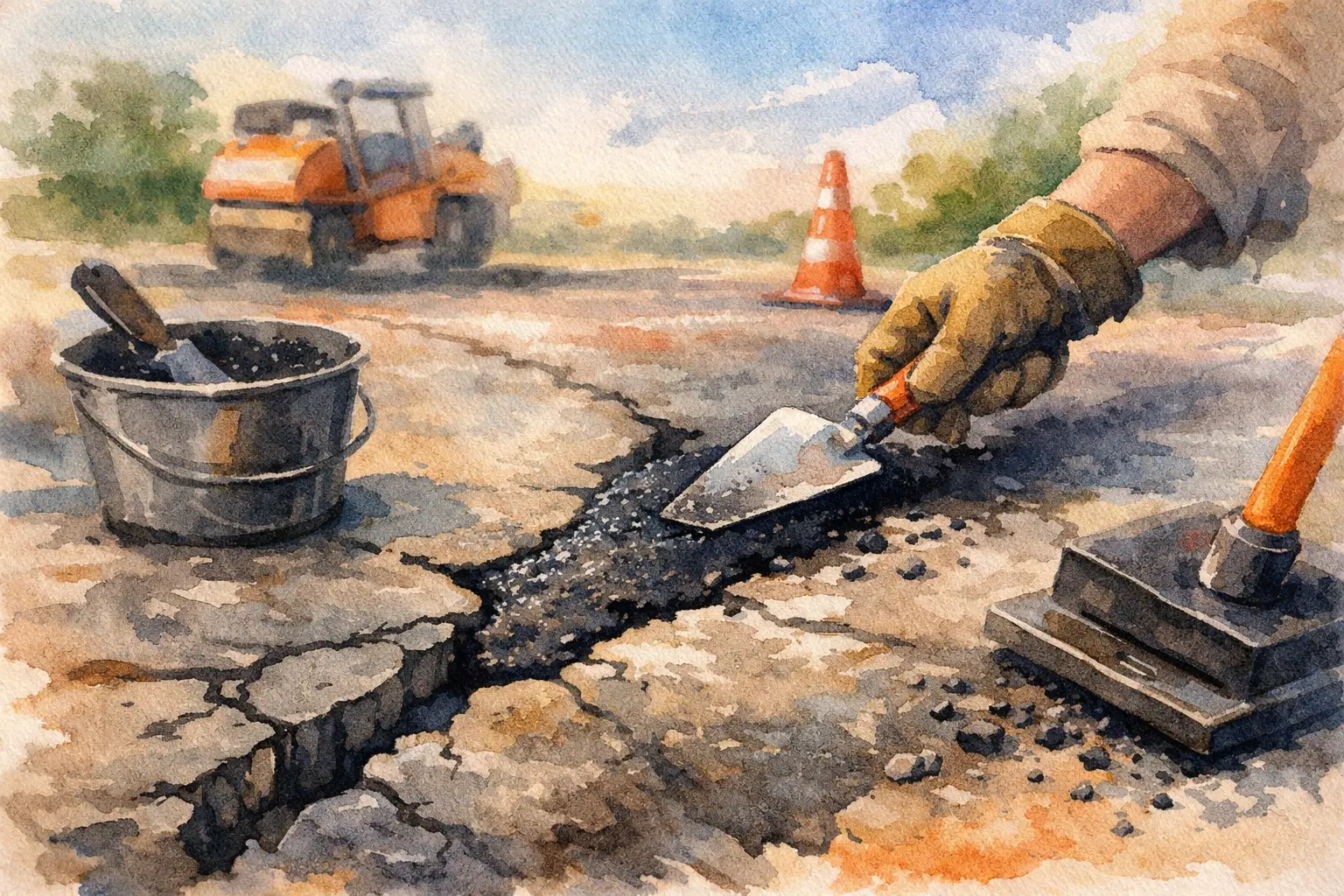
How to Repair Cracked Tarmac Properly
A few hairline cracks in tarmac rarely stay small for long. Once water gets in, the surface starts to weaken, freeze-thaw weather does the rest, and what looked like a minor defect can quickly turn into loose edges, potholes and trip hazards. If you are looking at how to repair cracked tarmac, the right fix depends on the size of the crack, the condition below the surface and how much traffic the area takes.
For a domestic drive, a simple repair may be enough if you catch the damage early. For a commercial yard, access road or car park, surface cracks can be a sign of movement, poor drainage or base failure underneath. That is why the best repair is not always the quickest one.
How to repair cracked tarmac without wasting money
The first step is to work out whether the crack is cosmetic, surface-level or structural. Fine cracks that have only just opened up can often be sealed before water causes more damage. Wider cracks, repeated splitting in the same spot or areas that feel soft underfoot usually point to a deeper problem.
This is where people often spend money twice. They fill the visible crack, the area looks tidy for a short while, then the same section breaks up again because the base was already failing. A proper repair starts with an honest assessment of the surface, not just the crack itself.
If the tarmac is otherwise sound, a crack repair can extend its life and improve appearance. If the surrounding area is brittle, fretting or sinking, patching one line is unlikely to hold for long. In those cases, a cut-out repair or local resurfacing is usually the better option.
Start by checking the crack size and cause
Crack width matters. Hairline cracking is different from a 10mm split with crumbling edges. The shape matters too. A single straight crack may come from shrinkage or minor movement. A network of interconnected cracks usually suggests the surface is reaching the end of its serviceable life or the sub-base is no longer stable.
Look for warning signs around the crack. If there is standing water after rain, drainage may be contributing to the problem. If vehicles regularly turn on the spot, braking and steering loads may be stressing the surface. If roots are lifting the tarmac, no filler will solve the issue for long.
Clean and prepare the area properly
Any repair is only as good as the preparation. Dirt, moss, loose aggregate and moisture stop repair materials bonding properly. The cracked area needs to be swept clean and any debris removed from inside the crack. If the edges are loose or broken, they should be cut back to sound material.
This is the part many rushed repairs get wrong. Pouring filler into a dirty, damp crack may look like progress, but it often fails quickly. For a repair to last, the material needs a clean, stable surface to adhere to.
When crack filler is enough
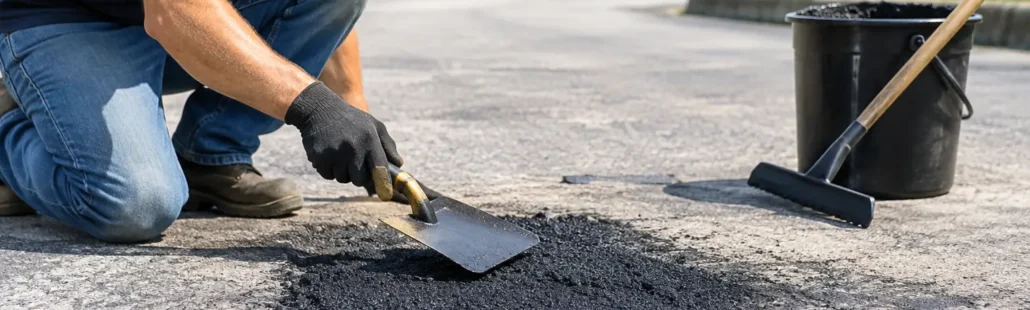
If the crack is narrow, the surrounding tarmac is firm, and there is no sign of subsidence, a specialist crack sealer or bitumen-based repair compound may be suitable. This type of repair is designed to close the gap, reduce water ingress and slow further deterioration.
It works best on early-stage damage. On a driveway or lightly trafficked private access, sealing a crack at the right time can prevent a much larger repair later on. On busier surfaces, the material needs to be suitable for traffic loading and applied correctly, otherwise it may pull out under use.
The timing of the repair also matters. Very cold or wet conditions can affect how well the product sets. In the UK, trying to patch or seal tarmac in poor weather often leads to weak results. Dry conditions and a properly prepared surface give the repair the best chance of lasting.
When a patch repair is the better option
Once cracking is wider, deeper or accompanied by edge breakdown, filling alone is usually not enough. In these cases, the damaged section should be cut out and reinstated with fresh tarmac. This creates a clean repair area with sound edges and removes weakened material rather than covering it up.
A patch repair is often the right choice where cracks have started to ravel, where there is localised potholing, or where repeated traffic loading has broken down a small section of surface. It is a more durable solution than surface filling because it deals with the damaged material directly.
That said, patching is still a local repair. If the defects are spread across a large area, a series of patches can become less cost-effective than resurfacing. It can also leave a surface looking pieced together, which may matter on front-facing commercial premises or newer driveways.
How a proper patch repair is carried out
The damaged tarmac is saw-cut to neat edges and removed. If the lower layers are weak, they are repaired or replaced as well. A tack coat may be applied to help the new material bond, then fresh hot or cold-lay tarmac is installed, compacted and finished level with the surrounding surface.
Good compaction is critical. Without it, the repair may settle, hold water or break away at the edges. This is one reason professional repairs generally last longer than quick temporary fixes, especially on roads, car parks and commercial traffic routes.
When cracked tarmac really needs resurfacing
Some cracked tarmac cannot be sensibly repaired in isolated spots because the wider area is already failing. If you can see multiple cracks, repeated patching, surface deformation or widespread fretting, resurfacing may be the more practical long-term answer.
This often applies to older driveways, forecourts, access roads and heavily used parking areas. While resurfacing costs more upfront, it can work out better value than repeated minor repairs that never fully solve the problem. It also gives a uniform finish, restores drainage falls where needed and improves overall safety.
For commercial clients and site managers, this matters beyond appearance. Surface defects create liability risks, affect vehicle movement and can lead to complaints from staff, visitors or tenants. A planned resurfacing job is often easier to manage than repeated reactive repairs.
Common reasons tarmac cracks in the first place
Understanding the cause helps prevent the same issue returning. Water is one of the biggest problems. Once it enters through small cracks, it weakens the binder and the layers below. Freeze-thaw cycles then expand the damage.
Age is another factor. Tarmac does not last forever, and over time it becomes more brittle under UV exposure, traffic and weathering. Heavy vehicles can also overstress surfaces that were originally laid for lighter use.
In some cases, the issue starts below the tarmac. Poor sub-base preparation, ground movement or inadequate drainage can all lead to cracking at the surface. Tree root pressure and edge failure are also common on domestic drives and lightly built private roads.
DIY repair or professional contractor?
For very small, isolated cracks on a domestic surface, a DIY repair may be reasonable if the base is stable and the right materials are used. It can be a cost-effective short-term measure, particularly where the damage is minor and access is light.
But there is a clear point where professional repair makes more sense. If the crack is reopening, the area is soft, water sits on the surface or vehicles use the area regularly, it is worth having the damage assessed properly. Commercial sites, public-facing areas and shared access routes should also be repaired to a standard that holds up under use and reduces safety risks.
A contractor can identify whether the issue is just the wearing course or whether the problem runs deeper. That avoids the common mistake of treating visible symptoms while the actual cause remains untouched.
How to make a tarmac repair last longer
Once cracked tarmac has been repaired, maintenance still matters. Keeping the surface clean helps stop moss, weeds and standing debris from holding moisture. Dealing with drainage issues early reduces the chance of water penetrating the surface again.
It also helps to act early when new defects appear. A small crack is cheaper and easier to repair than a failed patch or pothole. On commercial premises, regular surface inspections can reduce long-term maintenance costs by catching wear before it becomes disruptive.
For larger sites, a planned approach usually works best. Rather than waiting for visible failure, periodic maintenance and targeted repairs can keep roads, yards and car parks serviceable for longer and reduce the need for more expensive reconstruction.
If you are weighing up how to repair cracked tarmac, the real question is not just how to fill a crack. It is how to fix the surface in a way that matches its condition, traffic use and expected lifespan. Get that part right, and the repair stands a far better chance of lasting through the next spell of bad weather and beyond.