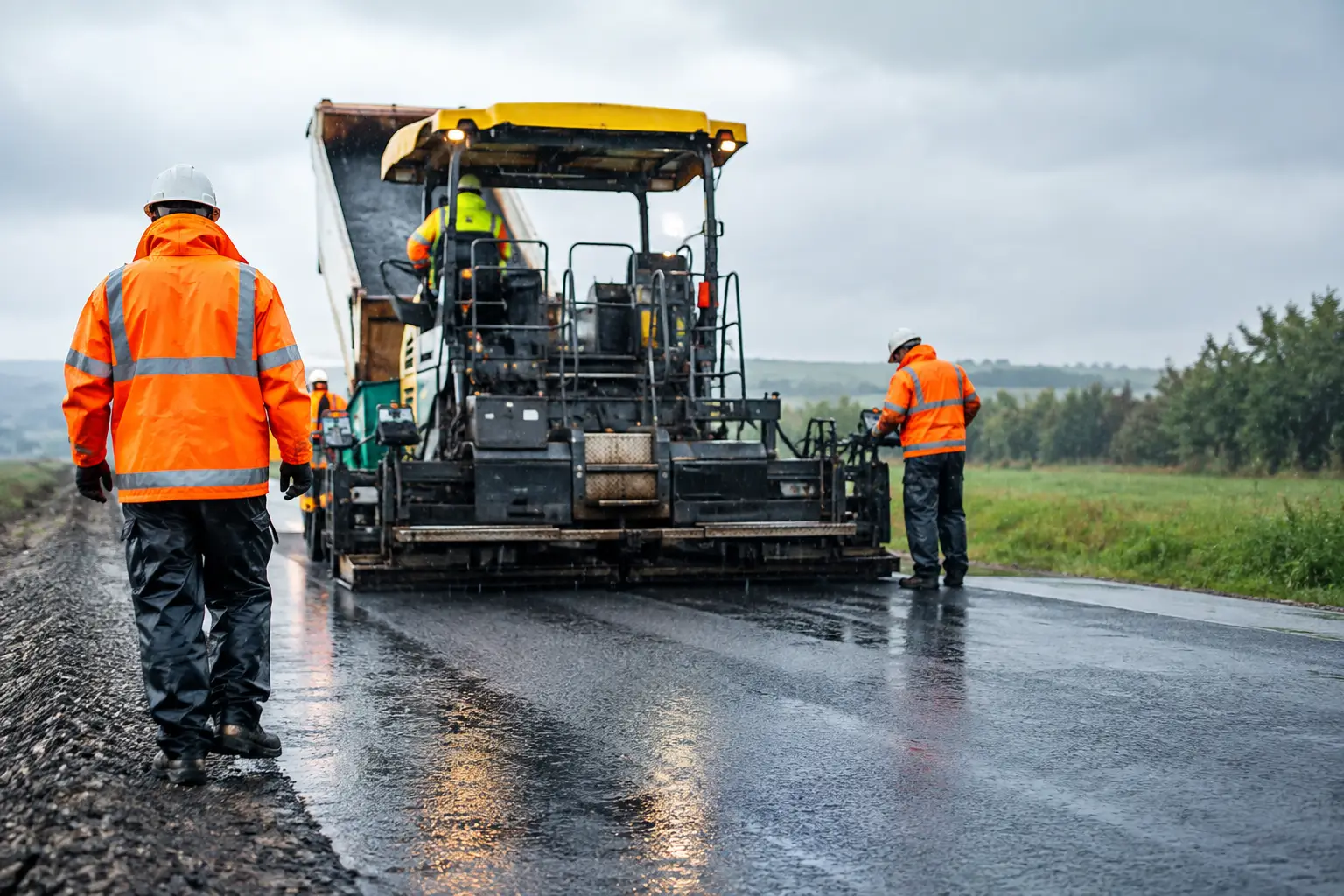
Tarmac Laying in Rain: When to Delay Work
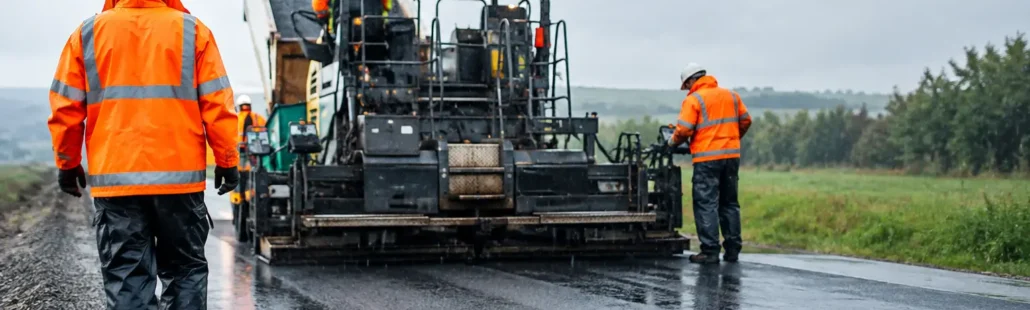
A shower arriving as the surfacing crew is due on site is frustrating, particularly when access, deliveries and other trades have been arranged. But tarmac laying in rain is not simply a question of whether the team can carry on. It is a decision that affects compaction, adhesion, drainage and the working life of the finished surface.
For a driveway, car park or access road, a professional contractor will assess the rain, the ground conditions and the temperature before committing to the work. A short, light shower does not always mean the job is lost. Persistent rain, standing water or a saturated base usually means postponing the surfacing is the right call.
Can tarmac be laid in rain?
Fresh tarmacadam is laid hot and needs to be spread, levelled and compacted before it cools. Rain can cool the material more quickly, making it harder to achieve the density needed for a strong, even finish. More importantly, water on the prepared base can interfere with the bond between layers and become trapped beneath the new surface.
The answer, therefore, depends on the conditions rather than the forecast alone. A light, brief shower may be manageable where the base is dry, the temperature is suitable and the crew can keep the area clear of water. In steady rain, or where water is pooling on the sub-base, laying should stop. Trying to force the job through is false economy.
There are occasions when urgent repairs need a temporary solution in poor weather, especially on busy commercial sites where a pothole or failed surface creates an immediate safety issue. That is different from laying a full, permanent wearing course. The permanent repair should be completed when the surface and weather conditions allow it to perform properly.
Why rain affects a newly laid surface
Tarmac is designed to resist water once it has been properly installed and compacted. During installation, however, moisture is a problem. The key risks are not always obvious on the day of the work.
Faster cooling and poor compaction
Hot asphalt has a limited window in which it can be rolled to the correct density. Cold rain and wet ground draw heat out of the material, shortening that window. If the tarmac cools before it is fully compacted, it can retain more air voids than it should.
This may leave the surface more vulnerable to water ingress, cracking and early wear. On a car park or access route that carries regular vehicle traffic, those weaknesses can appear far sooner than expected.
Water beneath the tarmac
Laying on a wet base can prevent proper adhesion between the new layer and the surface below. Any trapped water may also weaken the sub-base over time, particularly where drainage is already poor. Traffic then flexes the surface, allowing small cracks to develop and water to enter further.
In colder parts of the UK, repeated freezing and thawing can make this worse. Water expands as it freezes, putting pressure on the surrounding material and accelerating surface failure.
Poor levels and drainage
Rain makes it more difficult to see whether water is draining correctly while the work is underway. A finished surface needs the right falls so that water moves towards gullies, channels or suitable drainage points rather than sitting in low spots.
If standing water is present before laying, it can also hide soft areas in the base. Surfacing over those areas may leave a driveway or roadway looking sound initially, only for dips and rutting to develop once vehicles begin using it.
When should a surfacing job be postponed?
A reliable contractor does not make this decision based on appearances alone. They look at the whole construction, from the prepared foundation to the material temperature and expected rainfall over the laying period.
Work will normally be delayed where there is persistent rainfall, water lying on the base, soft or saturated ground, or temperatures that are too low for the specified material and compaction process. Heavy rain during the critical laying and rolling stage is a clear reason to stop.
The timing matters too. If rain is forecast shortly after the tarmac is due to be laid, the crew will consider whether the material can be fully compacted and allowed to stabilise first. A surface that has already been properly rolled is in a far better position to cope with a passing shower than material that is still being spread.
For larger projects, weather planning should begin before plant and materials arrive. The programme may be arranged in sections so that prepared areas are not left exposed unnecessarily, and so that the team can make the best use of a dry working window.
Preparing properly makes the difference
Good surfacing work is not just about the visible black top layer. The foundation beneath it carries the load, manages moisture and helps the surface stay level. If that foundation is weak or wet, even high-quality tarmac will not deliver the expected lifespan.
Before laying begins, the base should be stable, correctly compacted and free from standing water. Existing drainage issues should be dealt with rather than covered over. Depending on the site, this could mean repairing gullies, installing drainage channels, adjusting levels or rebuilding failed areas of the sub-base.
The material also needs to arrive at the right temperature and be laid efficiently. That requires suitable equipment, experienced operatives and a clear plan for lorry movements, access and rolling. On residential driveways, space can be tight. On commercial sites, the priority may be maintaining safe vehicle and pedestrian routes. In both cases, preparation reduces avoidable delays when the weather changes.
What to expect if rain interrupts the work
If rain starts while tarmac is being laid, the crew should assess the site immediately. They may complete a small section that is already being compacted if conditions remain safe and the material can still be finished to standard. They should not continue spreading new material onto a wet surface simply to avoid a return visit.
The affected area may need to be protected, cleaned and allowed to dry before work restarts. Where rain has damaged an unfinished section or compromised the base, it may need further preparation before the next laying attempt. This can be inconvenient, but it is better than accepting a surface with an avoidable weak point.
Customers should also be aware that a rescheduled date is not necessarily a sign of poor organisation. In Scotland and North England, changeable weather is part of practical site management. A contractor who is prepared to delay the final layer is protecting the quality of the work and the value of your investment.
Planning a driveway or commercial surfacing project
Weather cannot be controlled, but it can be managed. If you are arranging a new driveway, car park resurfacing or road repair, allow some flexibility around the intended installation date. Avoid booking follow-on works, such as line marking, gates or landscaping, so tightly that there is pressure to lay in unsuitable conditions.
Ask how the contractor will check the base, manage drainage and deal with poor weather. The right answer should be clear: the work will proceed when conditions support a durable result, and it will be rescheduled when they do not. You should also receive clear advice on when vehicles can use the new surface, as this varies with the material, thickness, weather and type of traffic.
EB Road Surfacing plans every job around site conditions as well as programme requirements. For domestic and commercial customers, that means straightforward advice, suitable preparation and a finished surface designed to handle regular use rather than merely look good on completion day.
A dry, stable base and a proper compaction window are worth waiting for. When the rain clears, the aim is not to make up time at any cost, but to lay tarmac that remains safe, tidy and dependable for years to come.