Asphalt vs Block Paving for Drives and Car Parks
A driveway can look smart on the day it is laid and still be the wrong choice five winters later. In the asphalt vs block paving decision, the best surface is not simply the one with the lowest initial quote or the most decorative finish. It is the one that suits the traffic using it, the ground beneath it, drainage requirements and the level of upkeep the site can realistically receive.
For homeowners, the choice often comes down to appearance, budget and how quickly the drive can be used. For commercial sites, car parks and access roads, load weight, turning movements, safety and downtime tend to matter more. Both materials have a place, but they perform very differently.
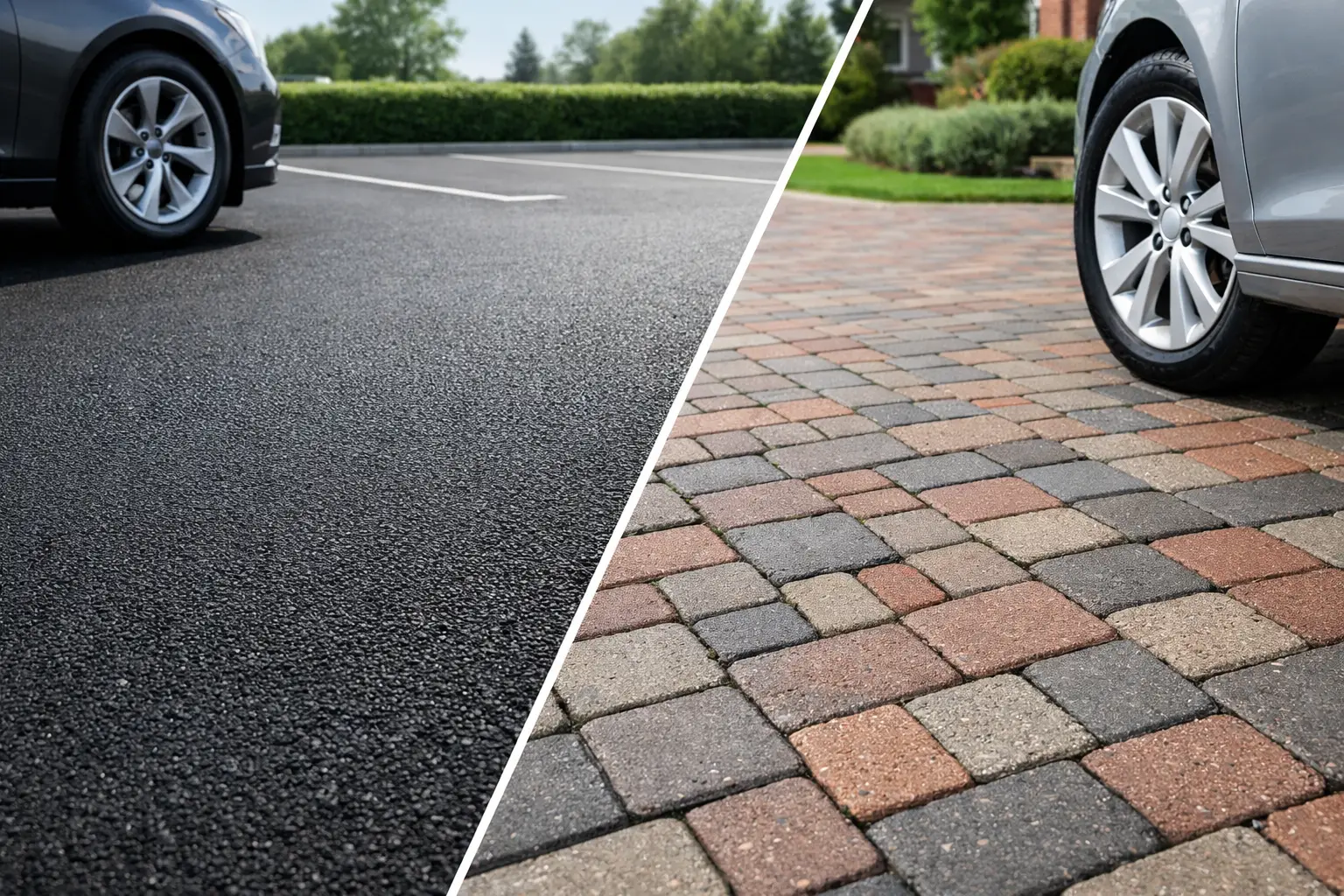
Asphalt vs Block Paving: the Main Difference
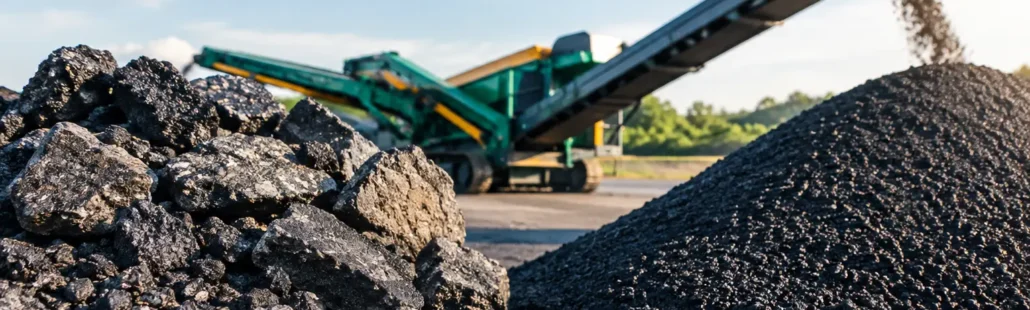
Asphalt creates a continuous, flexible surface. It is laid hot, compacted with specialist machinery and finished as a smooth expanse with no joints across the main surface. This makes it particularly effective for vehicle routes, larger driveways, private roads and car parks where a clean, practical finish is needed.
Block paving is made from individual concrete or clay blocks laid on a prepared bedding layer, normally with jointing sand between them. It offers more choice in colour, pattern and edging detail, which is why it remains popular for domestic driveways, paths, courtyards and entrance areas.
The visible difference is obvious, but the structural difference matters more. Asphalt spreads vehicle loads over a continuous surface, while block paving relies on interlocking units, sound edge restraints and a stable sub-base. Poor preparation will shorten the life of either surface, regardless of how good it looks at completion.
When Asphalt Is the Better Choice
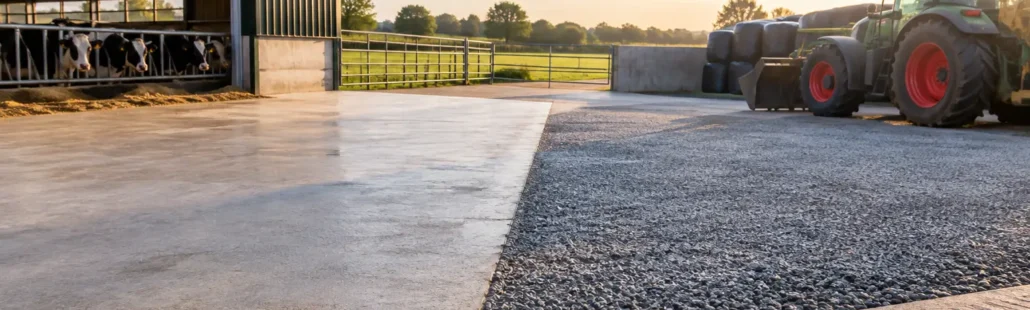
Asphalt is usually the practical option where vehicles are frequent, heavy or unpredictable. It suits car parks, farm and commercial yards, access roads, service areas and long driveways particularly well. A properly designed and laid asphalt surface is hard-wearing, smooth to drive over and straightforward to maintain.
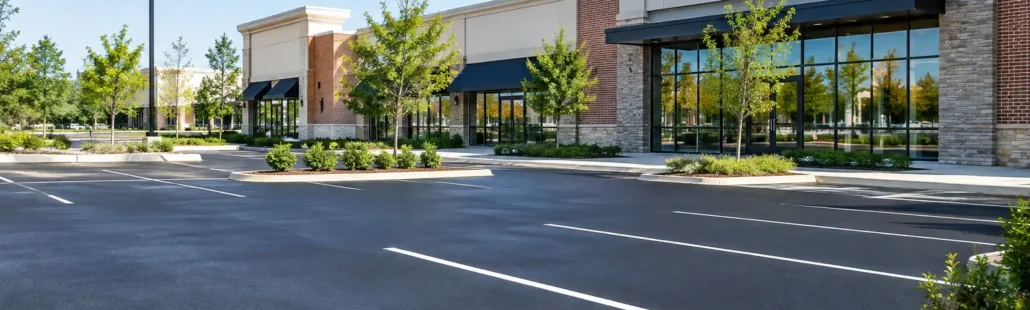
Because it has no paver joints, asphalt gives weeds fewer places to establish themselves. It also makes sweeping, line marking and general cleaning simpler, which is useful for managed sites. A smooth black surface can create a neat, professional appearance around offices, retail premises, industrial units and shared residential parking areas.
Speed is another advantage. Once the groundwork is complete, larger asphalt areas can generally be laid far more quickly than an equivalent block paved area. That helps minimise disruption where vehicle access needs to be restored promptly. The exact time before use depends on weather, thickness and site conditions, but an experienced contractor can plan the work around access needs.
Asphalt is not automatically the cheapest option for every job. Small, awkward areas can be less economical because they still require plant, skilled labour and careful handwork around edges, covers and thresholds. It can also soften in extreme heat and may mark under concentrated loads, such as skips, trailer jockey wheels or static HGVs, if the design is not suitable for the use.
For commercial traffic, surface thickness and the foundation below it must be specified for the anticipated loading. A domestic driveway construction should not simply be copied for a delivery yard or access route used by refuse vehicles.
Where Block Paving Has the Advantage
Block paving is often chosen because it gives property owners greater control over appearance. There are many block sizes, laying patterns, colours and border options available. A well-designed block paved driveway can complement brickwork, stone features or period properties in a way that plain asphalt may not.
It is also useful where small sections may need lifting later. If access is required to underground services, individual blocks can be removed and relaid, provided the sub-base has not been disturbed. Damaged blocks can be replaced without resurfacing the whole driveway.
That does not mean block paving is maintenance-free. The joints need to remain properly filled, edge restraints must hold firm, and regular cleaning may be needed to prevent moss, algae and weeds from spoiling the finish. On shaded or damp sites, this is a practical consideration rather than a minor cosmetic issue, as a slippery surface can affect safe access.
Block paving can also move or sink where the ground preparation is inadequate, drainage is poor or vehicles regularly turn their wheels while stationary. This is commonly seen at entrances, tight turning areas and parking bays. Repairing local settlement is possible, but it involves lifting blocks, correcting the base and relaying the area properly. Simply adding more sand on top will not solve a failed foundation.
Cost Depends on More Than the Surface
Comparing quotes solely by price per square metre can lead to a poor decision. The material is only one part of the job. Excavation depth, spoil removal, sub-base thickness, kerbs or edge restraints, drainage channels, manhole adjustments and access restrictions can all have a greater impact on price than the final surface itself.
Asphalt often offers better value across larger, straightforward areas because installation is efficient and the finish is continuous. Block paving can be more labour-intensive, especially when a detailed pattern, contrasting borders, curves or numerous cuts are involved. For a small front driveway, however, the visual value of paving may justify the extra cost.
A reliable quote should explain the preparation work, not just state a finished surface. The base is what carries the load and controls long-term movement. If a price seems unusually low, ask what depth of excavation is included, how the sub-base will be compacted, where water will drain and whether edging is allowed for.
Drainage Must Be Considered at the Start
Water is one of the main reasons surfacing fails prematurely. Standing water can weaken the foundation, encourage frost damage and leave algae on the surface. In the UK, drainage also needs to be considered carefully when changing a front garden or driveway area.
Standard asphalt is impermeable, so falls, channels, gullies or other suitable drainage arrangements may be required to prevent water running towards a building, pavement or public road. Permeable asphalt systems are available for suitable applications, but they need the right construction beneath them to store and release water effectively.
Block paving can be installed as a conventional sealed surface or as a permeable system. Permeable block paving uses specially designed blocks and open joints, allowing water to pass through into a graded sub-base below. It is not simply a matter of leaving wider gaps between ordinary blocks. The system must be designed and installed correctly if it is to manage rainfall and remain stable.
The right option depends on the site. Ground conditions, levels, local drainage routes, nearby buildings and the size of the paved area all need assessing before work begins.
Lifespan, Repairs and Day-to-Day Maintenance
A well-laid asphalt surface can provide many years of reliable service, particularly when it is kept clear of standing water and repaired before small cracks develop into larger defects. Local patch repairs are possible, and larger worn areas can be resurfaced without rebuilding everything if the underlying base remains sound.
Block paving can also last for many years, but its appearance and stability depend more visibly on maintenance. Re-sanding joints, cleaning the surface and dealing with early movement will help preserve it. Stains from oil, tyre marks and organic growth can be more noticeable on lighter coloured blocks than on asphalt.
Neither material should be judged only by its stated lifespan. A correctly installed surface with a suitable base will usually outperform a premium finish laid over poor preparation. This is why site assessment, excavation and compaction should be treated as essential parts of the job, not optional extras.
Choosing for a Driveway, Car Park or Access Road
For a typical domestic driveway with a strong focus on kerb appeal, block paving may be the better fit, especially where the area is modest and the property has architectural features worth matching. It can deliver an attractive, individual finish, provided the owner is comfortable with periodic cleaning and joint maintenance.
For a long driveway, shared access, car park or working area, asphalt is often the more sensible choice. It provides a smooth, durable surface that handles regular vehicle use well and can be installed efficiently over larger areas. It is also easier to integrate with road markings, speed humps and practical traffic management features where needed.
Some projects benefit from both. Asphalt can form the main vehicle area, with block paving used for entrance aprons, paths, borders or feature sections. This approach keeps the high-traffic areas practical while adding detail where it has the most visual impact.
Before committing to either finish, consider how the area will be used on an ordinary wet weekday, not just how it will look when new. The right surface should keep vehicles moving, water controlled and maintenance manageable for years to come.