8 Best Car Park Safety Upgrades
A car park rarely gets attention until something goes wrong. A slip on a worn pedestrian route, a minor collision at a blind corner, or confusion caused by faded bay markings can quickly turn an everyday space into a liability. The best car park safety upgrades deal with those risks before they become complaints, claims, or avoidable repair costs.
For site managers, landlords, schools, retail premises and commercial property owners, the challenge is usually the same. You need a car park that is safe, clear to use, durable under traffic, and presentable enough to reflect well on the site. That does not always mean a full rebuild. In many cases, the right combination of targeted improvements makes a clear difference without unnecessary disruption.
What makes the best car park safety upgrades worth doing
The strongest upgrades improve more than one problem at once. Good surfacing reduces trip hazards and standing water. Clear markings improve traffic flow and help drivers make decisions earlier. Better lighting supports both pedestrian safety and security. When each part works together, the whole site becomes easier to use.
That matters because car park accidents are often caused by a mix of small failures rather than one major defect. Poor drainage, faded arrows, weak lighting and surface wear can all combine to create confusion or risk. Fixing one issue helps, but fixing the right group of issues gives you a more reliable result.
Resurfacing damaged areas
If the surface is breaking up, no amount of paint will solve the underlying problem. Cracks, potholes, fretting edges and uneven levels all increase risk for vehicles and pedestrians. They also allow water to get into the structure, which tends to make the damage spread faster in colder weather.
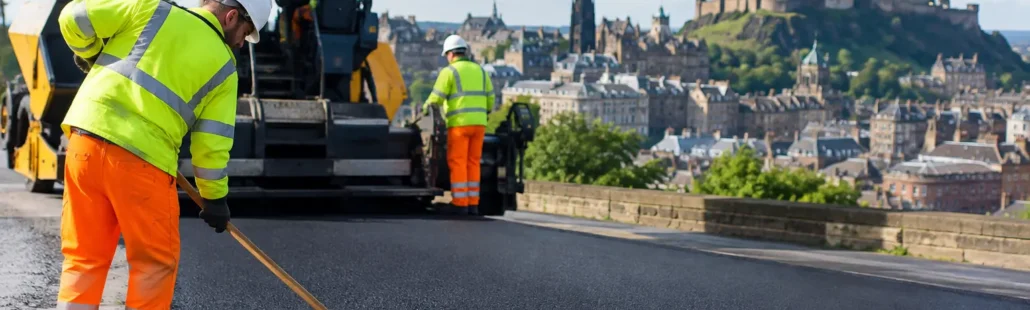
A professional resurfacing upgrade is often one of the best long-term investments in car park safety. It restores a sound running surface, removes defects that can cause trips or vehicle damage, and creates a clean base for fresh markings. For busy commercial sites, resurfacing can also improve drainage falls and remove isolated patchwork that has built up over time.
The extent of work depends on condition. Some sites only need localised repairs and overlay work. Others are better served by more substantial resurfacing if the existing construction has failed. The right answer comes down to traffic levels, drainage performance and how far the damage has progressed.
Repainting line markings and traffic guidance
One of the simplest safety upgrades is also one of the most overlooked. If drivers cannot immediately see where to go, how to park, or where pedestrians are meant to cross, hesitation and mistakes become more likely.
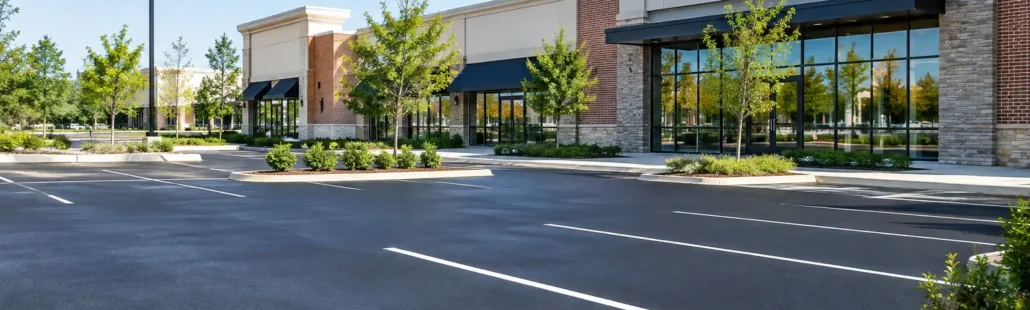
Fresh line marking improves order straight away. Clearly defined bays reduce poor parking and wasted space. Directional arrows support safer circulation. Marked pedestrian walkways help separate foot traffic from vehicles. Loading areas, disabled bays, hatched zones and keep-clear markings also make the site easier to manage.
This is especially important in car parks that have evolved over time. A layout that made sense years ago may no longer suit current traffic levels or vehicle sizes. Re-marking gives you a chance to correct layout issues rather than simply repaint what was there before.
Improving drainage to prevent standing water
Standing water is not just untidy. It creates slip risks, hides potholes, encourages surface deterioration and can freeze in winter. In a poorly drained car park, even a relatively sound surface can become hazardous during wet or cold conditions.
Drainage improvements are one of the best car park safety upgrades when water is collecting in wheel paths, pedestrian routes or bay entrances. The solution might involve regrading isolated areas, repairing channels, installing additional gullies, or resurfacing to correct levels. What matters is identifying why the water is sitting there in the first place.
There is a cost trade-off here. Minor drainage defects can sometimes be handled with localised work, but recurring water problems often point to a larger issue with falls or outlet capacity. Cheaper short-term fixes may need repeating if the root cause is left in place.
Upgrading lighting for visibility and confidence
A car park can look acceptable in daylight and still be unsafe after dark. Poor lighting affects driver reaction times, pedestrian visibility and general confidence in using the site. It can also make surface defects and markings harder to spot, which undermines other safety measures already in place.
Lighting upgrades improve safety in practical ways. Drivers can read signs and arrows sooner. Pedestrians are easier to see when moving between bays and pathways. Cameras, if fitted, are more effective. The car park simply feels more controlled and easier to use.
The best approach depends on the setting. A retail or healthcare site may need strong, even coverage across all routes. A private residential car park may only need targeted improvements around entrances, crossings and pedestrian areas. There is no value in over-lighting a site, but under-lighting often proves costly in other ways.
Installing speed control measures where needed
Not every car park needs speed bumps, but some clearly benefit from traffic calming. Long straight runs, mixed pedestrian use and poor driver behaviour can all justify physical speed reduction measures.
Speed ramps, raised tables and other traffic calming features work best when they are part of a wider layout, not added as an afterthought. They should be clearly marked, properly signed and positioned where they support sightlines and crossings. If badly placed, they can frustrate drivers without delivering much safety benefit.
This is a good example of where balance matters. Too many calming measures can make service access awkward and create noise concerns, particularly in residential settings. Too few may leave obvious risk points unchecked. A practical site assessment usually makes the right level of intervention clear.
Adding or improving pedestrian routes
Pedestrian safety is often where car parks fall short. People naturally take the shortest route to an entrance, even if the layout does not guide them properly. If there is no marked walkway, no crossing point and no clear separation from vehicles, conflict is almost guaranteed.
Creating dedicated pedestrian routes helps users move through the site with less uncertainty. Marked walkways, anti-slip surfacing in key locations, dropped kerbs and safer crossing points all improve usability. This is particularly valuable for schools, public buildings, retail parks and sites with frequent foot traffic from elderly or mobility-impaired users.
A well-planned pedestrian route also improves driver behaviour. When crossings and walkways are obvious, motorists are more likely to anticipate people on foot and reduce speed accordingly.
Updating signage and site information
Signage is not the first thing most people think of when planning safety work, but poor signs create hesitation and poor decisions. Entry and exit confusion, unclear one-way systems and missing warnings at height restrictions or delivery areas all increase risk.
Clear, well-positioned signs support the rest of the car park layout. They should be readable at the right distance, placed where decisions are made, and consistent with line markings on the ground. If signs and surface markings conflict, users will usually follow whichever they notice first, and that inconsistency causes problems.
For larger commercial sites, simple wayfinding can also reduce congestion. If drivers can identify short-stay areas, staff parking, delivery zones and pedestrian routes without stopping to work it out, the whole site runs more safely.
Using high-friction or anti-slip finishes in risk areas
Some parts of a car park need more grip than others. Ramps, sharp turns, pedestrian crossings, payment areas and shaded spots that stay damp for longer are common examples. In these areas, a standard finish may not offer enough traction in wet or icy conditions.
High-friction or anti-slip surfacing can be a smart targeted upgrade. It is particularly useful where vehicles brake or turn, and where pedestrians are likely to cross in poor weather. The key is to use it where it adds real value rather than applying it everywhere for the sake of it.
As with any specialist finish, durability and maintenance should be considered. The right product depends on traffic volume, exposure and the condition of the underlying surface.
Choosing the right upgrades for your site
The best car park safety upgrades are not always the most expensive ones. They are the ones that deal with the actual risks on your site, in the right order. A school drop-off zone has different priorities from an industrial yard. A small private car park may need drainage and markings, while a larger commercial site may require resurfacing, lighting and pedestrian segregation.
That is why a practical inspection matters. It helps you separate cosmetic issues from genuine safety concerns and invest where it counts. In many cases, phased works are the most sensible route. You can address urgent defects first, then schedule longer-term improvements around budget and site use.
For property owners and managers, the main goal is straightforward. Make the car park safer, easier to use and more durable without creating unnecessary cost or disruption. Done properly, these upgrades reduce day-to-day risk and help the site perform better over time.
If your car park is showing signs of wear, confusion or recurring maintenance issues, that is usually the right moment to act. Small defects have a habit of becoming bigger jobs when they are left too long.