Choosing a Pothole Repair Company
A pothole rarely starts as a major problem. It begins as a small weakness in the surface, then traffic, rain and frost do the rest. Before long, what looked minor turns into a safety risk, a vehicle hazard and a surface that keeps breaking down. That is usually the point where calling a pothole repair company stops being a maintenance decision and becomes an urgent one.
For site managers, landlords, commercial property owners and homeowners alike, the challenge is not just getting the hole filled. It is getting it repaired properly, with the right materials, the right preparation and a finish that holds up under real use. A quick patch can look acceptable for a few weeks. A proper repair is designed to last.
What a pothole repair company should actually do
There is a big difference between covering a defect and repairing it. A professional pothole repair company should assess why the surface failed in the first place, not just treat the visible damage. That matters because potholes often point to wider issues such as poor drainage, surface fatigue, weak sub-base areas or repeated traffic stress.
On a domestic driveway, the cause may be edge breakdown, water ingress or years of wear. On a commercial road or car park, it could be heavy vehicle loading, braking points, turning areas or neglected maintenance. The repair method should reflect that. If the underlying issue is ignored, the same section is likely to fail again.
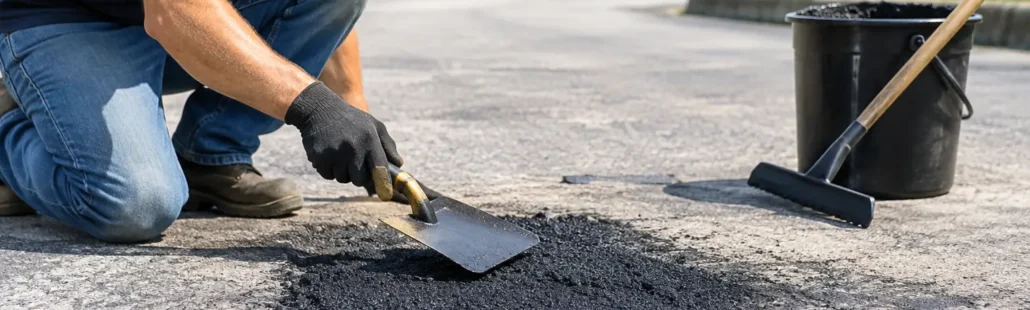
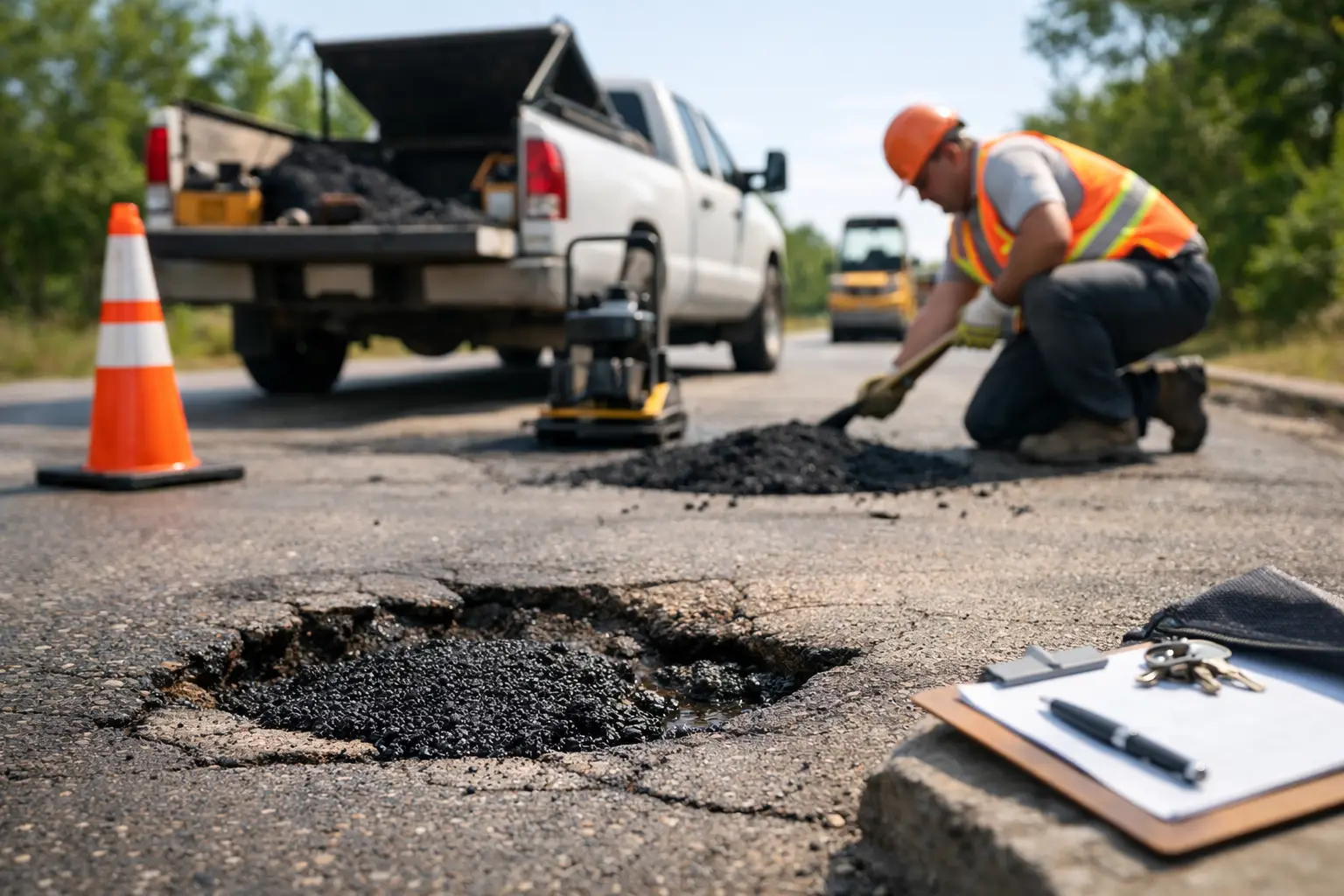
A dependable contractor will normally cut out the damaged area to form clean edges, remove loose material, prepare the base, apply the appropriate bonding treatment and lay suitable asphalt or tarmac to the correct level. The repaired area should then be compacted properly so it ties into the surrounding surface and does not leave a weak joint behind.
Why cheap pothole repairs often cost more
Price matters, especially when you are responsible for multiple surfaces or working within a maintenance budget. But the cheapest quote is not always the most economical option. A low-cost repair that fails quickly can lead to repeated call-outs, more disruption and larger resurfacing costs later on.
This is especially true in busy car parks, private access roads, industrial yards and delivery areas. If the repair is not built for the level of traffic using it, it will not hold. What looks like a saving on day one can become a more expensive problem within months.
That does not mean every pothole needs a large-scale resurfacing job. In many cases, a well-planned localised repair is the right answer. The key is honesty from the contractor. You want a company that can tell you when a patch repair is sensible and when the surrounding surface is too far gone for isolated fixes to be worthwhile.
Signs you need more than a temporary patch
Some potholes can be repaired cleanly and effectively as standalone defects. Others are a warning sign that the wider surface is reaching the end of its serviceable life. If the area has multiple potholes, widespread cracking, crumbling edges or pooling water, the issue may be broader than one hole in one spot.
Repeated failures in the same location are another red flag. If a section has been patched more than once and keeps breaking down, there is usually a structural reason behind it. The surface may be too thin, the base may be compromised, or water may be getting beneath the top layer.
A good pothole repair company should be able to explain that clearly. You do not need overcomplicated technical language. You need a straightforward assessment of what is failing, what can be repaired now and what may need planned resurfacing later.
What to look for when choosing a pothole repair company
Experience matters, but relevant experience matters more. A contractor that handles both public-facing road repairs and private surfacing work is often better placed to deal with different environments, from driveways and farm roads to retail parks and commercial estates. The repair approach for each can differ depending on traffic, access, appearance and budget.
You should also look for clear signs of reliability. Insurance, guaranteed workmanship, current equipment and a practical quote process all matter. So does responsiveness. When a pothole creates a trip risk or a vehicle hazard, waiting days for a reply is not ideal.
It also helps to choose a company that can manage related work if needed. Potholes are often part of a larger maintenance picture. If the site also needs resurfacing, drainage attention, road marking or edge repairs, dealing with one capable contractor is usually simpler than coordinating several.
For clients managing sites across Scotland or northern England, regional coverage can make a real difference. The ability to send a team to areas such as Glasgow, Edinburgh, Aberdeen, Newcastle or Manchester without unnecessary delay is valuable when defects need quick attention.
How proper pothole repairs are carried out
The repair process should suit the size of the defect, the condition of the surrounding surface and how the area is used. A sound contractor will not take a one-size-fits-all approach because not every pothole fails for the same reason.
In many cases, the first step is cutting out the damaged section. This creates a defined repair area with solid edges. Simply throwing material into a loose pothole is rarely enough for a durable result. The weak material has to come out first.
Next comes base preparation. If the lower layers are soft, wet or unstable, the repair will only be as strong as what sits underneath it. Once the area is prepared, the correct material is laid and compacted. Levels matter here. The repair should finish flush with the surrounding surface so water does not sit in the repaired section and traffic does not strike a raised or sunken patch.
For some jobs, especially where defects are widespread, it may be more effective to repair a larger section rather than several individual holes. This can improve durability and appearance while reducing the number of joints where future water ingress can start.
Domestic and commercial pothole repairs are not the same job
A homeowner with a broken driveway and a facilities manager dealing with a deteriorating access road are both looking for a safe, tidy and durable finish. Even so, the repair priorities are different.
Domestic customers often care about appearance as much as performance. The repaired area needs to be neat and practical, but it also has to sit well within the existing driveway. Commercial clients are usually more focused on speed, traffic management, safety risk and long-term resilience under heavier use.
That is why it helps to use a contractor that understands both settings. A family-run surfacing business with experience across domestic and commercial work can usually give clearer advice on what is necessary and what is not. At EB Road Surfacing, that practical approach is central to how jobs are priced and delivered.
Questions worth asking before you hire
Before agreeing to any work, ask how the company intends to repair the pothole, what material will be used and whether the surrounding area has also been checked. Ask whether the repair is expected to be a long-term fix or a short-term measure, and make sure you understand why.
You should also ask about access, downtime and weather sensitivity. Some repairs can be completed quickly with minimal disruption. Others may need a larger working area or a longer curing period depending on the material and site conditions.
Most importantly, ask whether repairing the pothole alone is the right option. A trustworthy contractor will not oversell, but they should not undersell either. If the whole section is failing, you are better off hearing that upfront than paying for a repair that is unlikely to last.
Why timing matters with potholes
Potholes do not improve with use. Every vehicle passing over them drives water deeper, loosens more material and widens the damaged area. What could have been handled with a straightforward repair can become a larger and more costly job if it is left too long.
That applies just as much to private roads and driveways as it does to commercial estates. Delays increase liability, reduce kerb appeal and make the surface harder to manage. Acting early usually gives you more repair options and a better chance of keeping costs under control.
If you are choosing a pothole repair company, the right decision is rarely the one that promises the fastest patch at the lowest figure. It is the contractor that gives you a clear assessment, turns up when agreed and repairs the surface in a way that makes sense for how it is actually used. A sound repair should leave you with fewer worries, not a date for the next failure.