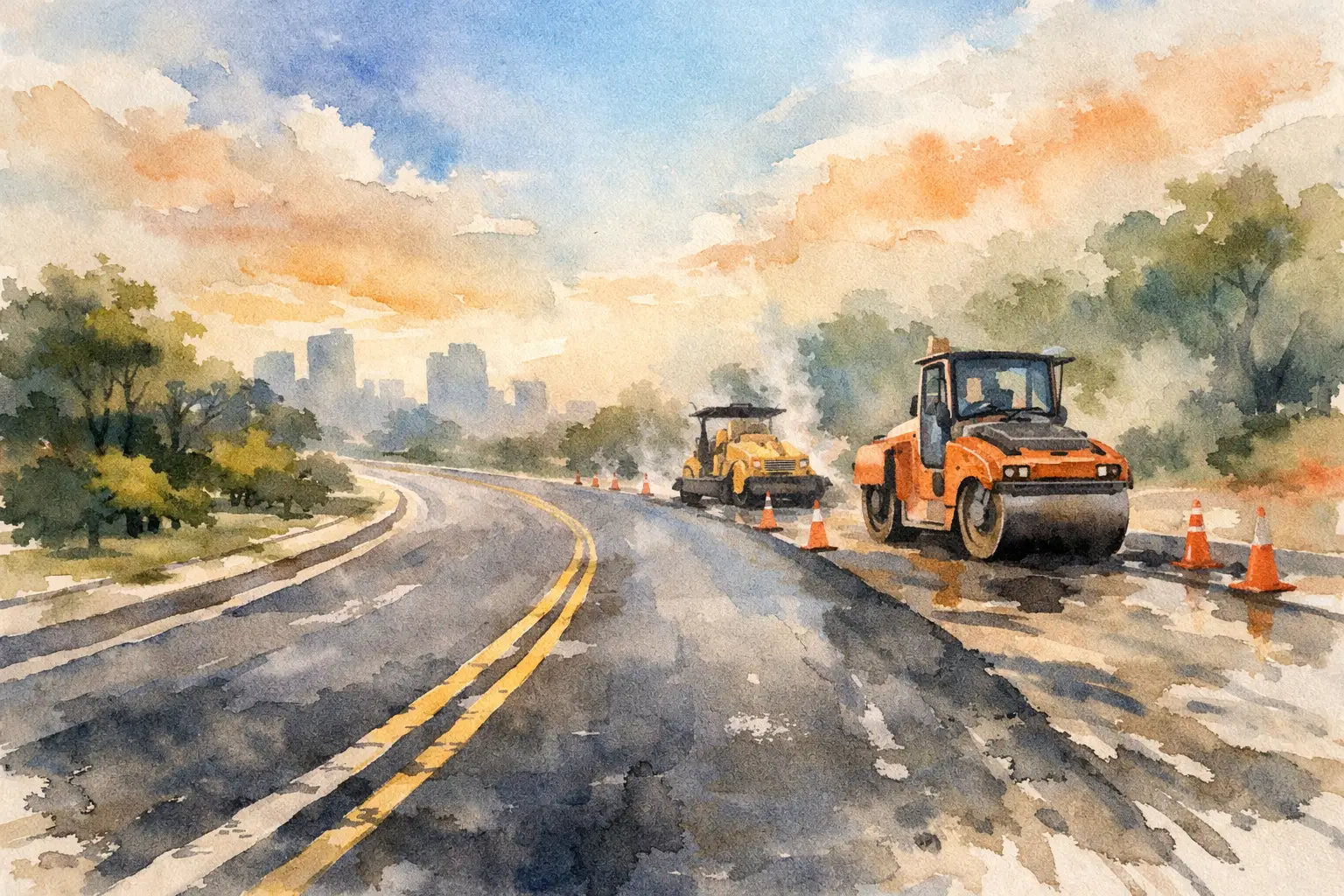
A Guide to Commercial Road Surfacing
When a road, yard or car park starts failing, the signs show up quickly – standing water, loose aggregate, cracking, potholes and complaints from drivers or site users. A proper guide to commercial road surfacing starts with one practical point: the right surface is not just about appearance. It affects safety, drainage, traffic flow, maintenance costs and how long the area stays serviceable.
For commercial sites, the wrong choice can be expensive twice over. You pay once for the work, then again when poor preparation, unsuitable materials or rushed installation lead to early repairs. Whether you manage an industrial estate, retail park, school access road, farm lane, depot or private business premises, good surfacing work should solve the problem properly, not just cover it up.
What commercial road surfacing actually includes
Commercial road surfacing covers more than laying a fresh top layer of tarmac. In most cases, the finished surface is only one part of the job. The real performance comes from the build-up beneath it, the condition of the existing base, the drainage arrangement, edge support and how the road is expected to be used day to day.
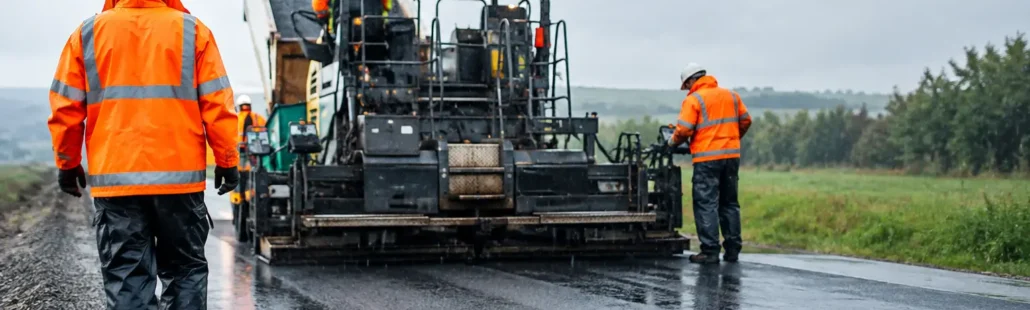
That means a commercial surfacing project might involve excavation, base repairs, resurfacing, patching, kerbing adjustments, ironwork level changes, line marking and drainage improvements. On one site, a full reconstruction may be necessary. On another, targeted repairs and an overlay may be the more sensible option. It depends on the condition of the road and what the surface needs to withstand.
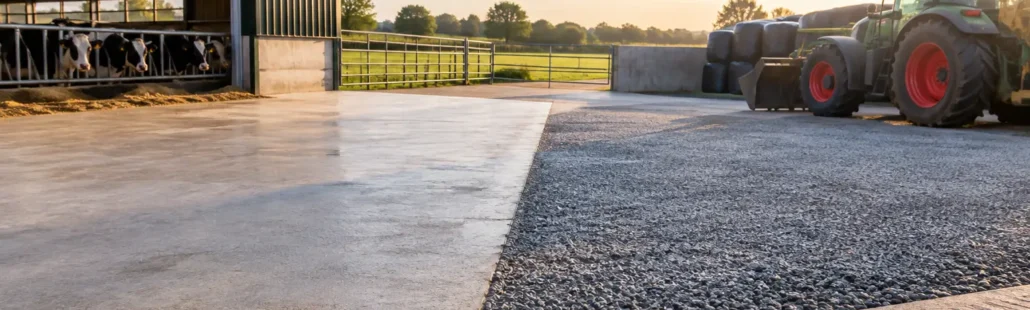
HGV traffic, frequent turning movements and heavy point loading place very different demands on a surface compared with light car use. That is why a car park used by office staff should not be specified in the same way as a delivery yard or service road.
A practical guide to commercial road surfacing materials
In most commercial settings, asphalt and tarmacadam remain the main choices because they are durable, cost-effective and quick to install. They also suit a wide range of applications, from access roads and forecourts to car parks and loading areas.
Dense asphalt tends to be chosen where a stronger, longer-lasting finish is needed under regular traffic. Tarmacadam can also perform very well, especially where a practical, reliable and competitively priced surface is the priority. Surface dressing has its place too, particularly for extending the life of existing roads that are structurally sound but showing signs of surface wear.
There is no single best option for every site. If the base has failed, a new wearing course alone will not fix the issue. If the surface is basically sound, full excavation may be unnecessary and poor value. The correct recommendation should reflect usage, condition and budget rather than a one-size-fits-all sales pitch.
Start with the existing condition, not the finish
One of the most common mistakes in commercial road surfacing is focusing on the final appearance before checking what is happening underneath. A newly laid surface can look excellent on completion but still fail early if the sub-base is weak, water is getting in, or previous damage has not been cut out and repaired correctly.
A proper site assessment should identify the cause of deterioration. Cracking may point to movement in the base. Potholes often indicate water ingress and surface breakdown. Rutting can suggest the surface is not designed for the weight or volume of traffic using it. If drainage falls are wrong, even a well-laid surface will struggle over time.
For site managers and property owners, this matters because the quote that looks cheapest at first may only deal with symptoms. Sound commercial surfacing work is about matching the repair method to the failure, not just getting black material on the ground quickly.
Drainage is not optional
If water sits on the surface, the road will deteriorate faster. It is that simple. Standing water increases the risk of skidding, weakens the structure over time and accelerates cracking and pothole formation, particularly through winter freeze-thaw cycles.
Any guide to commercial road surfacing should treat drainage as a core part of the project, not an extra. Falls need to direct water correctly. Gullies and channels need to be clear and set at the right level. In some cases, edge restraints, kerb lines or surrounding ground levels need adjustment so the new surface actually works once rain hits it.
This is especially important on larger sites across Scotland and the North of England, where weather conditions can be hard on poorly draining surfaces. A durable result depends as much on water control as it does on the surfacing material itself.
Full resurfacing or targeted repair?
Not every damaged road needs complete replacement. In some situations, localised patching, pothole repairs and surface restoration can safely extend service life at a much lower cost. This is often suitable where damage is limited to specific sections and the wider structure remains sound.
On the other hand, repeated patching can become false economy if defects are widespread. A surface covered in repairs may still look tired, perform poorly and create ongoing disruption. If the road is failing across multiple areas, full resurfacing may be the better long-term decision.
The trade-off usually comes down to budget, timing and expected lifespan. A short-term repair may be right if a site is due for redevelopment or major utility work. A full resurfacing scheme is more sensible where the road needs to perform reliably for years with minimal intervention.
How commercial surfacing work is planned properly
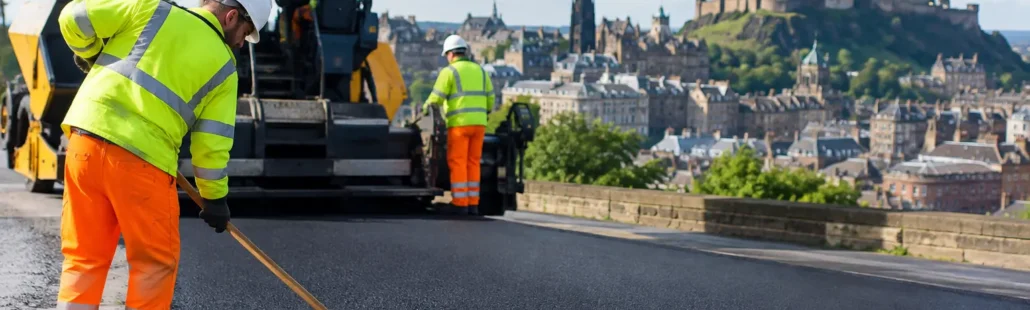
A good contractor will not just measure the area and send a price. Commercial road surfacing should be planned around access requirements, traffic management, working hours and how to keep the site operational during the works.
For busy premises, phasing is often key. Work may need to be completed in sections, outside peak hours or over weekends to reduce disruption. Deliveries, staff parking, emergency access and pedestrian routes all need consideration. If line marking is part of the job, that should be programmed so the area is handed back ready to use, not left half-finished.
This is where experience matters. Efficient delivery is not only about laying speed. It is about organising the work so the site remains safe, the programme stays realistic and the finished surface is ready for traffic when promised.
What affects cost
Commercial surfacing costs vary widely because the visible area is only one factor. Thickness specification, preparation works, excavation depth, drainage changes, edge repairs and access restrictions all influence the final price.
Small areas can sometimes cost more per square metre than larger straightforward schemes because plant, labour and set-up still need to be covered. Equally, a large site with poor access, heavy traffic requirements or extensive base failure may cost significantly more than expected if deeper reconstruction is required.
The cheapest quote is not always the best value. A fair price should reflect the right preparation, the correct material, suitable plant and a realistic programme. If one quote is much lower than the rest, it is worth checking exactly what has been excluded.
Compliance, safety and finish quality
Commercial clients are not only paying for a new surface. They are paying for a result that is safe, durable and fit for purpose. That includes proper levels, tidy joints, secure edges and a finish suitable for the intended traffic.
On many projects, road markings, bay layouts, directional arrows or safety markings form part of the overall outcome. For schools, retail sites, depots and shared access areas, these details are not cosmetic. They help manage vehicles and pedestrians safely.
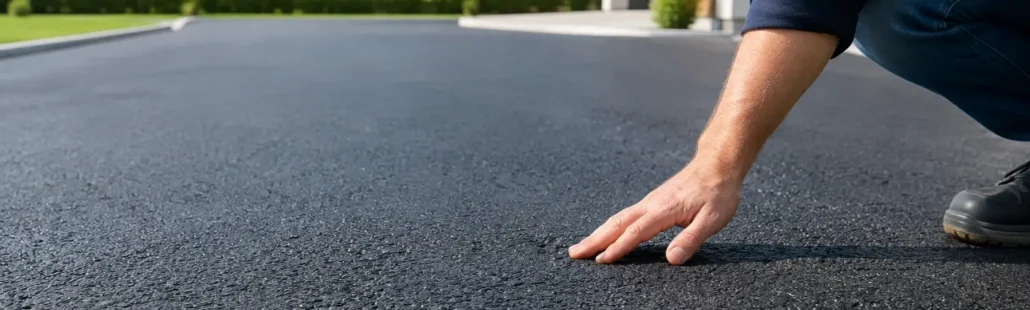
Workmanship also shows up in the details after completion. Poor compaction, weak joints and rushed edges tend to fail first. A surface should look clean and uniform, but more importantly it should perform well under traffic and weather.
Choosing the right contractor
If you are comparing contractors, ask practical questions. What preparation is included? Is the recommendation based on a site inspection? How will drainage be handled? Can the work be phased if needed? Is the workmanship insured and guaranteed?
Clear answers usually tell you a lot. Reliable contractors explain what is required, what is optional and where there are genuine choices on budget or specification. They should also be realistic. If a repair is only likely to offer a short extension of life, that should be said plainly.
For clients managing commercial properties, estates or access roads, the best contractor is not the one with the longest pitch. It is the one that understands the site, prices the work properly and completes it without unnecessary delay or disruption. That straightforward approach is exactly what businesses like EB Road Surfacing are built around.
A well-surfaced road does not need to be flashy. It needs to drain properly, carry traffic safely and hold up under daily use. If you start there, you are far more likely to get a surface that lasts and a project that feels like money well spent.