Hand Laid or Machine Laid Asphalt?
A surface can look fine on day one and still be the wrong choice for the job. That is usually where the question of hand laid or machine laid asphalt matters most – not as a sales phrase, but as a practical decision that affects finish, lifespan, cost and how quickly the area can be brought back into use.
For homeowners, site managers and commercial clients, the right method depends on the size of the area, the access available, the type of traffic it will carry and the finish expected. There is no one-size-fits-all answer. A small domestic driveway and a busy access road need different thinking, even if both are being surfaced with asphalt or tarmacadam.
Hand laid or machine laid – what is the difference?
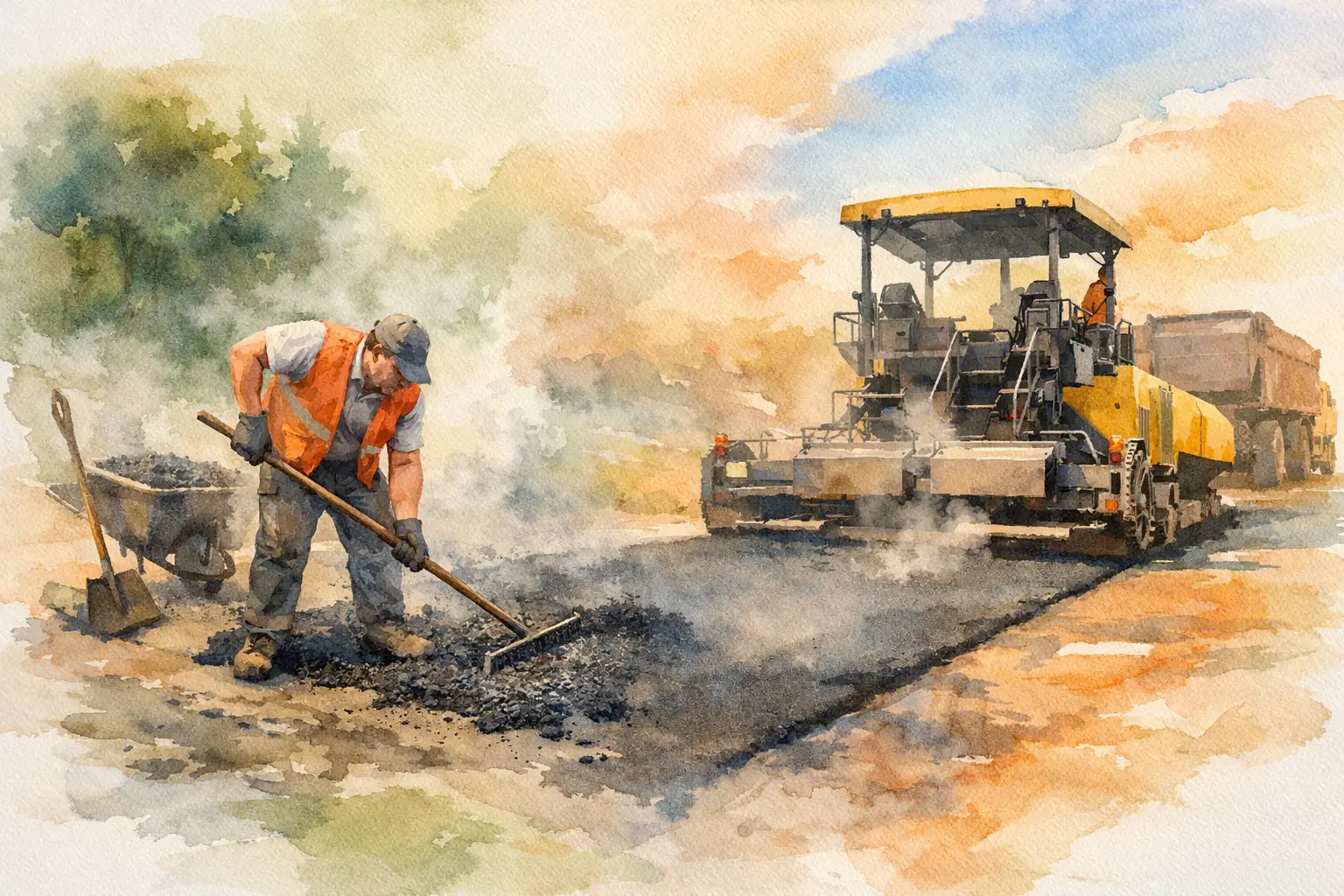
The basic difference is straightforward. Hand laying means the surfacing material is placed and spread manually by an experienced team using specialist hand tools, then compacted with the correct roller or plate compaction equipment. Machine laying uses a paving machine to lay the material at a more controlled depth and width before final compaction.
Both methods can produce a durable, professional finish when the groundwork is right and the job is carried out properly. The method itself is only part of the picture. Surface preparation, edge restraint, drainage, material choice and compaction standards all play a major role in how well the finished surface performs.
That said, the laying method does affect consistency, programme length and where the job can realistically be completed.
When hand laid surfacing makes more sense
Hand laying is often the better option on smaller or more awkward sites. If access is restricted, if the area has tight corners, complex shapes or multiple edges, or if there are obstacles such as manhole covers, gates, walls or parked structures close by, hand laying allows more control.
This is why hand laid asphalt is common on domestic driveways, footpaths, patch repairs, smaller private roads and localised resurfacing works. It is also useful where the area is too limited to justify bringing in a paving machine. On these jobs, a skilled gang can shape the material accurately and work around details without overcomplicating the programme.
There is also a cost point to consider. For a modest area, hand laying can be more economical simply because machine mobilisation may not be necessary. If the project is compact and access is simple enough for manual placement, the overhead of plant and set-up may not make financial sense.
The trade-off is that hand laying relies heavily on the experience of the operatives. Good results come from proper levels, even spreading and thorough compaction. In the right hands, that is not a problem. In the wrong hands, unevenness and weak spots can show up much sooner.
Typical jobs suited to hand laying
Hand laying is often well suited to small driveways, path connections, reinstatement works, pothole and patch repairs, small car park sections and areas with limited machinery access. It is particularly useful where flexibility on site matters more than speed across a large open area.
Where machine laid asphalt has the advantage
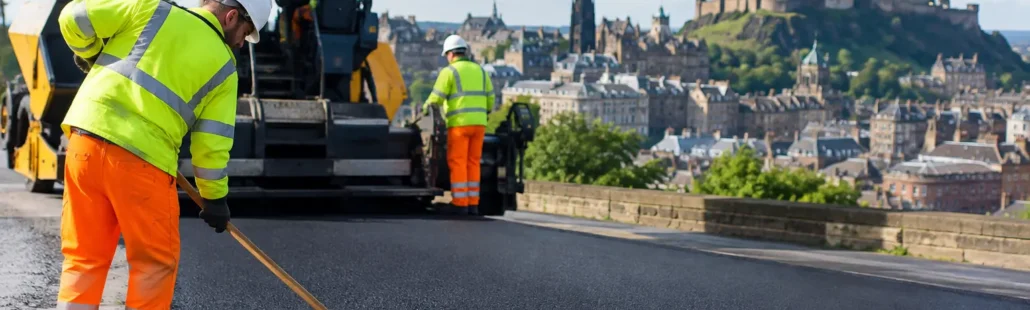
Machine laying comes into its own on larger, more open sites. Roads, car parks, forecourts, access routes and larger commercial yards benefit from the consistency that a paving machine can deliver. The machine lays material at a controlled width and depth, which helps create a more uniform finish over long runs.
For commercial and public-facing projects, that consistency matters. It supports better ride quality on roads, a neater appearance in car parks and more predictable surface levels across areas that need to drain properly. It also helps keep productivity high. A machine can cover ground much faster than a manual team, which can reduce disruption and shorten overall programme time.
On larger jobs, machine laying is often the more efficient option financially as well. Although plant costs are higher at the outset, the speed and output usually make it better value per square metre once the project reaches a certain size.
The limitation is access and space. A machine needs room to operate safely and effectively. If the site is narrow, enclosed or broken up by obstacles, machine laying may not be practical across the whole area. In some cases, the best result comes from using both methods on the same project – machine laying the main run and hand laying the difficult edges, tie-ins and smaller sections.
Finish quality – is machine laid always better?
Not automatically, but on wide open areas it often gives a more consistent finish. That is because the machine controls depth and placement more evenly over distance. On roads, car parks and long access lanes, this can make a visible difference.
Hand laid work can still achieve an excellent finish when completed by an experienced surfacing team. On smaller areas, the difference may be minimal to the untrained eye, especially if the sub-base is sound and the compaction is done properly. The problem is not that hand laying is poor. The problem is that it leaves more room for variation if the crew is rushed or inexperienced.
So the better question is not whether one method is always superior. It is whether the chosen method suits the area and whether the contractor has the skill and equipment to carry it out properly.
Cost, speed and disruption
For most clients, the decision between hand laid or machine laid work comes down to three practical points: budget, timescale and access.
Hand laying can be cheaper on smaller jobs, especially where the site would be awkward for machinery anyway. It also works well for repair-led projects where only part of a surface is being replaced. The downside is that production is slower over larger areas, and finish consistency can vary more if the site is extensive.
Machine laying usually means faster progress and better uniformity across larger spaces. That can reduce labour time on site and help commercial premises reopen sooner. On a live site, that reduced disruption can be just as valuable as the surface itself. However, for very small schemes, machine costs may outweigh the benefit.
For clients managing schools, industrial sites, retail areas or shared access roads, programme planning matters. A surface that is laid quickly and reopened on time reduces inconvenience and keeps operations moving.
Choosing the right method for roads, car parks and driveways
Roads and access routes
Machine laying is usually the preferred option for roads and longer access routes because it provides a more even finish and supports efficient progress over larger distances. If traffic volumes are higher or the route is regularly used by heavier vehicles, consistency in depth and compaction becomes even more important.
Car parks and commercial yards
Large car parks and yards are generally better suited to machine laying, particularly where line marking, drainage falls and presentation matter. Smaller parking areas or sections with awkward geometry may still be hand laid where access is restricted.
Driveways and private surfaces
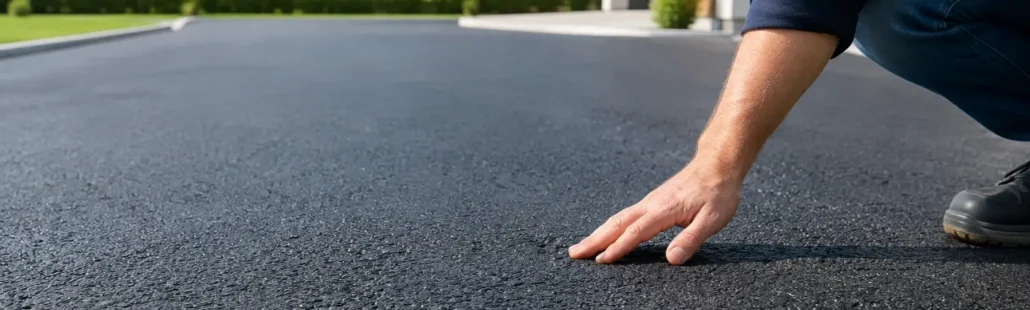
For domestic driveways, it depends on the shape and size. A straightforward, larger driveway may suit machine laying if access allows. A smaller driveway, one with curves, narrow entrances or tight edges, is often better hand laid. The main point is to match the method to the site rather than forcing the site to suit the method.
Groundwork still matters more than the laying method
Clients sometimes focus on the top layer because that is what they see. In practice, failure often starts underneath. A poor sub-base, weak edges, trapped water or bad drainage will shorten the life of the surface whether it was hand laid or machine laid.
That is why proper excavation, base preparation and compaction should never be treated as extras. If the foundation is wrong, the finished asphalt may crack, settle or deform earlier than expected. A dependable contractor will assess the whole build-up, not just quote for the visible layer.
For resurfacing work, the same principle applies. The condition of the existing base needs to be understood before a method is chosen. In some cases, patching and levelling may be enough. In others, deeper reconstruction is the only sensible route.
What clients should ask before deciding
If you are comparing quotations, ask why a contractor is recommending one method over the other. The answer should relate to site size, access, existing condition, traffic use, finish expectations and cost efficiency. It should not be vague.
You should also ask how the area will be prepared, what material is being used, how compaction will be handled and whether the proposed method is suitable for the way the surface will be used. A driveway used by family cars is not the same as a loading area receiving regular commercial traffic.
At EB Road Surfacing, that is usually where the right answer becomes clear. The best method is the one that suits the site, performs properly over time and avoids unnecessary cost.
If you are weighing up hand laid or machine laid asphalt, look past the label and focus on the end result. A surface should be safe, durable, properly drained and fit for the traffic it will carry. Get that part right, and the method becomes a sensible construction choice rather than a guessing game.