Tarmac Car Park Repair That Lasts
A car park usually tells you how well a site is being looked after before anyone steps through the door. Faded bays, loose edges, potholes and standing water do more than look tired – they create safety risks, frustrate drivers and often lead to bigger repair bills. That is why timely tarmac car park repair matters. Done properly, it restores appearance, improves safety and protects the structure underneath from further damage.
For site managers, landlords, business owners and organisations responsible for public access areas, the real question is not whether damage should be repaired. It is how far that damage has gone, what type of repair is actually suitable, and whether a short-term fix will simply delay a larger cost.
When tarmac car park repair is needed
Most car parks do not fail all at once. They deteriorate in stages. The first signs are usually small cracks, areas of fretting where the surface begins to break up, or sections that hold water after rain. If those early signs are ignored, vehicle loading and water ingress start to do the rest.
Heavy turning movements from cars and vans can stress the same areas repeatedly, especially around entrances, exits, ticket points and tight corners. Delivery vehicles and refuse lorries increase that pressure. In colder conditions, water can enter cracks, expand and force the surface apart. Over time, that becomes potholes, edge failure and soft spots.
In practical terms, repair is usually needed when the surface is no longer performing safely or draining properly. That may mean visible hazards for pedestrians, damaged bay markings, loose material under tyres, or sections of the car park that are beginning to deform under traffic.
Not every damaged car park needs full resurfacing
This is where experience matters. Some contractors push for complete resurfacing when localised repairs would do the job. Others patch over serious structural issues that should have been rebuilt. The right answer depends on the condition of the surface and the base beneath it.
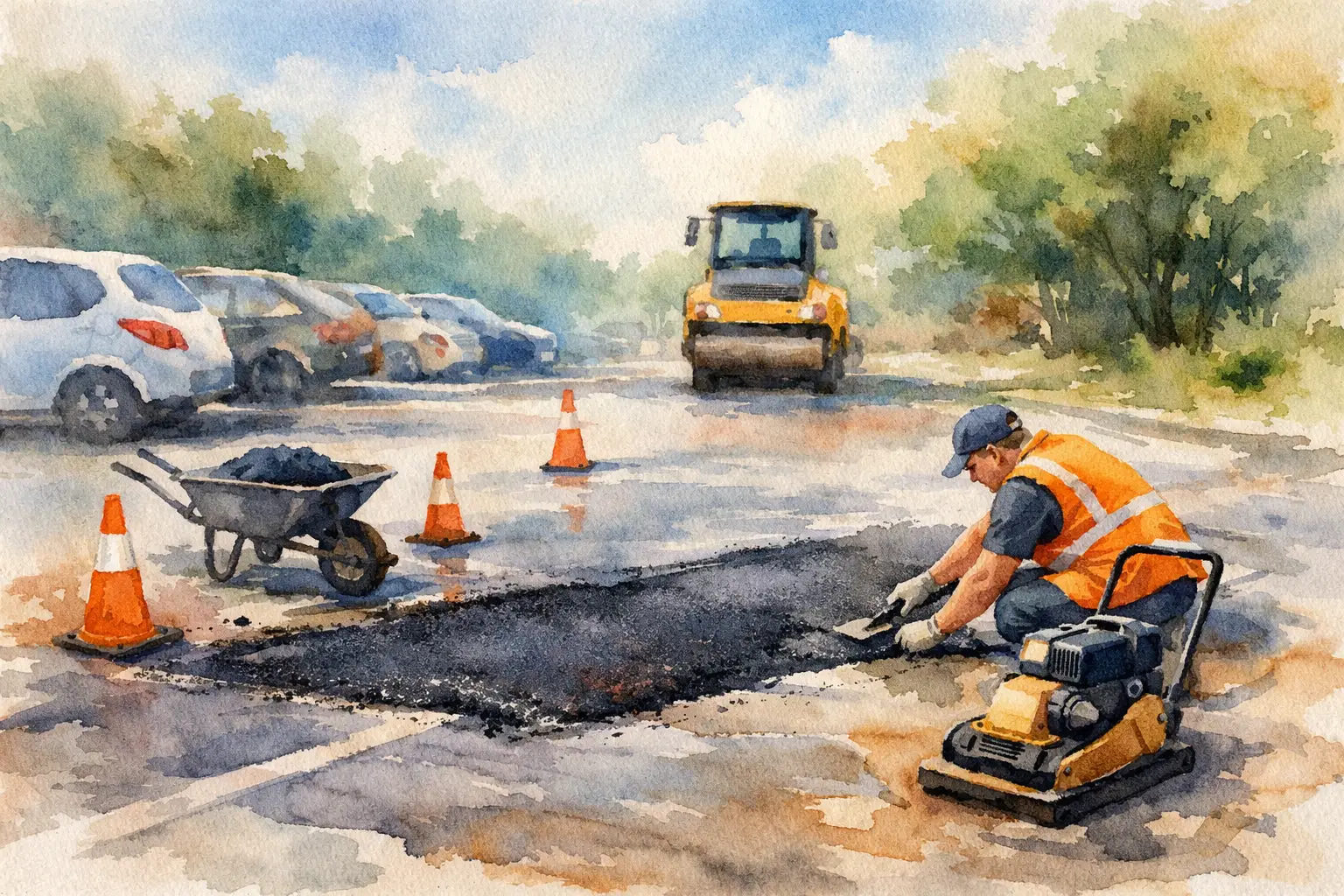
If the damage is isolated and the surrounding tarmac remains sound, patch repairs can be a sensible and cost-effective option. This works well for individual potholes, small failed sections and localised wear. A proper patch is cut back to solid edges, defective material is removed, the base is checked, and new material is laid and compacted correctly. It should not be a cosmetic throw-over.
If cracking is widespread, drainage is poor across the site, or the surface has reached the end of its serviceable life, patching alone may not offer lasting value. In that case, resurfacing larger sections or the full car park may be the more economical decision over time. Spending less now on repeated reactive repairs can end up costing more than planned replacement.
Common problems behind tarmac car park repair
Potholes and surface break-up
Potholes are the issue most people notice first, but they are rarely the whole problem. They usually form because water has got into the surface and weakened the structure below, or because traffic has repeatedly stressed an already failing area. Filling a pothole without dealing with the surrounding weakness often means it returns.
Cracking
Cracks vary in seriousness. Fine surface cracking may be an early warning sign. Larger open cracks usually point to movement, ageing or structural fatigue. Once cracks allow water through, the damage tends to accelerate.
Drainage failure
Standing water is not just untidy. It shortens surface life, encourages potholes and creates slip risks in colder weather. If water sits on the car park for long periods, the issue may lie with falls, blocked drainage, local settlement or a combination of all three.
Edge deterioration
Car park edges often fail where vehicles overrun weak margins or where support has been lost. This is common near verges, kerbs and transitions to other surfaces. Left alone, edge damage spreads quickly.
Faded markings and worn finish
While line marking is not structural, a repaired car park often also needs fresh bay markings, directional arrows or disabled bays to restore safe use. Surface appearance matters for customer-facing sites, but function comes first.
What a proper repair process should involve
Good repair work starts with assessing the cause, not just the visible damage. A contractor should look at traffic type, drainage, depth of failure and whether the base is still sound. Without that, repairs become guesswork.
Inspection and scope of works
The first step is identifying whether the defect is surface-level or structural. A shallow failed patch in a lightly used area is a different job from a heavily trafficked section that has sunk or deformed. The proposed repair should match the problem.
Preparation
This is where standards are won or lost. Failed material needs to be cut out cleanly and removed fully. If the sub-base has softened or broken down, it must be repaired before fresh tarmac goes in. Laying new material onto an unstable base simply hides the defect for a short while.
Surfacing and compaction
Once the area is prepared, the correct tarmac material is laid to the required depth and compacted properly. The finish should tie in neatly with surrounding levels to avoid creating lips, weak joints or drainage issues.
Finishing works
If needed, this can include reinstating road markings, adjusting ironwork levels, making good edges or dealing with nearby drainage features. On a working site, traffic management and phased access can also be part of the job.
Repair or resurface – how to decide
There is no one-size-fits-all answer. The better option depends on condition, usage and budget.
Repair is often the right choice when defects are localised, the foundation remains stable and the rest of the car park still has useful life left in it. It is faster, less disruptive and usually lower cost in the short term.
Resurfacing makes more sense when repairs are becoming frequent, the surface is ageing across a wide area, or the car park looks inconsistent after multiple patch jobs. For commercial premises, presentation can matter almost as much as performance. A heavily patched surface may still function, but it can reflect badly on the site.
For schools, retail parks, business premises and shared access areas, planned resurfacing can also reduce the disruption that comes with repeated emergency call-outs. A single organised programme is often easier to manage than constant reactive maintenance.
Minimising disruption during car park repairs
One concern comes up on nearly every job: access. Businesses do not want to lose trading time, and site managers do not want complaints from users. The good news is that many repairs can be phased to keep parts of a car park open while work is carried out.
This depends on layout, traffic volume and the extent of the damage. Small repairs can often be completed quickly with limited interruption. Larger resurfacing projects may need staged working, temporary rerouting or weekend scheduling. A dependable contractor will be clear from the start about what is realistic.
Speed matters, but not at the expense of the result. A rushed repair that fails early is more disruptive than a properly planned job completed once.
Why cheap patching usually costs more
Price always matters, especially for larger sites or organisations managing multiple properties. But there is a difference between competitive pricing and cutting corners.
Cheap repairs often fail because the damaged area was not cut back properly, the base was ignored, the wrong material was used or compaction was poor. On the surface, the patch may look fine for a short period. Then it opens up at the joints, sinks under traffic or breaks away under wet weather and vehicle movement.
A well-executed repair should be built for service life, not just immediate appearance. That is why guaranteed workmanship, proper preparation and suitable plant make a real difference.
Ongoing maintenance after repair
Once repairs are complete, a little maintenance goes a long way. Keeping drainage channels clear, dealing with early cracks before water gets in, and refreshing line markings when needed all help protect the surface.
Regular inspections are especially worthwhile on busy commercial sites. Entrance lanes, service yards and turning heads usually wear faster than the rest of the car park. Catching those issues early is cheaper than waiting for structural failure.
For clients across Scotland and the North of England, weather and traffic both play a part. Freeze-thaw conditions, rainfall and repeated vehicle use can accelerate wear, particularly on older surfaces. That makes timely attention more valuable than reactive last-minute repairs.
If you are looking at potholes, cracking or drainage problems, the best next step is a clear assessment of what is failing and why. EB Road Surfacing works on practical solutions – whether that means a targeted repair or a larger resurfacing plan – so you can keep your car park safe, presentable and built to last.