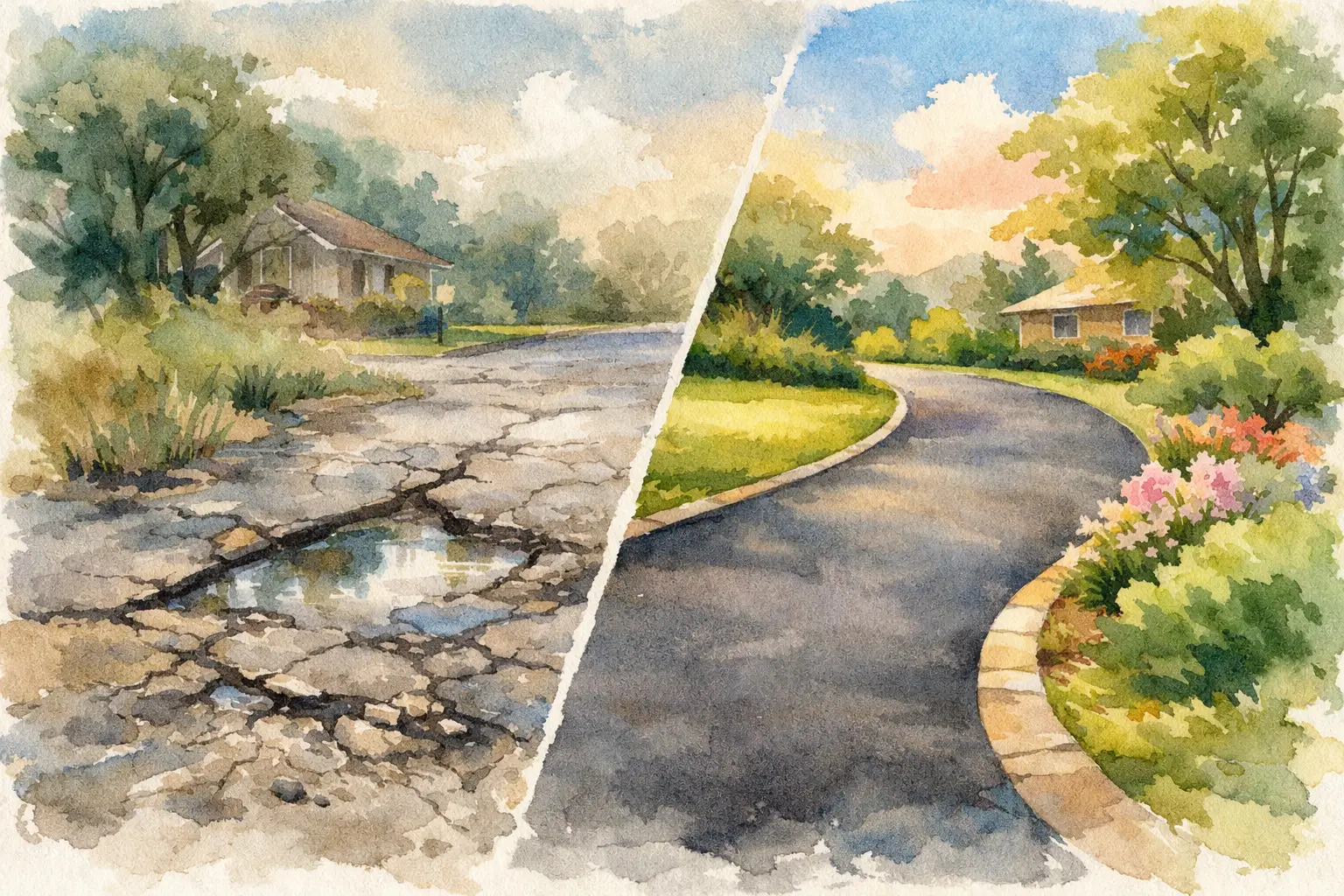
Top Signs a Driveway Needs Resurfacing
A driveway rarely fails all at once. What usually happens is slower and easier to ignore – a few cracks, water sitting after rain, loose edges, a surface that starts to look worn out and patchy. The top signs a driveway needs resurfacing tend to show up well before full replacement becomes necessary, and spotting them early can save you money, improve safety, and avoid bigger repair work later.
For homeowners, landlords, facilities teams and site managers, the key question is not whether a surface looks perfect. It is whether it is still doing its job properly. A sound driveway should carry traffic safely, drain water effectively, and hold up under regular use without breaking down further each season.
Top signs a driveway needs resurfacing
One of the clearest warning signs is widespread cracking. A small isolated crack is not always a major issue, especially if it can be cleaned out and sealed before water gets in. The problem starts when cracks multiply, join together, or keep returning after repair. That usually points to broader surface fatigue rather than one local defect.
If the cracking has spread across large sections of the driveway, resurfacing is often the more practical option. Repeated patch repairs can become false economy when the surrounding surface is already weakening.
Potholes are another strong signal that the surface is no longer sound. They do not just affect appearance. They create trip risks, can damage tyres and suspension, and allow more water into the layers below. Once potholes appear, especially in more than one place, the deterioration is already moving beyond cosmetic wear.
Surface fretting also matters. This is when the top layer begins to break down, shedding loose aggregate and leaving the finish rough, thin or uneven. On asphalt and tarmac driveways, fretting often means the wearing course has reached the end of its serviceable life. If you are constantly sweeping away loose material or noticing bare, worn patches, resurfacing may be the right next step.
When wear becomes a structural problem
Not every damaged driveway needs to be dug out and rebuilt. In many cases, resurfacing works well because the base underneath is still stable. The challenge is knowing when surface wear has started to affect performance.
Standing water is one of the biggest clues. If rainwater pools in dips and does not clear properly, the driveway may have settled or developed low spots. Water is hard on any paved surface. It works into cracks, weakens the material over time, and during colder weather can make defects worse through freeze-thaw movement.
Poor drainage is not just inconvenient. It shortens the life of the driveway and creates avoidable maintenance issues. If puddling is becoming routine rather than occasional, it is worth having the surface assessed before damage spreads further.
Rutting and depressions are also worth taking seriously, particularly on driveways used by heavier vehicles, delivery vans or frequent turning traffic. Where wheel paths have sunk or the surface has become uneven, the load is no longer being distributed evenly. Sometimes localised repairs are enough. In other cases, resurfacing gives a cleaner, longer-lasting result and restores a proper level finish.
The signs are not always dramatic
Some driveways look tired long before they become unsafe, and appearance does matter. A faded, patchy, oil-stained surface with visible repairs can make the whole frontage look neglected, even if the property itself is well kept. For commercial premises, managed properties and customer-facing sites, that can affect first impressions more than many owners realise.
That said, resurfacing should not be treated as purely cosmetic. If the driveway looks heavily weathered, has lost its smooth finish, and no longer presents a consistent surface, there is usually some level of material breakdown behind it. A fresh surface improves appearance, but it also restores protection, improves usability and can extend the overall lifespan of the driveway.
Edge breakdown is another common issue that gets overlooked. Once the sides of the driveway begin to crumble or break away, the rest of the surface becomes more vulnerable. Unsupported edges are easier to crack, and vehicles moving close to the perimeter can make the problem worse. If the edges are failing in several areas, resurfacing may be more effective than trying to patch each section one by one.
Repair or resurfacing – what is the difference?
This is where a lot of property owners hesitate, and fairly enough. A repair deals with a specific defect such as a pothole, crack or damaged patch. Resurfacing involves laying a new surface course over the existing driveway, provided the foundation underneath is still suitable. It is a way to renew the surface without the cost and disruption of full reconstruction.
In practical terms, resurfacing is usually the better option when damage is spread across the driveway rather than limited to one small area. If you have had the same spots patched more than once, or the surface condition is generally poor from end to end, resurfacing often gives better value.
Full replacement is sometimes necessary, but not always. If the sub-base has failed, there is major movement, or drainage and level problems are severe, a deeper rebuild may be required. That is why a proper site assessment matters. The right answer depends on the condition below the surface, not just what is visible on top.
How weather and traffic speed up deterioration
In the UK, driveways take a fair amount of punishment. Rain, frost, temperature changes and regular vehicle use all contribute to wear over time. Water gets into fine cracks, cold weather expands the damage, and repeated traffic then breaks the weakened material down faster.
This is especially common on older driveways and surfaces that were never designed for the weight or frequency of modern vehicle use. A domestic driveway that now handles multiple cars every day may age faster than expected. The same applies to small commercial yards, access roads and forecourts where vans or service vehicles regularly turn on the spot.
If the driveway has started deteriorating more quickly over the last year or two, that is often a sign the surface has moved past simple ageing and into active failure. Waiting too long can turn a resurfacing job into a larger and more expensive scheme.
What to check before the damage spreads
A quick visual check can tell you a lot. Look for cracks that are widening, repeated patch repairs, pooled water, rough or loose surface material, sunken areas and crumbling edges. Also pay attention to how the driveway feels underfoot and under tyres. If it is noticeably uneven, breaking up, or collecting water after normal rainfall, the issue is no longer minor.
For shared access areas, rental properties or commercial premises, safety should come first. Trip hazards, potholes and unstable surfaces create obvious risk, and delaying action can make liability harder to defend if someone is injured.
It is also worth thinking about timing. Resurfacing planned early is almost always more straightforward than emergency repairs after winter damage or a sharp increase in traffic. A scheduled job is easier to budget for and easier to complete with minimal disruption.
When to call in a surfacing contractor
If you are seeing more than one of these problems at the same time, it is sensible to get the driveway checked. The top signs a driveway needs resurfacing rarely appear in isolation for long. Cracks lead to water ingress, water leads to weakness, weakness leads to potholes and edge failure.
A good contractor will tell you whether resurfacing is appropriate or whether a repair or full replacement makes more sense. That advice should be straightforward and based on condition, usage and expected lifespan – not on selling the biggest job possible.
For property owners and site managers across Scotland and the North of England, that practical approach matters. You need a surface that is safe, durable and fit for purpose, without unnecessary downtime or wasted spend.
A worn driveway does not usually improve by being left alone. If the surface is showing clear signs of breakdown, dealing with it early gives you more options, better value and a stronger result that will hold up for years rather than months.