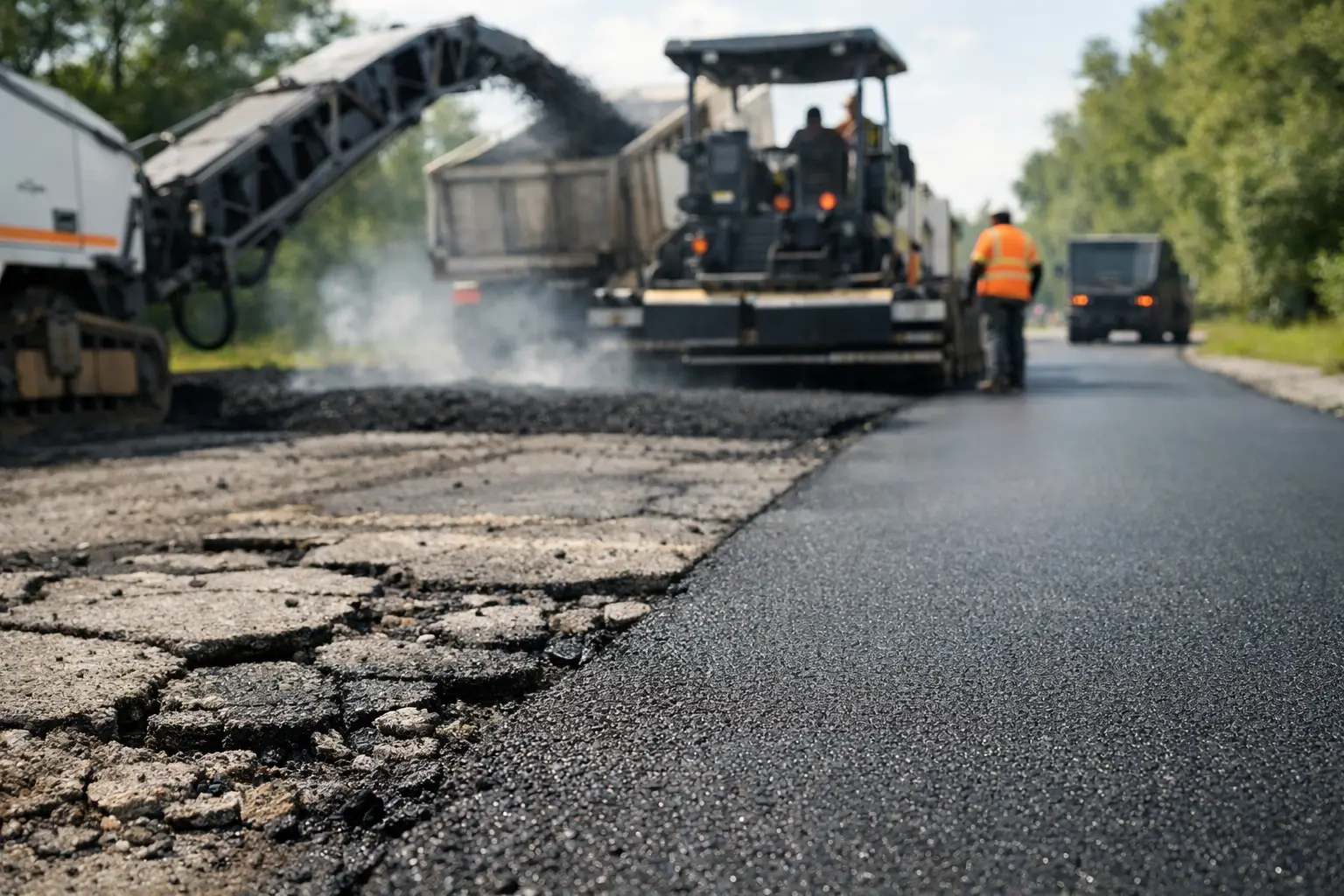
Road Resurfacing: When Repair Is Not Enough
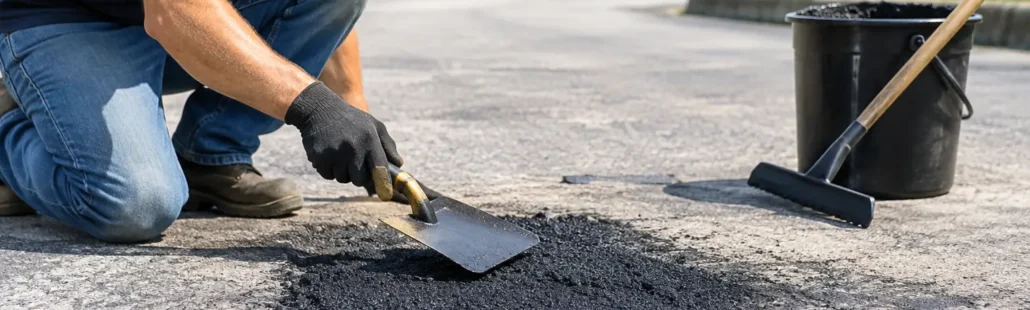
A few potholes can often be repaired locally. But when cracks keep returning, water sits on the surface, loose material spreads or vehicles begin to avoid parts of the route, patching may only delay a bigger problem. Professional road resurfacing replaces the worn running surface and, where needed, addresses the underlying failures that caused it to deteriorate.
For site managers, landowners and property owners, the aim is not simply to make an access road or car park look better. A properly planned surface improves safety, protects vehicles, manages water and reduces the likelihood of repeated call-outs. The right scope depends on the condition below the surface as much as the damage visible from above.
What road resurfacing involves
Road resurfacing is the renewal of an existing asphalt or tarmacadam surface. Depending on the condition of the site, this may involve planing off the old wearing course, carrying out local base repairs, adjusting drainage features and laying new material to the correct levels and falls.
It is different from applying a thin cosmetic layer over a failed surface. If the existing road has sound foundations and only the top layer is worn, an overlay may be suitable. If there are soft areas, deep rutting, widespread cracking or poor drainage, the contractor may need to excavate failed sections and rebuild the base before surfacing.
That distinction matters. A new finish laid over movement in the foundation can soon crack in the same places. A more thorough repair costs more at the outset, but it is often the better value option where traffic, heavy vehicles or standing water are involved.
Signs that resurfacing is the sensible option
Surface wear is normal, particularly on roads serving delivery vehicles, plant, buses or frequent residential traffic. The question is whether the defects are isolated or point to general failure across the route.
Road resurfacing should be considered when pothole repairs are becoming regular, when alligator-style cracking covers large areas, or when the surface has become uneven through wheel-rutting and settlement. Water pooling after rain is another warning sign. It can create slip risks, weaken asphalt and freeze in cold weather, accelerating damage.
Edges also tell a useful story. Broken, crumbling road edges often mean the surface is no longer receiving enough support, especially where vehicles regularly mount kerbs or pass too close to verges. On commercial premises, poor surfaces can affect customer access, delivery schedules and the professional appearance of the site. On private roads and drives, they can become a persistent nuisance as well as a safety concern.
A site inspection should establish whether local repairs will genuinely extend the life of the road or whether a wider resurfacing programme will offer a more dependable result.
The work should start with the cause of failure
The best surfacing work begins before machinery arrives. A contractor needs to assess traffic use, existing construction, drainage routes, access restrictions and the condition of surrounding kerbs, ironwork and edges. This allows the work to be designed around how the area actually performs rather than how it looks on a dry day.
Drainage and correct levels
Water is one of the main causes of premature road failure. If the finished surface does not fall correctly towards gullies, channels or drainage points, water will remain where tyres repeatedly pass. Over time, it finds weaknesses in joints and cracks, then damages the material beneath.
During resurfacing, levels may need to be adjusted so water runs away from buildings, entrances and pedestrian areas. Gullies, manholes and inspection covers may also need raising or resetting to match the finished level. These details can appear minor, but they have a major effect on drainage, ride quality and the lifespan of the new surface.
Base repairs where they are needed
Not every resurfacing project requires full excavation. Where the underlying construction remains stable, retaining it can keep costs and disruption under control. However, soft spots and failed areas should be cut out and repaired before the new asphalt is laid.
This targeted approach is common on car parks, estate roads and access routes. It avoids paying for unnecessary reconstruction while ensuring that weak sections are not concealed beneath a new wearing course.
Choosing a material for the job
Asphalt and tarmacadam are not one-size-fits-all products. The correct material and thickness depend on vehicle loading, turning movements, gradients and the required finish. A lightly used private access road has different requirements from a busy service yard where laden lorries turn sharply.
Fine-textured materials can provide a neat finish for residential and pedestrian-facing areas. Heavier-duty mixes are often more appropriate for commercial roads and loading areas. The practical objective is always the same: a surface that is strong enough for its use, drains effectively and can be maintained without unnecessary expense.
How a road resurfacing project is carried out
The sequence varies by site, but clear planning keeps the work efficient and reduces disruption. Before work starts, access arrangements should be agreed, particularly where residents, customers, emergency vehicles or deliveries need to be accommodated.
The existing surface is then prepared. This may involve cleaning, planing or removing damaged asphalt, followed by excavation and base repairs in failed areas. The prepared ground must be stable and correctly compacted before the next layer is installed.
A bond coat is applied where appropriate to help the new material adhere to the existing surface. Hot asphalt is laid, levelled to the required falls and compacted while it is at the right temperature. Good compaction is essential: it gives the surface its strength, reduces voids and helps prevent water ingress.
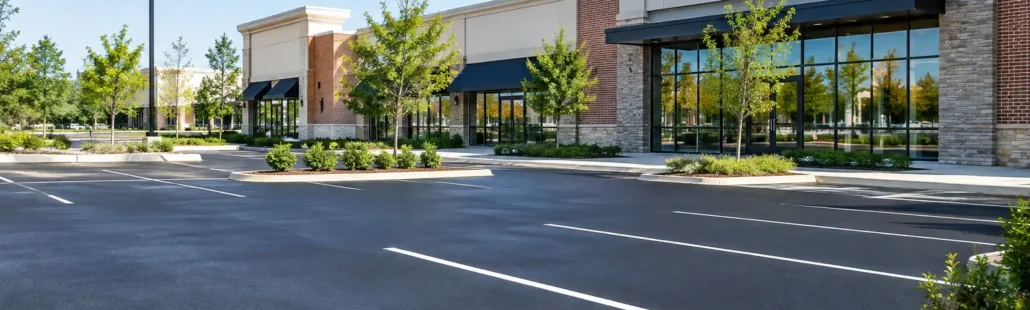
Finally, junctions, edges, drainage points and ironwork are checked. Where the project includes car parks, private roads or managed premises, road markings can be reinstated after the surface has cured sufficiently. A professional finish should leave the route safe, tidy and ready for its intended traffic as soon as practical.
Managing access and disruption
Resurfacing can be completed quickly when the scope is clear and the weather is suitable, but it still requires coordination. Closing an entire access route may be impractical for a live business, residential development or shared private road. In these situations, the work can often be phased so that one section remains usable while another is being prepared or surfaced.
The trade-off is that phased work may take longer and can create additional joints between sections. Where a full closure is possible, it often allows the team to achieve a cleaner, more efficient result. The best option depends on site operations, safety requirements and how much traffic the route carries.
Weather also matters. Asphalt work should be planned for conditions that allow proper laying and compaction. Heavy rain, standing water and very cold conditions can affect quality. A dependable contractor will be honest about timing rather than laying material when conditions are likely to compromise the finish.
What affects the cost of resurfacing
There is no useful one-price answer for road resurfacing. Cost is shaped by the area to be covered, thickness and type of material, amount of excavation, condition of the existing base, drainage changes, access for plant and whether traffic management is required.
A simple overlay on a sound private road will be less involved than rebuilding a heavily trafficked commercial access route with failed drainage and multiple ironwork covers. Small areas can also have a higher cost per square metre because mobilisation, equipment and labour are still required.
The lowest quotation is not always the most economical choice. Check that it states what will happen to failed areas, how levels and drainage will be handled, what material is proposed and whether removal of waste, edging and reinstatement are included. A clear scope makes it easier to compare quotes fairly and avoids unwelcome additions once work is under way.
Getting a surface that lasts
A new road does not need complicated care, but it should not be ignored. Keep gullies and channels clear, deal with oil spills promptly and repair isolated damage before water can enter the structure. Avoid allowing heavy vehicles to repeatedly overrun unsupported edges, particularly on narrow access roads.
For commercial sites, scheduled inspections are worthwhile after winter and following periods of heavy use. Early action on small cracks, failed joints and drainage problems can prevent a minor defect becoming an excavation and reconstruction job.
EB Road Surfacing carries out resurfacing work for roads, access routes and car parks across Scotland and North England, with the practical planning needed to keep disruption under control. If your surface is showing repeated defects, arrange an assessment before another temporary repair becomes the more expensive choice.