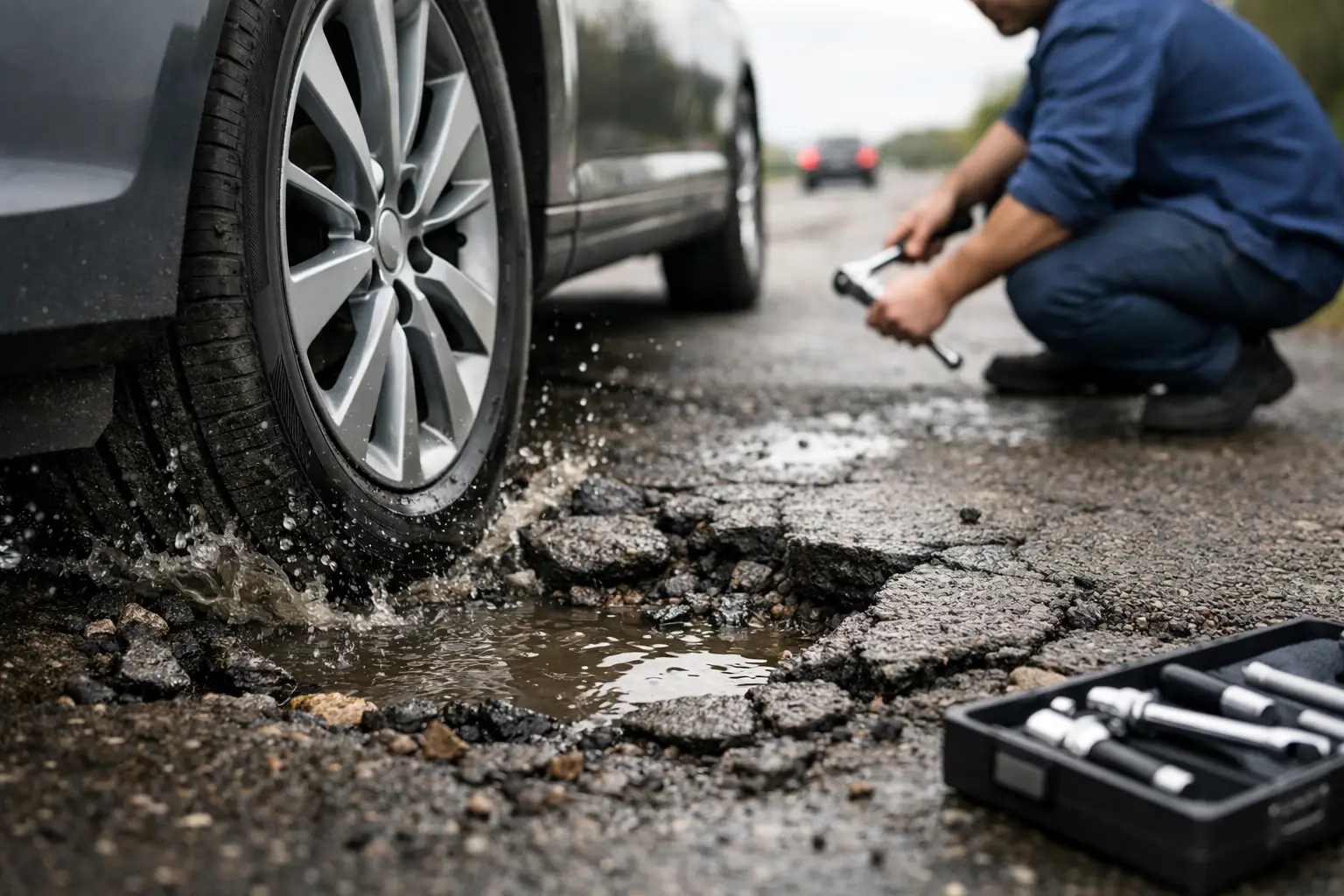
Can Potholes Damage Vehicles? Risks and Repairs
A sharp bang through the steering wheel, a sudden pull to one side or a tyre that starts losing pressure shortly afterwards are familiar signs of a pothole strike. But can potholes damage vehicles? Yes. Even a single impact can damage tyres, wheels or suspension components, while repeated impacts on a worn road surface can create costly problems over time.
For drivers, potholes are more than an irritation. For property owners, site managers and organisations responsible for private roads or car parks, they are also a safety and maintenance issue. Prompt, properly finished repairs protect road users, reduce the risk of vehicle damage and stop a small surface defect becoming a much larger failure.
Can potholes damage vehicles? The short answer
The severity of damage depends on the depth and edge of the pothole, the speed of the vehicle, tyre profile, vehicle load and the angle of impact. A shallow depression driven over slowly may cause no obvious harm. A deep pothole with sharp, broken edges can transfer a heavy shock directly through the tyre and wheel into the steering and suspension.
Low-profile tyres and larger alloy wheels are particularly vulnerable because there is less tyre sidewall to absorb the impact. Heavier vehicles, including vans and loaded lorries, place greater force on weakened surfaces and can both suffer damage and accelerate the deterioration of the road.
Damage is not always immediately visible. A wheel may appear sound but be slightly bent, affecting ride quality and wheel balancing. Suspension parts can also take a knock that becomes noticeable only after further driving. That is one reason potholes should be treated as an urgent maintenance item rather than left until they expand.
The vehicle parts most at risk
Tyres and wheels
Tyres are normally the first point of contact. A hard pothole impact can cause a puncture, split the sidewall or damage the internal structure of the tyre. A bulge in the sidewall is particularly serious, as it can indicate internal cord damage and raises the risk of a sudden failure.
Alloy wheels can crack or bend, especially where the pothole edge is sharp. Steel wheels are generally more resistant to cracking but can still become distorted. A damaged wheel may lead to vibration through the steering wheel, gradual pressure loss or an uneven ride.
Suspension and steering
The suspension is designed to manage normal road movement, not repeated impacts from failed surfacing. Potholes can contribute to worn or damaged shock absorbers, springs, bushes, ball joints and track-rod ends. Steering alignment may also be affected.
Drivers may notice the vehicle pulling left or right, a steering wheel that no longer sits straight, knocking noises over uneven ground or uneven tyre wear. These symptoms do not always mean a pothole is the only cause, but they should be checked promptly. Driving with poor alignment or worn steering components can reduce control and shorten tyre life.
Underbody components
Deep defects are also a concern for lower vehicles. The underside may strike the road surface, potentially damaging exhaust components, protective covers, oil pans or other parts beneath the vehicle. This is more likely where a pothole sits in a sunken, broken section of road rather than as an isolated small hole.
Why potholes become worse so quickly
A pothole usually starts with a small crack or weak point in the surface. Water enters through that opening and weakens the layers beneath the asphalt or tarmacadam. In colder conditions, water can freeze and expand, widening the defect. Traffic then flexes and breaks the surface further, pulling loose material from the damaged area.
Drainage plays a major part. Standing water keeps the surface wet, masks the depth of defects and allows more water to enter. On access roads, car parks and driveways, a pothole that returns after a basic patch often points to an underlying issue such as poor drainage, weak foundations or a failed surrounding surface.
This is why simply filling a hole with loose material is rarely a lasting answer. The repair must address the damaged area properly, create sound edges and use suitable materials and compaction. Otherwise, vehicle traffic and weather will quickly reopen the defect.
The wider risk on private roads and car parks
Potholes affect more than vehicles. Pedestrians can trip on broken edges, cyclists can lose control and wheelchair or pushchair users may struggle to pass safely. In commercial settings, defects can disrupt deliveries, make access difficult for customers and leave a poor first impression of the site.
For facilities teams and landowners, delaying repairs can increase the eventual cost. Water does not remain inside the original hole. It spreads into the surrounding construction, weakening a larger area and making local patching less effective. A repair that could have been completed quickly may develop into a section requiring excavation and resurfacing.
There is also a practical responsibility to inspect routes used by staff, visitors, residents and contractors. Regular checks are especially worthwhile after prolonged rain, frost or heavy traffic periods. Clear records of inspections, reported defects and completed repairs support sensible maintenance planning.
When a pothole repair is enough
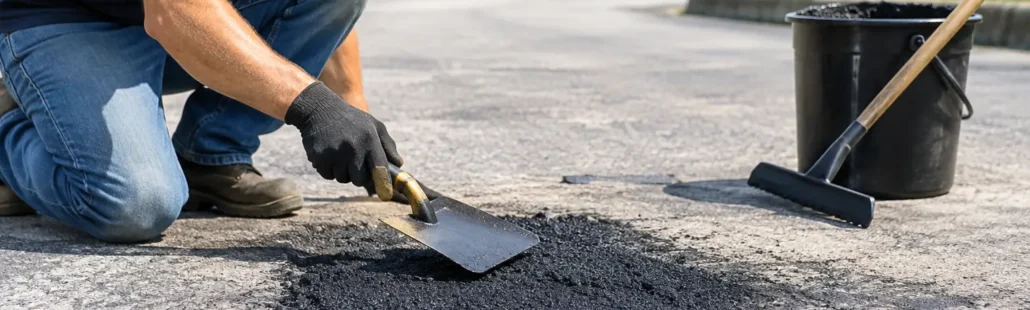
A local repair can be the right choice when the damage is isolated and the road base remains stable. The contractor should cut back to sound material, remove loose debris, repair the affected layers where required, apply the appropriate bonding treatment and compact the new surface correctly. A properly installed repair should sit level with the surrounding surface and allow water to drain as intended.
The cheapest-looking option is not always the most cost-effective. Cold patch materials may have a temporary role in urgent conditions, but high-traffic areas and deeper failures usually need a more substantial, hot-applied repair for durability. The right approach depends on the depth of failure, traffic levels, drainage and the condition of the surrounding surface.
When resurfacing is the better investment
If potholes are appearing across a wider area, repeated patching can become false economy. Multiple repairs may keep a route usable in the short term, but they can leave a patchwork surface with inconsistent levels and continuing water ingress.
Resurfacing may be more suitable where there is widespread cracking, fretting, rutting, drainage-related deterioration or numerous previous patches. It creates an opportunity to correct levels, improve surface drainage and restore a consistent finish across the road, car park or driveway.
For busy commercial premises, planned resurfacing can also reduce disruption compared with a cycle of emergency repairs. Work can be phased around access requirements, deliveries and operating hours, with clear traffic management where needed.
What drivers should do after hitting a pothole
If it is safe to do so, stop and inspect the tyres and wheels. Look for a flat tyre, a sidewall bulge, visible cuts, wheel cracks or a damaged rim. Avoid continuing to drive on a visibly damaged tyre, as this can worsen the problem and compromise safety.
During the next journey, pay attention to vibration, pulling, new noises and changes in steering response. If any of these occur, arrange a vehicle inspection. Taking a photograph of the pothole and noting its location may also be useful if damage needs to be reported.
Drivers should not swerve suddenly into oncoming traffic, kerbs or pedestrians to avoid a defect. Reducing speed where conditions allow and leaving enough space from the vehicle ahead gives more time to spot poor road surfaces.
Preventing potholes before they disrupt access
The most effective pothole strategy is early intervention. Small cracks can be sealed before water reaches the base layers, while drainage channels and gullies can be kept clear to prevent standing water. Regular surface inspections help identify weak areas before they become a hazard.
For roads, yards, car parks and private access routes, professional maintenance provides a clearer view of whether a targeted repair, surface dressing or larger resurfacing programme offers the best value. EB Road Surfacing carries out practical pothole repairs and surfacing work with the focus where it belongs: a safe, durable surface that keeps vehicles moving and avoids unnecessary repeat costs.
A pothole rarely improves by itself. Acting while the defect is small protects road users, preserves the surface beneath it and gives you far more control over the cost and timing of the repair.