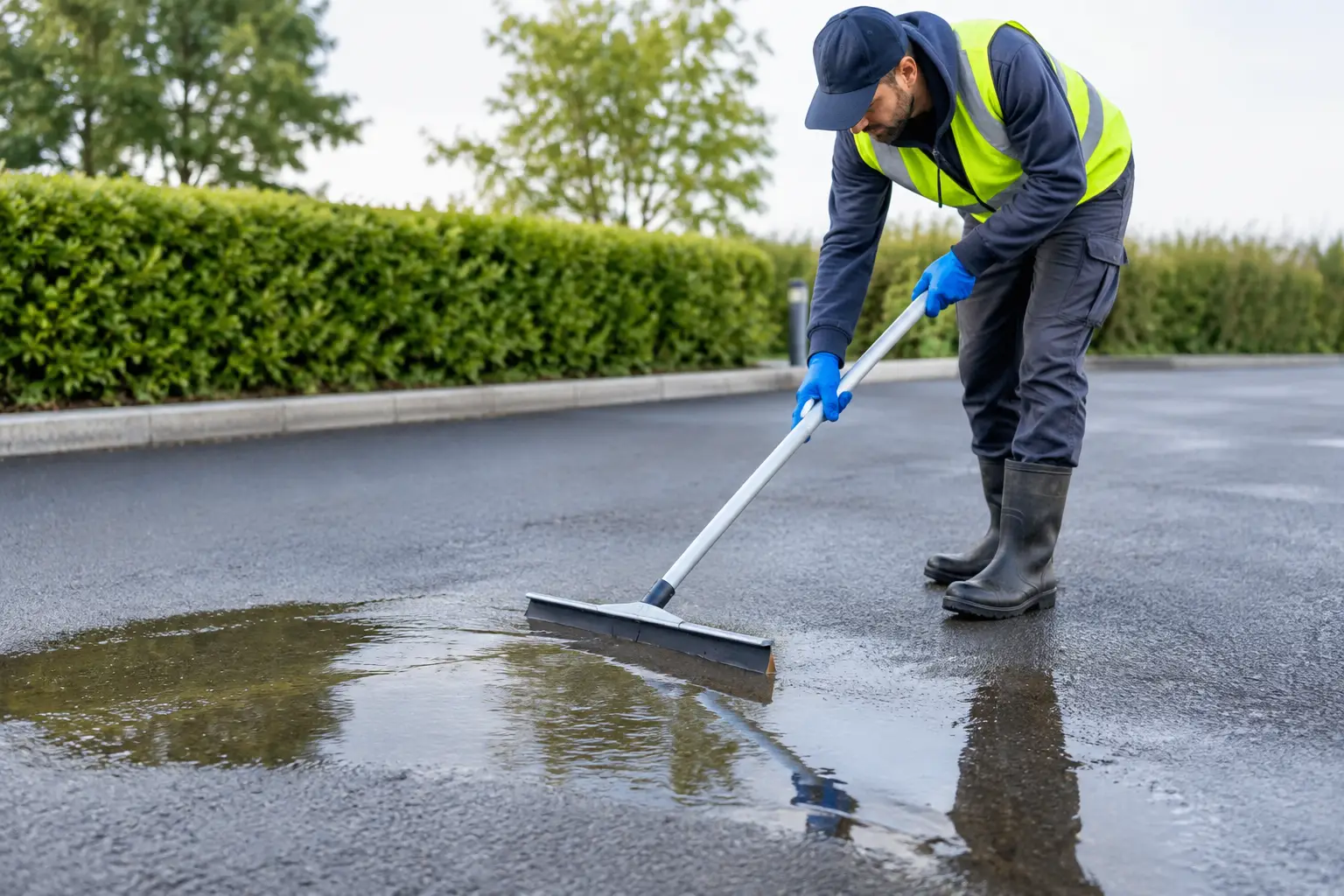
How to Remove Standing Tarmac Water Safely
Standing water on tarmac is more than an untidy puddle. If you need to remove standing tarmac water after every shower, the surface, drainage route or ground beneath it is not doing its job. Left in place, water finds its way into joints and small cracks, weakens the surface through freeze-thaw cycles and creates a slip, trip and vehicle safety risk.
For a homeowner, the problem may be a low spot at the end of a driveway. For a site manager, it may be a pond beside a loading bay, car park entrance or pedestrian route. The immediate action is similar, but the right permanent repair depends on why the water is collecting.
How to Remove Standing Tarmac Water in the Short Term
Where access or safety cannot wait, remove surface water with a stiff yard broom, wide rubber squeegee or suitable pump. Push water towards an existing gully, channel drain or safe permeable area, provided this does not send it towards a building, public footway or neighbouring land. On larger commercial sites, a wet vacuum or pump may be the practical choice.
Do not use a pressure washer simply to force water into cracks, around kerbs or towards door thresholds. It can make a small drainage issue worse by driving water into weak points in the tarmac. Likewise, avoid spreading loose sand or aggregate over the puddle as a cure. It may improve grip temporarily, but it does not restore the fall of the surface and can block gullies.
If the ponding is close to an entrance, crossing, disabled bay or footpath, put basic controls in place while it is wet. Cones, warning signage and a clear alternative route can reduce the immediate risk. On busy premises, water removal should be part of a short-term safety response, not the whole maintenance plan.
Why Water Pools on Tarmac
Tarmac should be laid to a controlled fall so water runs away from buildings and across the surface into a suitable drainage point. A small amount of water shortly after heavy rain is not always a concern. Water that remains for hours, returns in the same place or grows in area points to a defect worth investigating.
The most common cause is a local depression. This may develop where the original surface was laid unevenly, where a previous patch has settled or where repeated vehicle loading has compressed the layers beneath. Delivery vehicles, skips and turning traffic can quickly expose weak areas on commercial yards and access roads.
Blocked drainage is another frequent cause. Leaves, silt, litter and loose chippings can stop a gully or channel drain from taking water away. A drain may appear clear at the grate yet be blocked further along the run, so visual checks alone do not always reveal the full problem.
In other cases, the issue is more structural. Water may be entering through cracks at the edge of the surface, softening the sub-base and causing the tarmac above to sink. This is often accompanied by broken edges, alligator-style cracking, potholes or a noticeable dip under vehicle wheels. Simply filling the low spot in this situation can lead to an early failure.
Check the Cause Before Choosing a Repair
A practical inspection after rainfall is useful because it shows exactly where water is travelling and where it stops. Note whether the water drains slowly, sits at one point, backs up from a gully or runs towards a building. Check surrounding kerbs, drainage channels and access covers too. A sunken gully can create a local pond, while raised edging can prevent water leaving the surface.
There are four signs that the work is likely to need more than a minor surface repair:
- The water remains for more than a day in normal weather.
- Cracks, potholes or crumbling edges sit around the ponded area.
- The affected surface dips when vehicles pass over it.
- Water is collecting near a building, electrical equipment, pedestrian route or road entrance.
A professional survey will establish whether the surface still has a sound foundation, whether drainage is blocked or undersized, and whether the existing levels can be corrected without affecting thresholds, kerbs and surrounding land. This matters because drainage changes have to work across the whole area, not merely move the puddle elsewhere.
Lasting Repairs for Ponding on Driveways and Car Parks
For a shallow, isolated depression on sound tarmac, local planing and resurfacing can be effective. The defective section is cut back to a clean edge, levels are corrected and fresh asphalt is laid and compacted to restore a proper fall. The repair must tie neatly into the existing surface so water does not sit along the new joint.
Where the affected area is broader, an asphalt overlay may be the better option. This involves preparing the existing surface and applying a new layer with corrected levels. It can improve appearance and drainage at the same time, but only when the original base is stable. Raising levels without checking doorways, kerbs, gates and drainage covers can create new problems, so this approach needs careful planning.
If the sub-base has failed, the damaged area needs excavation rather than a cosmetic patch. The contractor removes weak tarmac and unsuitable material beneath it, rebuilds the base, reinstates the asphalt and compacts each layer properly. Although this is a larger repair, it addresses the cause of settlement and is usually better value than repeated patching.
Drainage work is required where the existing outlet cannot cope. Depending on the layout, this may mean clearing and repairing gullies, adding channel drainage at the bottom of a slope, adjusting drainage cover levels or installing new drainage runs. The correct option depends on available outfalls, ground conditions, traffic loading and where water can legally and safely discharge.
Avoid Quick Fixes That Make the Surface Worse
Cold-lay materials and sealants can have a place in small, temporary repairs, but they are not a reliable answer to standing water in a traffic area. They often fail at the edges if applied over damp, weak or moving tarmac. Applying material into a puddle without correcting the surrounding level can also leave a ridge that traps water on the other side.
Surface dressing and protective seal coatings can extend the life of sound tarmac, but neither will correct poor falls or a failed base. They are maintenance treatments, not drainage repairs. The same applies to filling cracks: it helps limit water ingress, yet it will not solve ponding caused by settlement.
Be wary of cutting random channels into the surface to create a route for water. Unless they lead to suitable drainage and are finished correctly, they can leave rough edges, weaken the tarmac and encourage further cracking. A planned channel drain or a properly regraded surface is the safer solution.
Prevent Standing Water Returning
Once the repair is complete, routine maintenance keeps the drainage path working. Sweep leaves and loose debris from channels and gullies, particularly in autumn and after storms. Inspect surfaces after severe weather and deal with new cracks before winter water gets beneath the tarmac.
Commercial properties should pay particular attention to areas where lorries brake, turn or queue. These locations carry concentrated loads and often develop depressions first. On domestic driveways, keep soil, decorative gravel and overgrown planting from spilling into drainage channels at the edges.
If standing water has become a recurring issue, arrange an assessment before the wet weather exposes more damage. EB Road Surfacing can inspect the surface, levels and drainage arrangement, then recommend a repair that suits the traffic, budget and condition of the site. A well-planned repair should leave water with one clear place to go – away from the surface, not back into the same problem.