Farm Surfacing Options for Safer Working Yards
A farm yard surface has to cope with far more than passing traffic. Tractors, telehandlers, livestock vehicles, feed lorries, slurry, frost and standing water all put pressure on the ground beneath them. The right farm surfacing options make daily work safer, keep access open through poor weather and reduce the cycle of filling potholes only for them to return.
There is no single best material for every agricultural site. A busy dairy collecting yard needs a different finish from a field access track, machinery shed entrance or grain store loading area. The most cost-effective decision starts with how the space is used, what runs over it and where water goes when the rain arrives.
Start with use, traffic and drainage
Surfacing fails from the bottom up. Even a good-quality wearing course will crack, rut or break at the edges if it sits on weak ground, an inadequate stone base or poor drainage. Before selecting a finish, assess the existing surface and identify soft patches, wheel ruts, failed drainage channels and areas where water regularly collects.
Traffic loading matters just as much. A lane used mainly by pickups and ATVs can often use a different construction from an access route used by fully laden silage trailers or delivery lorries. Repeated turning movements are particularly hard on surfacing. Gateways, loading bays, feed stores and the corners of a yard need a stronger foundation than a straight run of track.
Drainage should be planned alongside the surfacing, not added as an afterthought. The finished surface needs a sensible fall to direct water towards suitable drainage points. Where required, channels, gullies or grips can prevent runoff from sitting against buildings or washing loose material onto the road. On livestock areas, the drainage approach must also take account of slurry and dirty-water management requirements.
Farm surfacing options to consider
Tarmacadam and asphalt for hard-working areas
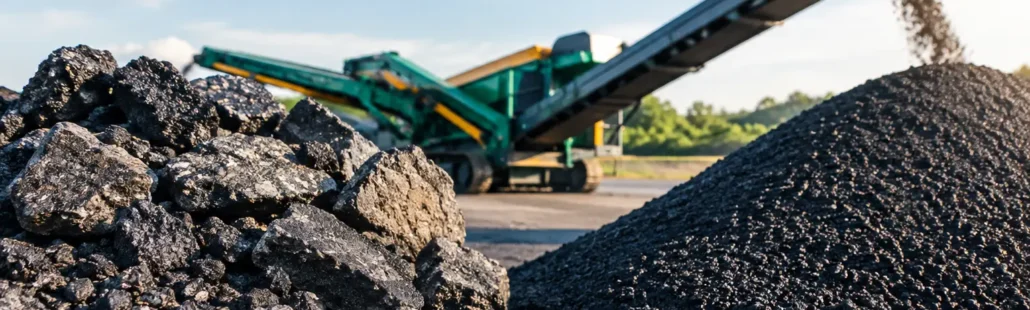
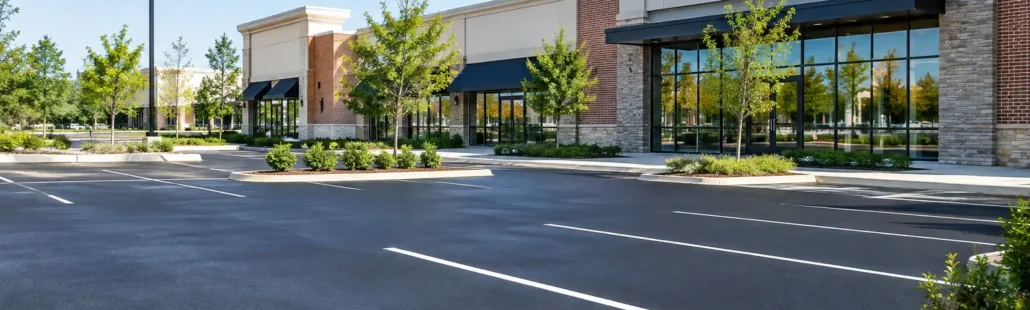
Tarmacadam and asphalt are strong choices for farm yards, access roads, loading areas and entrances that receive frequent vehicle movements. When laid over a correctly prepared sub-base, they provide a level, durable and relatively low-maintenance surface. This makes them particularly suitable where forklifts, telehandlers, delivery vehicles and trailers need reliable year-round access.
A smooth black surface is also easier to sweep, pressure wash and keep clear of loose stone. That can improve safety around workshops, stores and commercial-facing entrances. It reduces dust in dry conditions and helps prevent stones being carried into sheds or onto the public highway.
The trade-off is that asphalt surfacing depends on proper ground preparation and drainage. It is not a material to lay over unstable ground simply to hide existing defects. Agricultural traffic can be heavy, so the depth and make-up of the base must be designed for the expected use. A thinner surface may suit light traffic, while a high-use yard needs a more substantial construction.
Concrete for static loads and intensive wash-down areas
Concrete is often considered for cattle courts, silage clamps, wash-down zones, feed areas and locations with heavy static loading. It is hard-wearing, resistant to concentrated weight and can be finished with texture to improve grip. In the right setting, it offers a long service life.
However, concrete is not automatically the best answer for every farm surface. Installation can take longer, joints need careful consideration and repairs can be more disruptive than localised asphalt repairs. A poor concrete finish can also become slippery when contaminated with mud, slurry or algae. The specified finish and drainage detail are therefore essential.
For large yards with varied uses, concrete may work best in high-stress sections, with asphalt used for access routes and general vehicle circulation. This can control costs without compromising the areas that receive the hardest use.
Compacted stone for tracks and lower-use areas
A well-built aggregate track remains a practical option for field access, private farm roads and areas where a fully bound surface is not necessary. The key phrase is well-built. Loose stone tipped onto mud will soon disappear into it. A reliable track normally requires excavation, separation from weak ground where needed, a correctly graded stone foundation and thorough compaction.
Stone surfacing can be more economical over long distances and is straightforward to extend as land use changes. It also offers a more rural appearance where that matters. Yet it will need periodic grading and topping up, particularly where traffic brakes, turns or climbs. Loose aggregate can migrate, create dust and form potholes if water is allowed to run along the track.
For a field road that sees occasional seasonal traffic, this maintenance is often a sensible compromise. For a busy main yard route, the ongoing upkeep may outweigh the initial saving.
Surface dressing for existing sound roads
Surface dressing can extend the life of an existing asphalt road or yard where the base remains sound but the top surface is ageing, losing texture or showing minor defects. A bitumen binder is applied, followed by aggregate chippings that create a renewed, skid-resistant finish.
It is a maintenance treatment rather than a cure for structural failure. If the surface has deep potholes, widespread cracking, failed edges or movement beneath it, those problems need repair before surface dressing is considered. Applied at the right stage, it can be a cost-effective way to protect a long access route and maintain grip.
Permeable grids for light-duty and overflow spaces
Grass or gravel reinforcement grids can suit overflow parking, occasional access areas and locations where maintaining a more natural appearance is useful. They help spread loads and reduce rutting compared with untreated ground. Some systems can support grass growth, while others retain gravel.
These products are not intended to replace a heavy-duty yard construction under constant lorry and machinery movements. They still need a properly prepared base, and their performance depends on correct installation and suitable use. They are best reserved for lighter-duty areas rather than the main route to a grain store or livestock unit.
Do not overlook gateways and edges
Many farm surfaces fail first at the points where traffic changes direction or leaves the carriageway. Gateways take repeated braking and turning, often while vehicles are carrying weight. Without proper edge support, asphalt can crack and stone can spread into the adjoining field or verge.
Widening the entrance, strengthening the base and installing clean drainage often make a greater difference than simply resurfacing the visible ruts. The same applies around shed doors, cattle grids and loading points. A surface should be designed around real vehicle movements, not only the straight-line distance between two points.
Choosing the right finish for each area
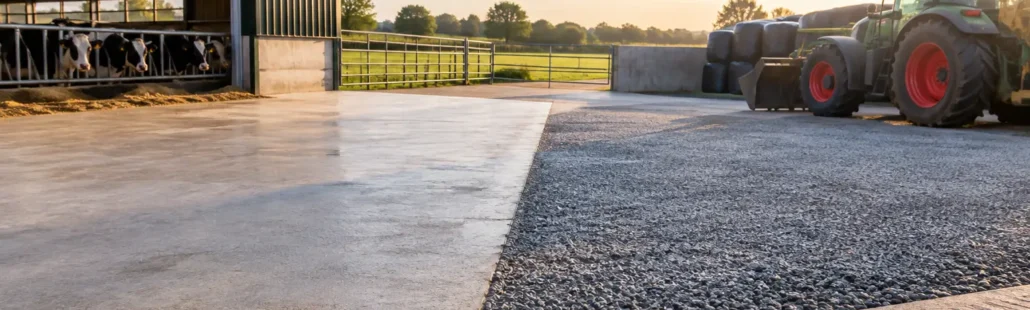
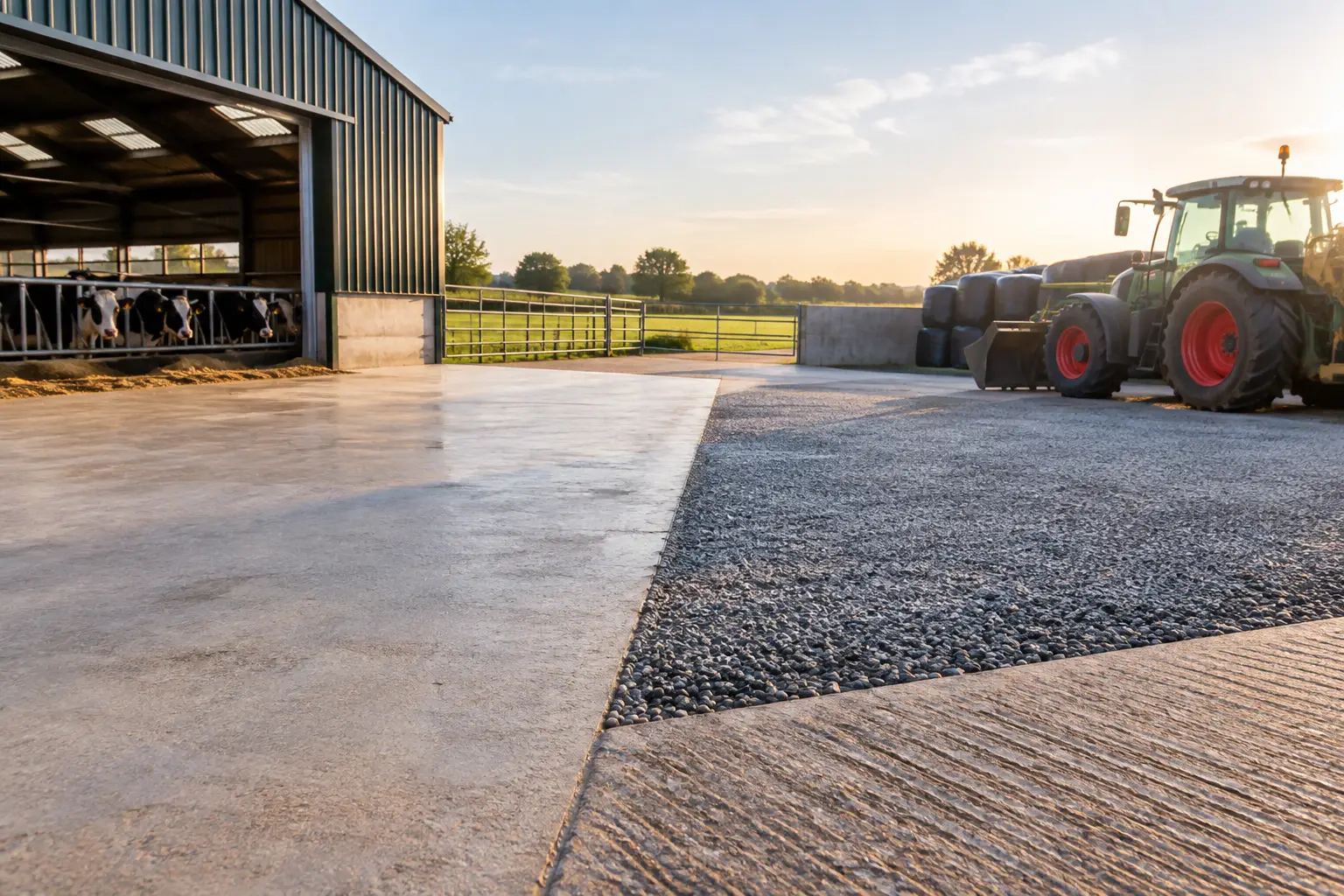
A practical farm surfacing plan often uses more than one material. Asphalt may be appropriate for the main yard, delivery route and workshop frontage. Concrete may suit a high-load or wash-down area. Compacted stone can serve field tracks, while a reinforced grid may handle occasional parking.
This approach focuses investment where it produces the best return. It also avoids overspecifying low-use ground or underbuilding areas that must remain operational every day. A professional site assessment should consider the ground condition, drainage, access for plant and the likely traffic for years ahead, not just the immediate repair requirement.
Plan work around the farm calendar
Timing can make surfacing work easier and less disruptive. Busy harvest periods, lambing, calving, silage operations and delivery schedules all affect when access can be restricted. Clear planning allows contractors to phase works, retain an alternative route where possible and complete critical areas efficiently.
Weather also matters. Bound materials need suitable conditions for installation and curing, while groundwork is more difficult when the formation is saturated. Acting before a damaged route becomes impassable gives more flexibility over programming and usually limits the scale of repair required.
EB Road Surfacing can assess farm yards, tracks and access routes across Scotland and North England, then recommend a surface construction that suits the traffic, drainage and budget. The aim should be simple: a safe, dependable surface that lets the farm keep moving when the weather and workload are at their worst.