Best Driveway Finish for Drainage in Britain
A driveway can look excellent on the day it is laid and still cause expensive problems after the first heavy spell of rain. The best driveway finish for drainage is not simply the surface that lets water through fastest. It is the finish, gradient, sub-base and edge drainage working together to move water safely away from buildings, entrances and neighbouring land.
For most domestic properties, a permeable surface such as gravel, permeable block paving or resin-bound aggregate is the most straightforward answer. For heavier traffic, steep sites and commercial access routes, an asphalt finish with properly designed falls and channel drainage can be the better long-term choice. The right option depends on ground conditions, use, available outlets and the standard of preparation beneath the surface.
Start with where the water needs to go
Drainage failures rarely begin at the finished surface. They begin when the existing levels, soil type or water route have not been assessed properly. Water must either soak into the ground through a permeable construction or be collected and directed to a suitable drainage point. Allowing it to run towards a garage, house wall, public footway or neighbouring property is not an acceptable solution.
A professional installation starts by checking the driveway levels. As a general rule, the finished surface should fall away from the building. The required fall varies with the surface and site, but it must be sufficient to prevent puddles without making access uncomfortable or unsafe. On a long or awkwardly shaped drive, more than one drainage channel or a change in gradient may be needed.
The ground also matters. Free-draining soil may suit a soakaway or permeable build-up well. Heavy clay can hold water for long periods, meaning a permeable finish may need additional drainage measures rather than relying on infiltration alone. Existing drains should be identified before excavation, especially on older properties and commercial sites.
Best driveway finish for drainage: the main options
Permeable block paving
Permeable block paving is one of the strongest all-round choices for domestic driveways. The blocks are laid with wider joints filled with clean aggregate, allowing water to pass into a specially graded sub-base below. That sub-base stores water temporarily and lets it soak into the ground or discharge gradually through a designed outlet.
It provides a neat, traditional appearance and copes well with regular car traffic when installed on the correct foundation. Individual blocks can also be lifted and replaced if a local repair is needed. The trade-off is that it costs more than a basic gravel drive and needs the correct jointing and bedding materials. Standard block paving with sand-filled joints is not the same as a permeable paving system.
It is a good option for homeowners who want a finished look without relying on visible channel drains across the entrance. It can also suit car parks and shared access areas where appearance, pedestrian grip and controlled surface water are all priorities.
Gravel with a permeable sub-base
Gravel is naturally free-draining, economical and well suited to rural homes, long private drives and larger areas where a formal paved finish is not essential. Water passes through the aggregate and into the sub-base, provided the material below has been designed to drain rather than compact into a sealed layer.
The weakness of loose gravel is movement. It can migrate into lawns, collect at the bottom of slopes and develop ruts where vehicles turn or brake. A cellular gravel grid can help keep the stone in place and improve stability under tyres and foot traffic. Edging is equally important, particularly where the driveway meets paving, grass or a road entrance.
Gravel is not usually the best choice for a steep driveway, for sites requiring wheelchair-friendly access, or where frequent sweeping and snow clearance are expected. It can also be noisier than other finishes. With a firm base, suitable gravel size and regular topping up, however, it remains an effective drainage-led solution.
Resin-bound aggregate
Resin-bound surfacing combines dried aggregate with resin before it is laid, creating a smooth decorative finish with small voids between the stones. When laid over a suitable permeable base, it can allow water to drain through the surface while offering a cleaner, more stable alternative to loose gravel.
This finish works well on residential driveways where kerb appeal matters and on paths where a level walking surface is useful. It is available in a wide range of aggregate colours and can follow curved layouts neatly. The surface must be installed in dry, suitable weather by an experienced contractor, and the base must be sound. Resin-bound material laid over an impermeable or poorly drained base will not solve a drainage issue.
Do not confuse resin-bound with resin-bonded surfacing. Resin-bonded surfaces have aggregate scattered onto a resin layer and are generally not permeable. The names sound similar, but their drainage performance is very different.
Porous asphalt
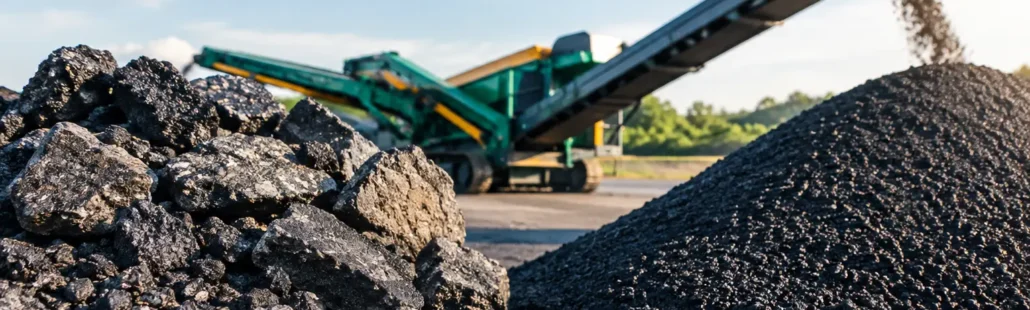
Porous asphalt is designed with an open texture that allows water to pass through the surface into a drainage layer below. It gives the appearance and driving feel of a conventional asphalt driveway while supporting a permeable construction. It can be a practical option for larger driveways, private roads and areas carrying more regular traffic.
Its performance depends heavily on the underlying layers remaining open and clean. Fine material, poor maintenance during construction or runoff carrying silt onto the surface can gradually reduce permeability. It is therefore best specified as part of a complete system, not treated as a simple replacement for standard tarmacadam.
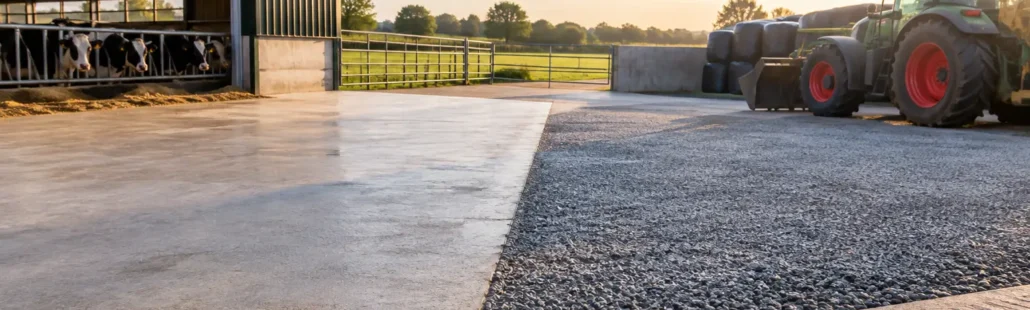
For commercial yards and access roads, a conventional asphalt surface is often more appropriate than porous asphalt because it is hard-wearing, easy to maintain and suited to heavier vehicles. In those cases, drainage is normally managed with carefully formed falls, gullies, linear channels and suitable outfalls.
Standard tarmacadam or asphalt with channel drainage
A conventional tarmacadam driveway is impermeable, but that does not make it a poor drainage choice. On the right site, it is one of the most durable and cost-effective finishes available. The key is to design the water route before surfacing begins.
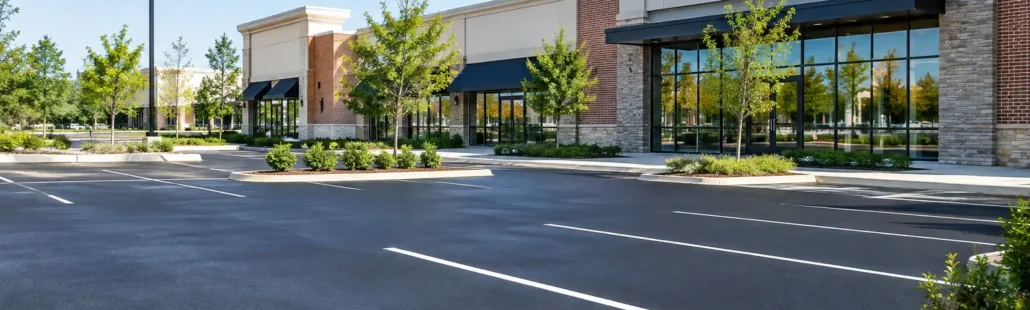
A correctly laid asphalt driveway can be shaped to direct water to a channel drain, gully or drainage run at the lowest point. This is particularly useful where the ground is clay-heavy, where infiltration is limited, or where vehicles and deliveries would quickly disturb a loose or permeable finish. It also offers a clean, low-maintenance surface for busy households and commercial premises.
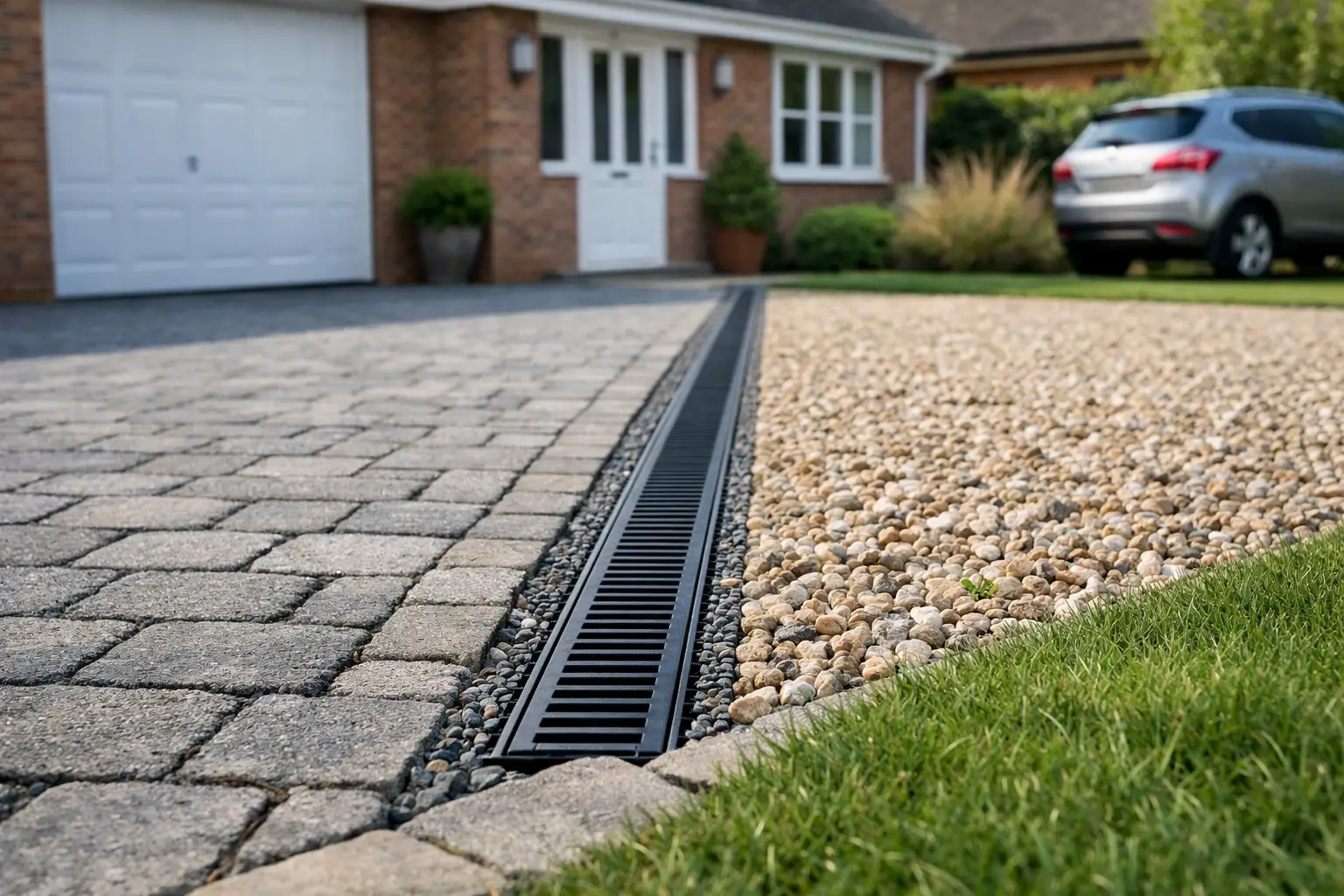
The risk comes when an asphalt surface is laid flat, or when its fall directs water towards a building. A channel drain should be positioned where it can intercept runoff before it reaches a garage threshold, doorway or public pavement. The drainage connection itself must be suitable for the site and local requirements.
The sub-base determines whether drainage lasts
A driveway finish is only as good as the layers beneath it. For a permeable driveway, the sub-base must use clean, open-graded aggregate that stores and transmits water. Using the wrong material can trap water below the surface, causing soft areas, movement and frost damage.
For an impermeable driveway, the sub-base still needs adequate depth, compaction and stability. If it settles under vehicle loads, the surface can form low spots where water sits. Those puddles accelerate deterioration, especially when water freezes and thaws through the winter.
Geotextile membranes may be used to separate the ground from the stone layers and prevent fine soil from contaminating the drainage stone. Their specification depends on the site. This is why a quick overlay over an old, failing driveway is rarely a proper answer to persistent standing water.
Planning and practical drainage checks
Before choosing a finish, consider the size of the front driveway and where runoff will go. In many cases, replacing a front garden surface with an impermeable area requires the water to be directed to a permeable area within the property or managed through an appropriate drainage system. Requirements can vary by location, property type and local authority, so it is sensible to confirm what applies before work starts.
Drainage also needs routine attention. Keep channel grates clear of leaves and grit, remove soil from gravel edges, and avoid allowing garden beds to spill onto porous surfaces. Permeable paving and resin-bound finishes benefit from occasional cleaning to prevent fine debris blocking their pores. Early maintenance is far cheaper than lifting a driveway to correct a blocked drainage build-up.
Choosing the finish for your site
For a typical home driveway on free-draining ground, permeable block paving or resin-bound aggregate usually gives the best balance of appearance, drainage and everyday usability. Gravel is a sensible value option for long or rural drives if its movement can be managed. Where the soil drains poorly, the slope is challenging or vehicle use is heavier, asphalt with purpose-built channel drainage may be the more dependable route.
The finish should never be chosen from appearance alone. A site survey should establish the levels, ground condition, traffic load and lawful drainage route before a quote is finalised. EB Road Surfacing can assess these details and recommend a driveway construction that is built to shed water properly, rather than merely hide the problem for a season.
A dry, stable driveway starts below the surface. Choose the finish that suits the ground and make sure the water has a planned place to go.