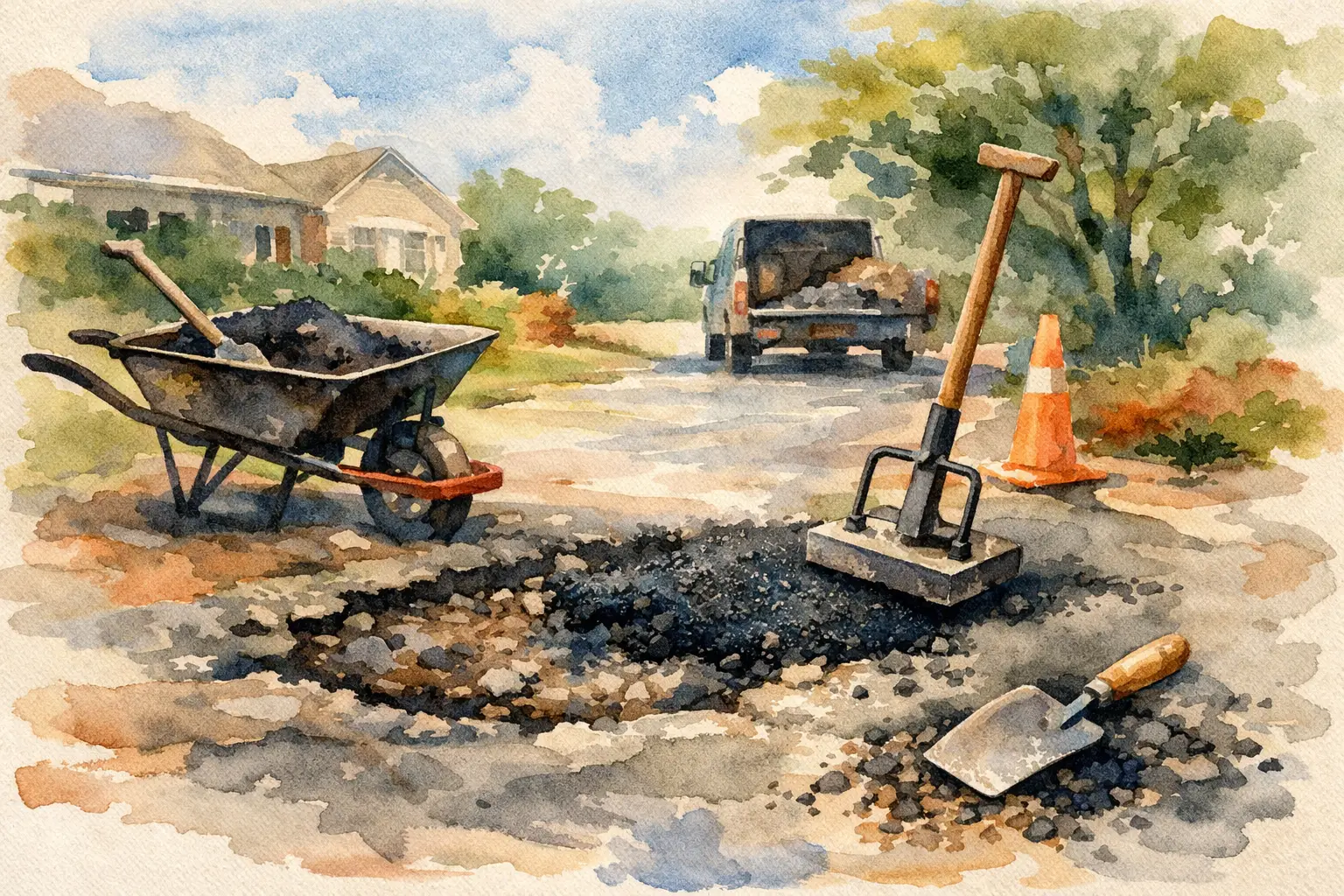
Driveway Pothole Repair Done Properly
A pothole in a driveway rarely stays small for long. One week it looks like a rough patch near the gate or garage, and before long it is collecting water, breaking up at the edges, and making every vehicle movement harder on tyres, suspension, and the surface around it. Good driveway pothole repair is not just about filling a hole. It is about stopping the damage from spreading and making sure the repair holds up under daily use.
For homeowners, landlords, site managers and commercial property operators, the real issue is usually not the hole itself. It is the risk that comes with leaving it. Potholes create trip hazards, hold standing water, spoil the appearance of the property, and often point to a deeper weakness in the surface or base below. The right repair deals with the cause as well as the visible damage.
What causes driveway potholes?
Most potholes start the same way. Water finds its way into cracks or weak points in the surface. Traffic then puts pressure on that area, especially where vehicles brake, turn, or sit repeatedly in the same position. In colder weather, freeze-thaw action can make the problem worse. Once the surface starts to loosen, small fragments break away and the hole grows.
On asphalt or tarmac driveways, this can happen because of age, poor drainage, edge breakdown, or a base that was never strong enough for the load it carries. On commercial yards and access roads, heavier vehicles accelerate the damage. On domestic driveways, the issue often shows up where cars enter from the road, outside garages, or where water sits after rain.
That is why a proper repair starts with assessment. If the pothole formed because the surface is worn but the base is still stable, a local patch may be enough. If the area is soft underneath or there are multiple failures close together, a simple fill will only be a short-term fix.
Driveway pothole repair is not one-size-fits-all
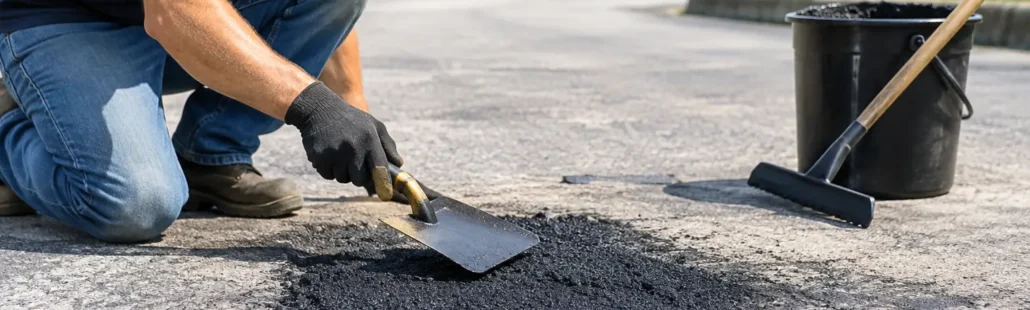
There is a big difference between a quick temporary patch and a repair designed to last. Temporary repairs have their place, especially where immediate safety matters or weather conditions are poor. But for a driveway that sees regular traffic, the better option is usually a cut-out and reinstatement of the failed section.
That means removing the damaged material back to sound edges, checking the condition of the sub-base, replacing any weak material underneath, and laying fresh asphalt or tarmac properly compacted to the right level. This creates a bonded patch that sits flush with the existing driveway and can cope with ongoing use.
Surface dressings, cold lay products and off-the-shelf patch materials may seem attractive because they look cheaper at first glance. Sometimes they are suitable for a very minor defect. The trade-off is durability. If the surrounding area is already breaking up, or if water is still getting underneath, those materials often fail quickly and need doing again.
When a patch repair is the right choice
A localised repair makes sense when the damage is limited and the rest of the driveway is in reasonable condition. If there is one pothole, or a small number of isolated failures, repairing those sections can restore safety and appearance without the cost of resurfacing the whole area.
This approach is common on driveways with solid foundations and a surface that still has years of life left in it. It is also useful where a utility trench, tree root movement or a local drainage issue has caused a specific weak spot.
A good contractor will match the repair to the condition of the drive rather than overselling a bigger job. If patching will do the job properly, that should be the recommendation.
When resurfacing is the better investment
There are times when repeated driveway pothole repair stops being cost-effective. If the surface is cracked throughout, fretting at the edges, uneven in multiple places, or showing signs of widespread wear, isolated patches can leave the driveway looking poor and performing inconsistently.
In that situation, resurfacing is often the more sensible option. It gives a uniform finish, restores the wearing course, and deals with a broader pattern of deterioration in one go. For domestic properties, that improves kerb appeal as well as safety. For commercial sites, it reduces the risk of ongoing disruption from repeated small repairs.
The key point is value over time. A cheaper repair that fails in months is not cheaper once you factor in repeat visits, extra disruption and further damage to the surrounding surface.
What a proper repair should include
A reliable repair process is straightforward, but it has to be done correctly. First, the damaged area is marked out and cut back to sound material. Loose debris and failed surfacing are removed fully rather than worked around. If the base below has softened or broken down, that material must be replaced and compacted.
Once the foundation is stable, fresh surfacing material is laid and compacted to create a tight, level finish. Edges matter here. Poorly formed edges let in water and are often where failed repairs begin. A neat tie-in to the existing driveway helps both the appearance and the lifespan of the patch.
Drainage should also be considered. If water is regularly collecting in the same location, the pothole may return unless the fall of the surface or nearby drainage is corrected. That is especially relevant on sloped drives, entrances, and areas where run-off from roofs or adjoining ground reaches the surface.
Domestic and commercial driveways need different thinking
The same defect can need a different solution depending on who uses the driveway. A domestic drive with light car use may only need a local repair and some preventative maintenance. A commercial forecourt, shared access road or service yard may need a stronger specification because of turning vehicles, delivery traffic or higher daily use.
That is where experience in both private and commercial surfacing work matters. The repair needs to suit the load, the traffic pattern and the condition of the existing surface. A patch that survives family car use may not last in a setting where vans and heavier vehicles are using the same point every day.
For sites across Scotland and the North of England, weather exposure is another factor. Repeated rain, colder winters and water sitting on shaded surfaces can all shorten the life of poor repairs. Materials and workmanship need to reflect those conditions.
Signs you should not leave a pothole any longer
Some damage can wait a few weeks while quotes are arranged. Some should be dealt with sooner. If the pothole is getting deeper, holding water, breaking up around the edges, or causing vehicles to bottom out or jolt sharply, the risk is increasing. The same applies if pedestrians use the area regularly or if the driveway forms part of the access to a business, block, yard or public-facing premises.
There is also a practical point that gets missed. The longer a pothole is left, the larger the repair area usually becomes. Water infiltration and traffic do not stay neatly within the original hole. Adjacent material starts to fail, and what could have been a local repair turns into a more expensive reinstatement.
Choosing the right contractor for driveway pothole repair
This kind of work should be simple to arrange. You want a contractor who can assess the defect properly, explain whether patching or resurfacing is the better route, and carry out the repair with minimal disruption. Clear pricing, insured work and guaranteed workmanship all matter, especially if the driveway serves a business or shared property.
It also helps to use a contractor with broader surfacing experience. Pothole repairs sit within a bigger picture that includes drainage, edge support, sub-base condition and long-term wear. A team that handles roads, car parks, driveways and maintenance work is more likely to spot the underlying issue instead of just treating the symptom.
EB Road Surfacing works with both domestic and commercial clients on repairs, resurfacing and general surface maintenance, so the advice is based on what will last on site, not what looks cheapest on paper.
Aftercare and preventing future potholes
Once repaired, a driveway still benefits from basic maintenance. Keep it clear of standing water where possible, deal with cracks early, and do not ignore failing edges. If drainage is poor, fixing that may do more to extend surface life than repeated patching.
For older driveways, periodic maintenance can prevent larger costs later. That might mean isolated repairs, surface treatment, or resurfacing before the base becomes affected. The right timing depends on the condition of the drive, the traffic it carries and how long you intend to keep the property or asset in service.
A pothole is easy to dismiss until it becomes the part of the driveway everyone notices and avoids. Deal with it properly, and you protect the surface, the appearance of the property, and the cost of future repairs all at once.