Road Maintenance That Prevents Bigger Costs
A road rarely fails all at once. It starts with a small crack, a loose edge, standing water after rain, or a patch that no longer sits level with the surrounding surface. Leave it too long, and what could have been a straightforward repair turns into a larger, more expensive job. That is why road maintenance matters – not just for appearance, but for safety, access, compliance and long-term cost control.
For commercial sites, private estates, farms, industrial yards and public-facing access routes, the condition of the surface affects more than first impressions. Poor surfaces create trip hazards, damage vehicles, hold water, and make premises look neglected. For homeowners, the same principle applies on driveways and private roads. A worn surface is easier to ignore than a broken one, but early action is usually the better investment.
What road maintenance actually covers
Road maintenance is a broad term, and that matters because not every surface problem needs the same fix. In some cases, a pothole repair is enough. In others, the right answer is resurfacing, surface dressing, patching, drainage improvement or fresh road markings.
The key is matching the treatment to the condition of the surface and the level of traffic using it. A lightly used private lane can often be repaired in sections and remain serviceable for years. A busy access road serving delivery vehicles or constant car traffic may need a more durable solution from the outset. Treating both jobs the same would be a false economy.
A proper maintenance approach looks at the structure beneath the surface as well as the visible wear on top. If the base is sound, repairs can be localised and cost-effective. If the foundation has started to fail, surface-only work may tidy the area up for a short time but will not hold for long.
Why road maintenance saves money over time
The biggest mistake property owners and site managers make is waiting for obvious failure before acting. By that stage, water has usually penetrated the surface, traffic has widened the damage, and the repair area has become larger than it first appeared.
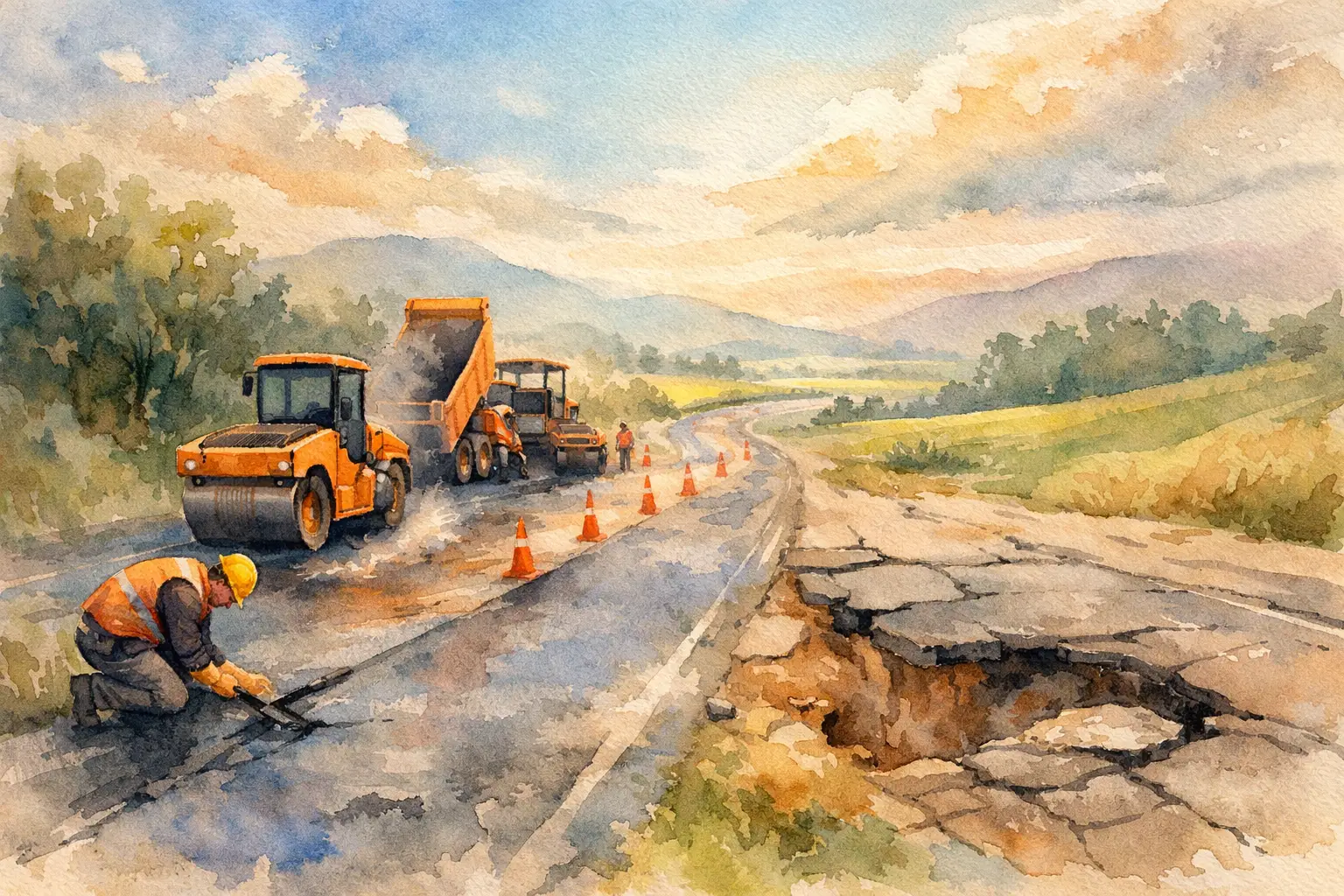
Cracks are a good example. When sealed early, they can often be managed before water reaches the lower layers. Once water gets in, freeze-thaw cycles, vehicle loading and regular wear begin to break the surface apart. What started as a maintenance issue becomes a structural repair.
There is also the operational cost to consider. Damaged roads and access areas slow traffic, create complaints, increase liability risks and can affect day-to-day business. On commercial premises, that may mean disruption for staff, customers, tenants or deliveries. On residential properties, it often means avoidable wear on vehicles and a poorer finish at the front of the home.
Road maintenance is not always about the cheapest immediate fix. It is about choosing work that remains sound, keeps people safe and delays the need for full replacement.
Signs your road maintenance is overdue
Some defects are obvious, but others are easier to miss until they become more serious. Standing water is one of the clearest warning signs. If water sits on the surface after rain instead of draining away, the levels may have dropped, the surface may be deforming, or drainage may be blocked. Water is one of the main causes of accelerated road damage, so this should never be ignored.
Potholes, fretting edges, loose aggregate, surface cracking and depressions in wheel tracks are also common indicators. So are faded road markings where safety depends on clear traffic movement, parking bays or pedestrian routes.
For site managers, another sign is repeated reactive repair. If the same areas keep failing, the problem is often no longer localised. That usually points to fatigue in the wider surface or weakness below it. Repeated patching can still have a place, but not if it simply delays the inevitable while costs continue to stack up.
Road maintenance options and when each one fits
The right repair depends on traffic, surface age, existing construction and budget. There is no single fix that suits every road.
Pothole and patch repairs
These are suitable when damage is confined to isolated sections and the surrounding surface remains stable. A good patch should be cut back properly, prepared correctly and finished level with the existing area. Poor patching often fails because it is rushed or installed onto an unsound base.
For private roads, car parks and access routes, localised repairs can be an efficient way to restore safety without unnecessary cost. They work best when carried out early rather than after widespread deterioration.
Road resurfacing
Resurfacing is often the right option when the surface is tired across a larger area but the underlying structure is still broadly sound. It provides a new wearing course, improves appearance, restores levels and can significantly extend service life.
This is often the sensible middle ground. It costs more than isolated repairs but less than full reconstruction. For many commercial sites, it offers the best balance between durability, appearance and budget.
Surface dressing
Surface dressing can be a practical treatment for roads that need sealing and renewed skid resistance but are not yet at the stage of major structural repair. It helps protect the surface from water ingress and can slow further wear.
That said, timing and suitability matter. It is not a cure for serious potholing or failed foundations. Used in the right setting, it is preventative maintenance. Used in the wrong one, it simply postpones a bigger job.
Full reconstruction
If the sub-base has failed, drainage is poor, or heavy traffic has caused deep movement and repeated defects, reconstruction may be the most economical long-term option. It is the largest intervention, but sometimes patching or resurfacing would only waste money.
A dependable contractor will say that plainly. Not every customer wants to hear that a bigger job is needed, but honest advice is better than a short-lived repair.
Safety, compliance and public-facing surfaces
Road maintenance is not just a matter of keeping a surface tidy. It directly affects safety. Uneven areas, potholes, crumbling edges and poor markings all increase risk for drivers, cyclists and pedestrians.
For businesses and organisations, that also brings liability into the picture. If a defect is known and left untreated, the cost of delay can be far higher than the repair itself. This is especially relevant in car parks, service yards, schools, housing developments, retail sites and any location with regular public access.
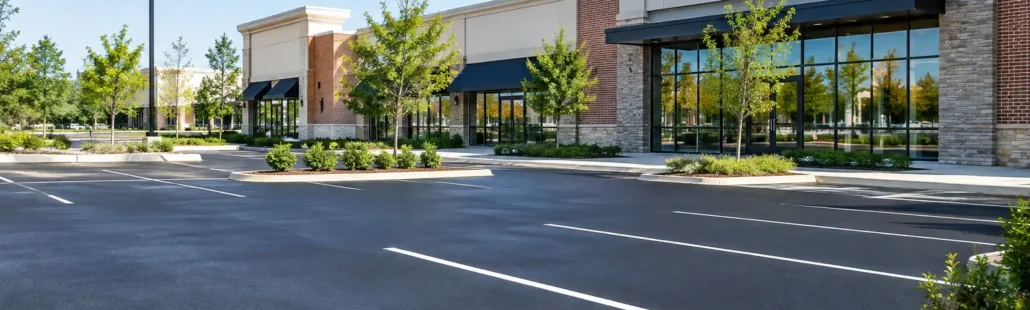
Clear markings are part of the same conversation. Lines that have worn away can create confusion around parking, traffic direction, loading areas and pedestrian zones. Fresh line marking is a simple addition, but it makes a real difference to how a site functions day to day.
Choosing a contractor for road maintenance
The quality of the result depends as much on the contractor as the materials. A proper road maintenance job starts with an accurate assessment, not a guess from the gate.
You want clear advice on what needs doing now, what can wait, and where a short-term repair would or would not be sensible. That level of honesty matters. There is no benefit in over-specifying a small repair, and equally no value in under-specifying work that will fail under traffic.
Look for a contractor that can handle both straightforward repair work and larger resurfacing schemes. That usually means they are better placed to recommend the most practical option rather than steering every enquiry towards one type of job. Experience across commercial, domestic and access-road projects also helps because the demands are different in each case.
A reliable contractor should also be able to work efficiently, minimise disruption and explain the programme in plain terms. For busy sites, timing can be just as important as price. If access is critical, the work needs to be organised around how the site actually operates.
When planned maintenance beats reactive repair
Reactive repair has its place. Urgent potholes and surface failures sometimes need immediate attention, particularly where safety is involved. But the most cost-effective road maintenance is usually planned rather than rushed.
Periodic inspections, early patch repairs and timely resurfacing help spread costs and avoid emergency disruption. That approach is especially useful for commercial landlords, facilities teams, managing agents and landowners responsible for multiple surfaces across one site.
It also gives you better control over standards. Emergency work is often done under pressure. Planned maintenance allows proper preparation, scheduling and finish quality. The result is usually neater, longer-lasting and better value.
For property owners and site managers across Scotland and the North of England, that practical approach is often what keeps roads, car parks and private access routes in serviceable condition year after year. EB Road Surfacing works with clients who need that straight answer – repair what is worth repairing, resurface where it makes sense, and deal with defects before they become a larger problem.
If a surface is starting to crack, dip or break up, the best time to act is usually sooner than feels necessary. That is how you keep a manageable repair from turning into a full replacement.