Surface Dressing for Private Roads Explained
If your private road is starting to look tired, with loose stone, light cracking or a worn top layer, a full resurfacing may not be the first answer. In many cases, surface dressing for private roads is a practical way to restore protection, improve grip and extend the life of the existing surface without the cost of a complete rebuild.
That matters for estates, farms, business parks, shared access roads and residential lanes where maintenance budgets need to go further. The right treatment at the right time can prevent more serious deterioration. Leave it too long, and a relatively straightforward maintenance job can turn into patching, base repairs or full resurfacing.
What surface dressing for private roads actually is
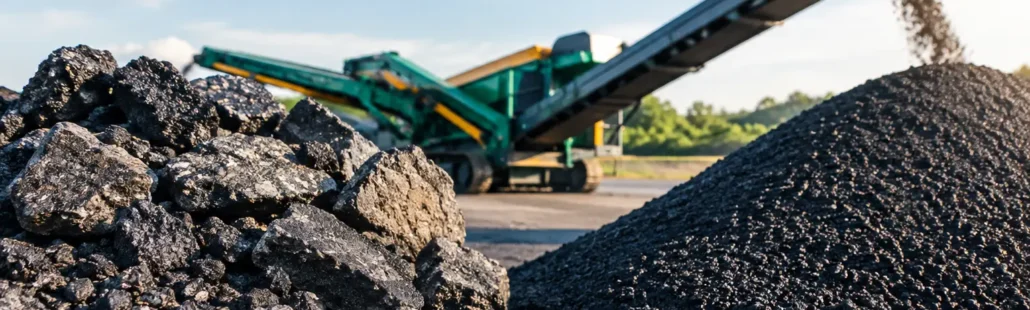
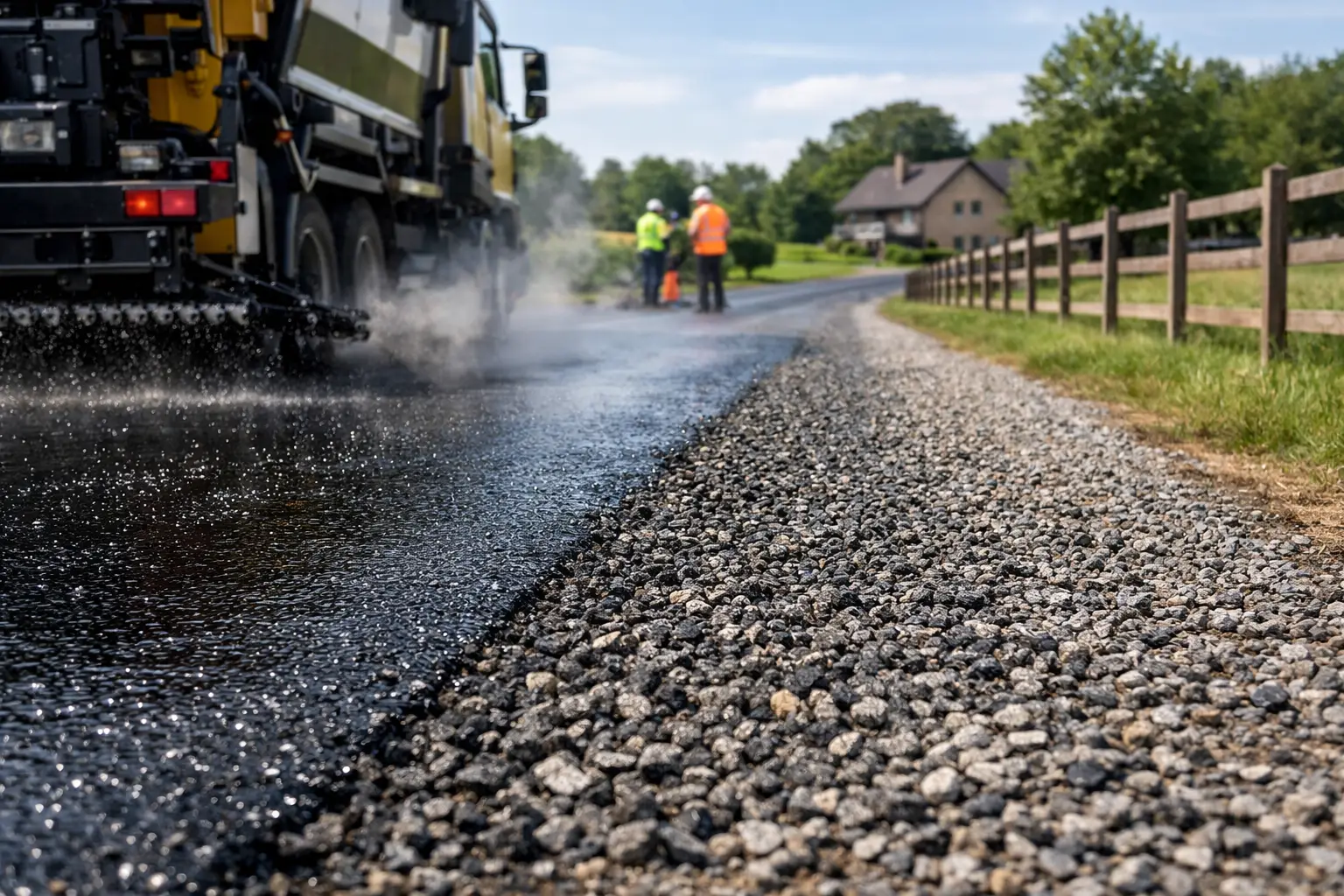
Surface dressing is a road maintenance treatment rather than a full reconstruction. A layer of bitumen emulsion is applied to the existing surface, then clean aggregate chippings are spread over it and rolled in. Once the binder has set and the loose stone is swept away, the road has a refreshed wearing surface that helps seal out water and improve skid resistance.
It is commonly used on public roads, but it also suits many private roads where the existing structure is still sound. That point matters. Surface dressing works best when the road has surface wear rather than deep structural failure.
If the road is breaking up because the sub-base has failed, or there are widespread potholes and rutting, dressing over the top will not solve the root problem. It will improve appearance for a while, but the underlying defects will keep coming through.
When surface dressing is a good option
The best candidates are roads with an ageing bitmac or asphalt surface that has become dry, polished or lightly cracked. You may also notice the road is starting to lose fines, look patchy, or become slippery in wet weather. In these situations, dressing can reseal the surface and add a new layer of texture.
For private roads, cost is often one of the main reasons clients choose this method. Compared with full resurfacing, it is generally quicker and more economical, especially over longer stretches of road. It also causes less disruption, which is useful where there is regular access for residents, staff, deliveries or agricultural vehicles.
It is particularly useful for:
- shared private lanes
- estate roads
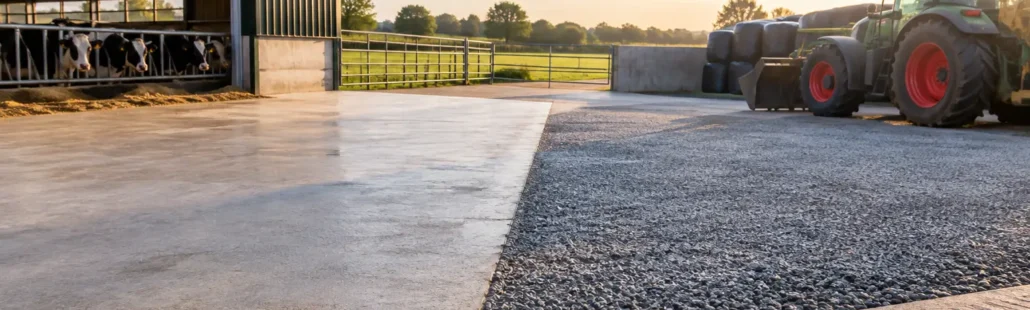
- farm and rural access roads
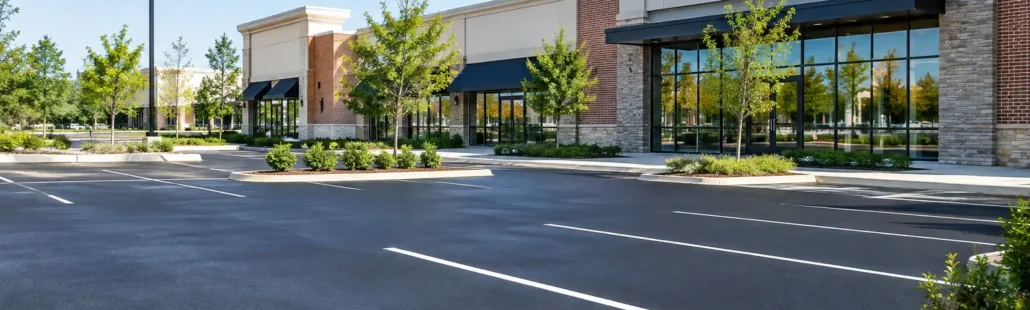
- commercial access roads
- light-use residential roads
That said, traffic type matters as much as traffic volume. A road used occasionally by cars is different from one carrying frequent heavy lorries, plant or repeated turning movements. The heavier the use, the more important it is to assess whether a stronger surfacing solution would give better long-term value.
The main benefits of surface dressing
The biggest benefit is preservation. Surface dressing seals minor cracks and surface voids, helping to stop water getting into the road. Once water enters and freezes, or starts weakening the layers below, deterioration tends to speed up.
It also improves texture. That means better grip for vehicles and, where relevant, safer footing for pedestrians. On bends, gradients and shaded areas that stay damp, this can make a noticeable difference.
There is also the cost benefit. For many private road owners, the choice is not between surface dressing and full resurfacing today. It is between carrying out preventative maintenance now or facing a much larger repair bill later. Used at the right stage, dressing can buy valuable years from the existing road.
Appearance should not be overlooked either. A worn private road affects first impressions, whether it serves homes, a holiday park, a business unit or a country property. Surface dressing gives a cleaner, more uniform finish without the expense of total replacement.
When it is not the right solution
This is where a straightforward assessment matters. Surface dressing is not a cure-all.
If there are large potholes, movement in the road, deep cracking, edge failure or drainage problems, those issues need dealing with first. Dressing over failed areas can trap problems underneath and shorten the life of the treatment.
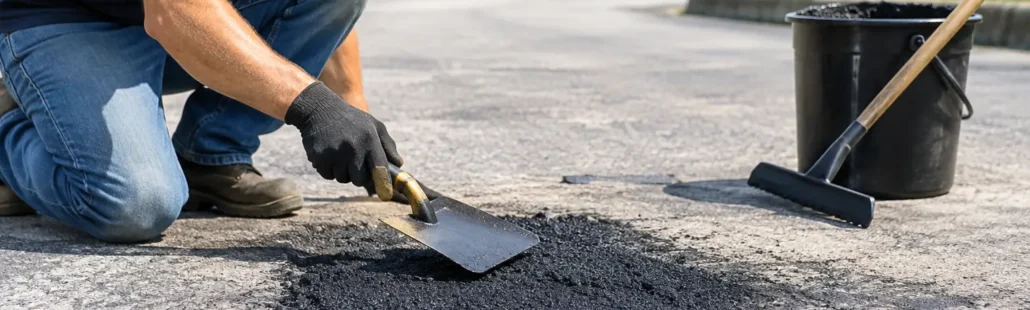
Private roads often have mixed conditions along their length. One section may be suitable for dressing, while another needs patch repairs or local resurfacing before any final treatment goes down. That is often the most sensible approach – repair the weak areas, then treat the rest of the road to create a sealed, consistent finish.
Road level is another consideration. Surface dressing adds relatively little thickness, which is often an advantage where kerb heights, thresholds or drainage channels leave little room for build-up. But if the road profile has already become uneven or worn into depressions, resurfacing may be needed to restore levels properly.
What affects the finish and lifespan
Surface dressing is simple in principle, but results depend heavily on timing, preparation and application. Weather matters. The binder needs suitable temperatures and dry enough conditions to bond properly, so this is usually carried out in the warmer months.
The condition of the existing surface matters just as much. The road needs to be clean and prepared, with any necessary repairs completed beforehand. The correct binder rate and aggregate size also need to match the road condition and traffic use. Too little binder and the stone may not hold. Too much and the surface can bleed in hot weather.
Traffic management after application is part of the job as well. Vehicles generally need to move at controlled speeds initially so the chippings bed in correctly. On private roads, that often means clear communication with residents, occupiers or site teams.
In terms of lifespan, there is no honest one-size-fits-all figure. Usage, weather exposure, drainage, gradient and underlying condition all play a part. A lightly used private road in good condition can see strong value from surface dressing. A heavily trafficked access road with weak edges and standing water will not perform the same way.
Surface dressing compared with resurfacing
If you are weighing up options, the key difference is purpose. Surface dressing is preventative maintenance. Resurfacing is corrective work that replaces the top layer, and in some cases more than that.
If the existing road still has a sound structure, dressing is often the more cost-effective decision. It protects what is already there and delays major works. If the road surface has reached the point where defects are structural, resurfacing usually gives the more reliable result.
This is why proper site assessment matters more than choosing the cheapest method on paper. A lower initial cost is only a saving if the treatment is suitable. If the wrong solution fails early, you end up paying twice.
What private road owners should expect from the process
A professional contractor should first assess whether the road is suitable, not simply quote for the treatment requested. That includes looking at the existing surface, drainage, edges, previous repairs and how the road is used.
If surface dressing is appropriate, any patching or preparation should be dealt with before the main works begin. The road is then cleaned, the binder is sprayed, aggregate is applied and rolled, and the surface is left to cure. Loose chippings are typically swept after trafficking, once the stone has embedded.
For clients, the main practical points are access planning and short-term aftercare. There may be temporary speed restrictions and some loose stone initially. That is normal. What matters is that the job is applied evenly, managed properly and followed up where needed.
For longer private roads, estates and mixed-use sites, it is also worth thinking beyond a single job. Planned maintenance nearly always costs less than reactive repair. A road that is inspected and treated at the right point will usually outlast one that is left until failure is obvious.
Is surface dressing for private roads worth it?
When the existing road is basically sound, yes, it often is. Surface dressing for private roads can extend service life, improve safety and tidy up a worn surface at a much lower cost than full resurfacing. That makes it a sensible option for many landowners, property managers and shared road users.
The key is timing. Too early and you may not get full value. Too late and the road may already need heavier repair. A dependable contractor will tell you which side of that line your road sits on.
At EB Road Surfacing, that practical approach matters. The aim is not to oversell a treatment, but to recommend the work that gives the road the best performance for the budget available.
If your private road is showing signs of wear, the best next step is a clear assessment of what is happening on the surface and underneath it. A well-timed repair is usually cheaper than a delayed one, and a road that stays sealed, safe and serviceable causes fewer problems for everyone using it.