School Playground Surfacing Repairs Done Right
A playground surface rarely fails all at once. More often, it starts with a split seam, a worn landing zone under a swing, or edges that begin to lift where children run, stop and turn every day. That is why school playground surfacing repairs are best dealt with early. Leave defects too long and a straightforward repair can turn into a wider safety issue, a larger bill, and more disruption for pupils and staff.
For schools, academies, nurseries and local authority sites, the surface is not just part of the playground’s appearance. It is part of site safety. When it starts to break down, the risks are practical and immediate – trips, water ingress, loose material, and uneven areas that become worse under constant use. The right repair approach protects children, keeps the area serviceable and helps avoid premature full replacement.
When school playground surfacing repairs are needed
Some signs are obvious. Cracks, holes, fretting, pooling water and loose edges all point to surface deterioration. Others are easier to miss unless someone is inspecting the area with maintenance in mind. Colour fade on its own is usually cosmetic, but surface thinning, loss of slip resistance and soft spots underfoot can indicate a more serious problem.
High-wear zones tend to fail first. Entrances to play areas, paths between equipment, scooter routes and impact zones around swings and roundabouts all take concentrated punishment. In rubber safer surfacing, that can mean localised wear or lifting. In tarmacadam and asphalt areas, it may show up as cracking, potholes, rutting or breaking at the edges.
Drainage also matters. If water sits on the surface after rain, the issue may not be the top layer alone. Standing water speeds up deterioration, increases slip risk and can point to movement in the base or poor falls. In those cases, patching the top without addressing the cause is usually a short-term fix.
Repair or replacement – what is the right call?
This is where experience matters. Not every damaged playground needs to be dug out and redone, but not every defect should be patched and left either. The right answer depends on the age of the surface, the extent of the damage, the type of material, and whether the base remains sound.
If the issue is localised – for example, one worn section under play equipment or a small area of cracked macadam – a targeted repair is often the most cost-effective option. It restores safety without taking the full playground out of use for longer than necessary.
If defects are widespread across the area, or if previous repairs are failing one after another, resurfacing may be the better investment. Repeated patching can make a site look untidy and may not solve underlying problems. A larger resurfacing job costs more upfront, but it often gives better value over time if the existing surface has reached the end of its workable life.
There is also a middle ground. Some schools only need partial resurfacing in the busiest sections while the rest of the area remains in good condition. A proper site assessment helps separate what genuinely needs replacing from what can still perform with a quality repair.
Common causes of surface failure
Heavy daily use is the obvious one, but it is not the only reason playground surfaces break down. Weather plays a major part, especially in areas that see repeated freeze-thaw cycles and persistent rainfall. Moisture gets into cracks, temperatures drop, and the surface opens further.
Poor installation is another factor. If the original groundwork was weak, the base depth inadequate, or drainage not properly considered, even a decent top layer will struggle. The same applies where the wrong material has been used for the job. A surface designed for light foot traffic will not hold up well in a school setting with constant movement, equipment loads and seasonal wear.
Tree roots, edging failure and vehicle overrun can also contribute. It is not uncommon for maintenance vehicles or delivery traffic to clip areas never designed for heavier loads. Once the edge starts to crumble, damage spreads quickly.
How professional school playground surfacing repairs are carried out
A reliable repair starts with inspection, not guesswork. The first step is to identify whether the problem sits in the surface course, the binder, the base, or the surrounding drainage and edging. Repairing only what is visible can be false economy if the structure underneath has already failed.
For asphalt or tarmac playground areas, damaged material is usually cut back to a sound edge, removed, and replaced with compatible material laid and compacted to match the surrounding level. If the base is compromised, that section needs rebuilding before the new surface goes in. Done properly, the repaired area ties in cleanly and performs as it should.
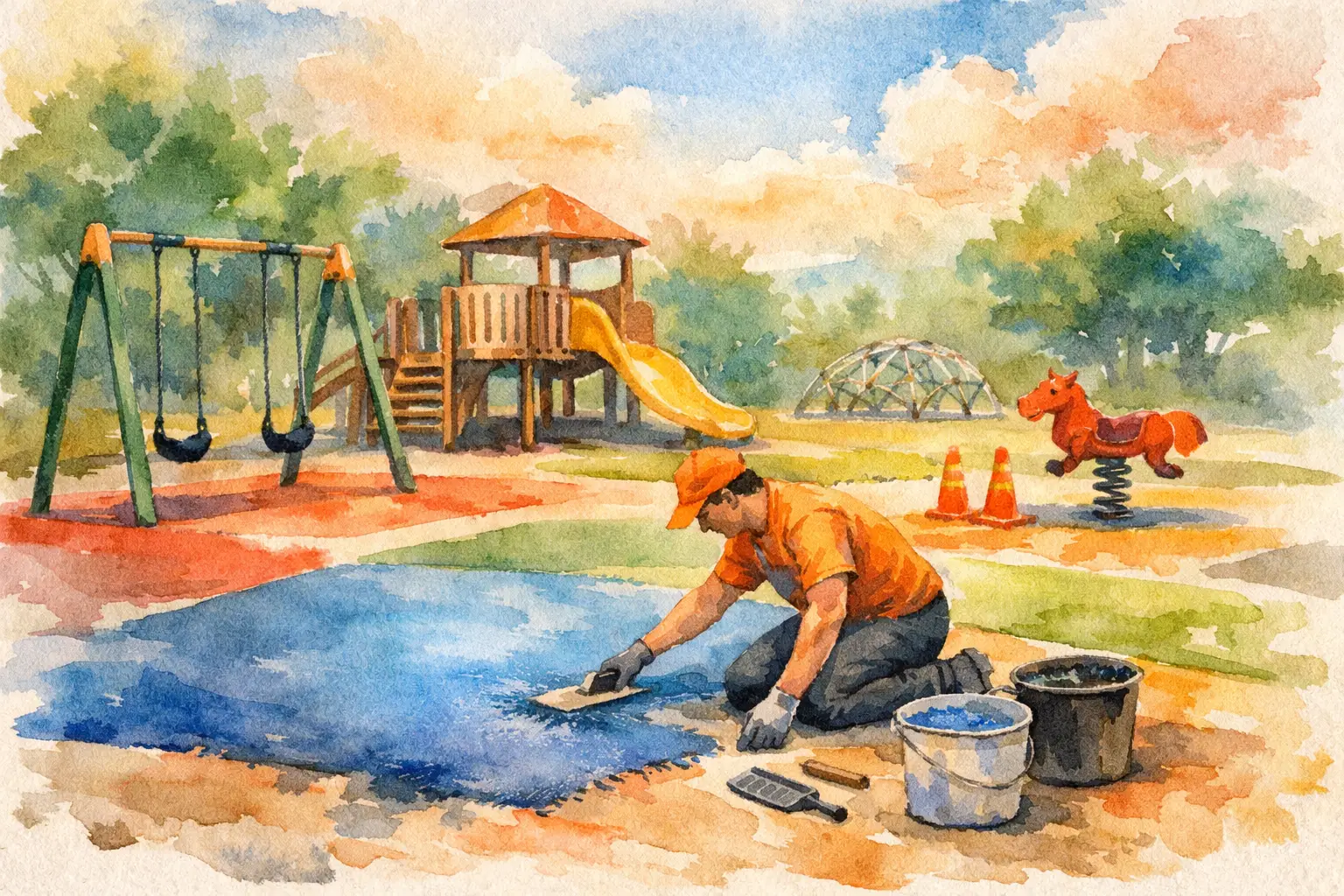
For wet pour or rubber safer surfacing, the method depends on the type and extent of the damage. Local cuts, worn patches and lifting edges can often be repaired in sections. The key is getting a strong bond, correct thickness and a neat finish that does not leave lips or weak joins.
Timing matters too. Schools often need work completed during holidays, inset days or tight operational windows. That is one reason many site managers prefer contractors used to live environments and programmed work. Efficient repairs reduce disruption, but speed should never come at the cost of preparation or finish.
Safety, compliance and duty of care
For anyone responsible for a school site, this is not just a maintenance issue. It is a duty of care issue. Damaged surfaces increase the chance of slips, trips and falls, and defects around play equipment are especially sensitive because those zones are already higher risk.
A repair should not simply make the area look tidier. It should restore safe, reliable use. That includes addressing trip points, surface integrity, drainage and suitability for the space. If impact-absorbing surfacing is involved, repairs need to preserve the intended performance of the area, not just patch over visible damage.
Clear records also help. When a defect is reported, inspected and repaired promptly, schools are in a stronger position from both an operational and liability point of view. Leaving known surface problems in place for months tends to create avoidable risk.
Planning repairs without overspending
Budgets matter, especially in education settings where maintenance money is rarely unlimited. The most sensible approach is usually to act before defects spread. Small repairs are almost always cheaper than major reinstatement once water, movement and wear have had time to widen the problem.
It also helps to prioritise. Not every aged-looking area needs urgent work, but any defect affecting safety or active use should move up the list. A contractor who gives honest advice will distinguish between cosmetic wear, maintenance needs and genuine failure. That makes budgeting easier and helps avoid unnecessary spend.
For larger estates or multi-site organisations, phased works can make sense. Repairs can be carried out in priority order, tackling the worst areas first while planning resurfacing works where they will have the greatest long-term benefit.
Choosing the right contractor for playground repairs
Schools and public-facing sites need a contractor who understands more than laying surface material. They need someone who can assess wear properly, work safely around sensitive environments, and complete repairs with minimal fuss. That means clear communication, realistic timescales, insured work and workmanship that lasts.
It is also worth choosing a contractor with broader surfacing experience. Playground areas are rarely isolated from the rest of the site. Paths, access roads, car parks, line marking and drainage often connect into the same maintenance picture. A team that handles surfacing and civil works in a practical, joined-up way can often spot issues others miss.
Across Scotland and the North of England, weather exposure and site use vary, so there is no single repair method that suits every school. A small nursery play area will have different demands from a large primary campus with hard play zones, access routes and multiple equipment areas. The work needs to fit the site, not the other way round.
If you are dealing with early signs of wear, now is the right time to get the surface checked. A sound repair carried out at the right stage keeps children safer, protects your budget and gives the playground a longer working life without unnecessary disruption. That is usually the difference between a manageable maintenance job and a much bigger problem later on.