Utility Reinstatement Guide for Safer Roads
A utility excavation may be small, but the reinstatement decides whether the surface remains safe and presentable six months later. This utility reinstatement guide explains what a proper repair involves after water, gas, electricity, telecoms or drainage works have opened up a road, footway, car park or driveway.
For site managers, developers and property owners, the priority is straightforward: restore safe access quickly without creating a weak patch that sinks, cracks or holds water. That takes more than tipping material into a trench and laying a strip of tarmac over the top. The ground, foundation layers, surfacing material, drainage and final finish all need to work together.
What utility reinstatement means
Utility reinstatement is the repair of a surface following an excavation. It commonly applies to adopted roads and pavements, but the same principles are just as relevant on private estates, commercial yards, access roads, car parks and domestic driveways.
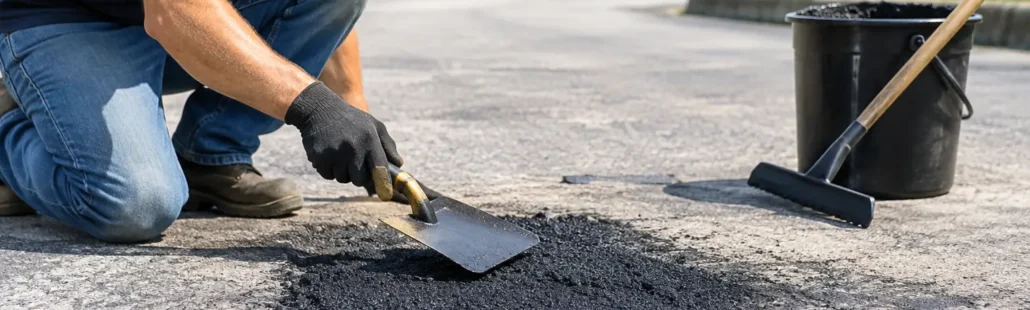
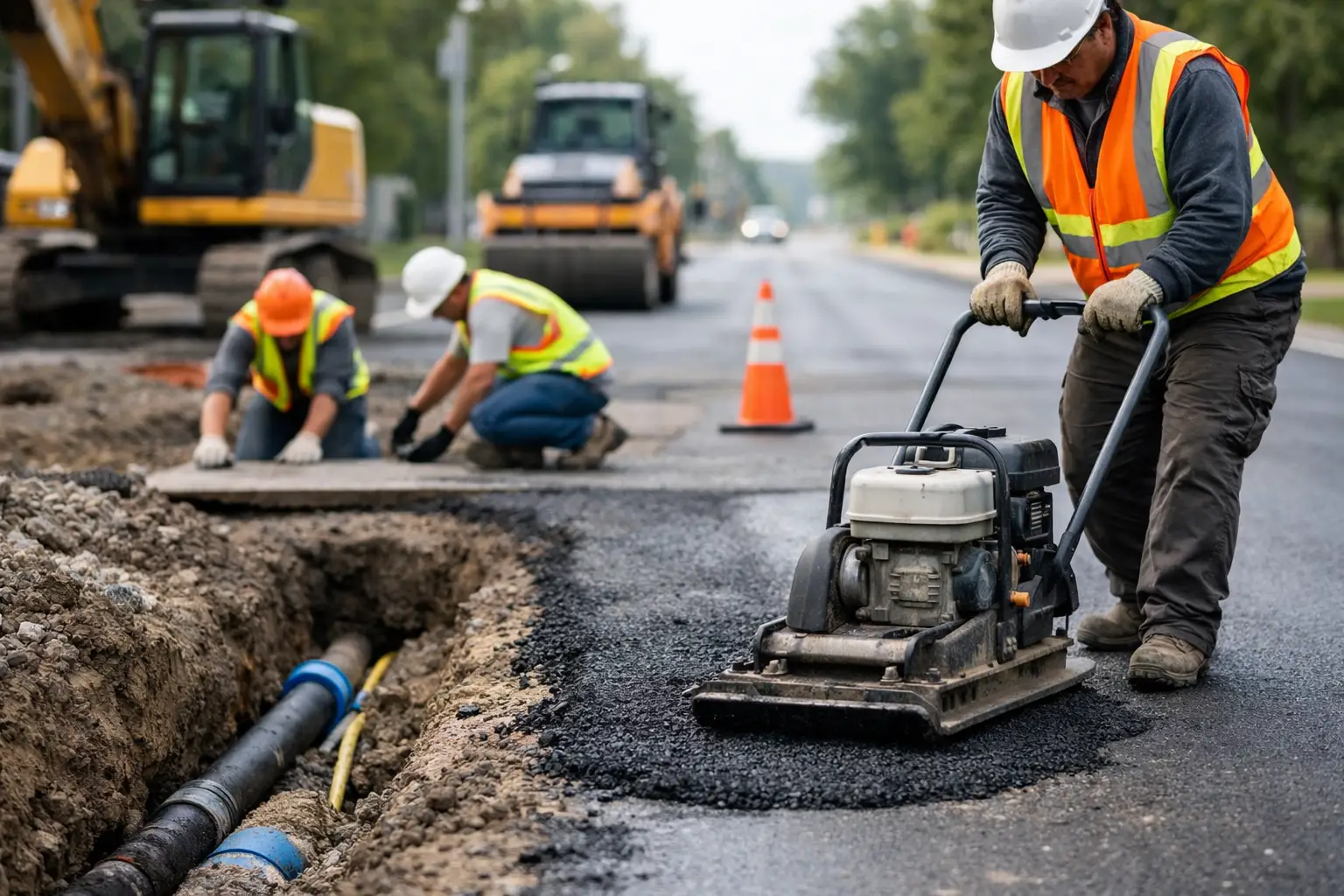
The work normally starts once the utility provider has completed its installation or repair and the excavation is safe to backfill. The trench is rebuilt in layers, compacted properly, and finished to match the surrounding surface as closely as practical. On highways, the required materials, depths, testing and inspection arrangements can be governed by the relevant highway authority and statutory street works requirements. Private sites may allow more flexibility, but cutting corners still causes the same failures.
A good reinstatement should sit level with the existing surface, shed water effectively, provide enough grip for vehicles and pedestrians, and withstand the traffic expected to use it. A neat-looking patch on day one is not enough if it starts to depress under delivery vehicles or breaks away around the edges after winter.
Start with the right assessment
Before surfacing begins, establish what has been disturbed and what the repaired area needs to carry. A narrow trench through a lightly used footway is not the same job as an excavation across a busy service yard or access route used by refuse lorries.
The site assessment should consider the existing surface type, the depth and width of the excavation, ground conditions, drainage, traffic levels and the condition of the adjacent pavement. If the surrounding road surface is already weak, cracked or rutted, a simple trench patch may not provide a lasting visual or structural match. In that situation, a wider resurfacing area can be the more cost-effective answer.
It is also worth checking whether the excavation has affected kerbs, channels, ironwork, drainage runs or road markings. Reinstating the asphalt while leaving a sunken gully, uneven cover or missing line marking creates another maintenance issue and can introduce a safety risk.
Know where responsibility changes
Responsibility can be unclear when a utility opening crosses the boundary between public highway and private land. The utility company or its appointed contractor may be responsible for the statutory works area, while the landowner remains responsible for damage or deterioration beyond that point.
For commercial premises, obtain clear records of the excavation location, dates, photographs and the agreed repair extent. These details help if settlement appears later and make it easier to establish who should return to rectify the work. On public roads, the highway authority may also set requirements for permits, traffic management and inspection.
The utility reinstatement process
A durable repair is built from the bottom up. The visible asphalt layer matters, but it cannot compensate for loose backfill or a poorly compacted foundation below it.
First, the excavation must be backfilled with suitable material in controlled layers. Each layer needs compaction before the next is placed. Trying to compact too much material at once can leave voids beneath the surface, even when the top looks firm. Those voids are a common cause of later settlement.
The sub-base and base layers are then rebuilt to suit the original construction and expected loading. A driveway used by cars may need a different build-up from a heavy-use commercial access road. Material selection and layer thickness should reflect the site rather than follow a one-size-fits-all approach.
Once the foundation is stable, the surfacing is laid and compacted. For asphalt and tarmacadam repairs, clean, square edges are important. They provide a sound joint between the new and existing material and reduce the risk of water entering the repair. Poorly formed joints often fail first, particularly where turning vehicles place sideways pressure on the surface.
The finished area should be level with the surrounding surface, with no raised lip, hollow or loose material. It should also maintain the original falls so that water continues to drain towards gullies or suitable runoff points rather than ponding over the patch.
Matching the surface to the location
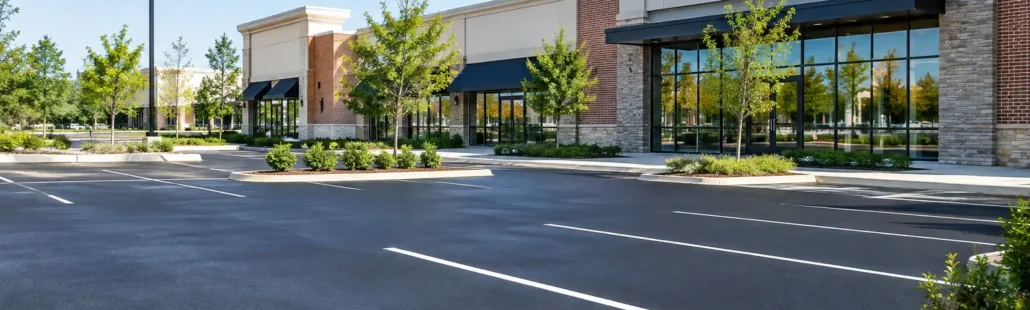
The final surface should suit the setting as well as the load. On an access road or car park, asphalt is usually selected for its strength, clean finish and ability to deal with regular vehicle movements. On footways, the existing material may be asphalt, concrete flags, block paving or another proprietary finish that requires a closer visual match.
Driveways need particular attention because even a technically sound trench repair can look untidy if the new material differs sharply from the original. In some cases, resurfacing the full width of the driveway or a defined section produces a better long-term appearance than a narrow strip. This costs more initially, but it avoids a visible patchwork finish and removes weakened material beside the trench.
For private roads and commercial yards, consider the route vehicles take. If lorries turn, brake or queue over the repair, the area faces more stress than a straight section carrying occasional traffic. A stronger construction or wider repair may be justified in these high-load zones.
Common reinstatement failures and how to avoid them
Most failures can be traced back to preparation, compaction or drainage. Recognising the warning signs early can prevent a modest repair turning into a larger resurfacing job.
- Settlement occurs when backfill or lower layers have not been compacted sufficiently. The repair sinks below the surrounding road and collects water.
- Cracking at the edges often points to weak joints, movement below the surface or an unsuitable repair width.
- Loose aggregate or fretting can result from poor material placement, inadequate compaction or traffic using the repair before it is ready.
- Standing water suggests that surface levels or drainage falls have not been restored correctly.
- Uneven ironwork can create trip hazards, vehicle impacts and water ingress around covers or frames.
Weather affects the work as well. Heavy rain can compromise trench conditions and make compaction difficult, while cold or wet conditions can affect asphalt laying quality. A contractor should assess conditions honestly rather than force a finish that is unlikely to last.
Managing access and disruption
Utility repairs often happen where people need to keep moving: outside shops, across warehouse entrances, on residential streets or through active car parks. The best programme balances safe working with practical access arrangements.
Plan deliveries, customer access and vehicle movements around the works before the excavation is closed. Where possible, phase the repair so that one route remains available. Pedestrian routes need clear protection, safe crossings and appropriate temporary surfacing. On public-facing sites, traffic management and clear signage are not optional details – they protect workers, drivers and visitors.
For a commercial site, tell staff and tenants what will happen, when access will be restricted and where vehicles should go instead. Short, clear communication prevents the last-minute conflict that can delay surfacing crews and compromise the repair.
Inspection after the work is complete
A reinstatement should be checked after completion and monitored over the following weeks, particularly after heavy rain or regular HGV use. Look for a change in level, cracking around the perimeter, loose material and water pooling. These are easier and cheaper to address while the defect is localised.
Keep photographs of the finished work and any records of materials, levels or agreed scope. This is useful for property managers maintaining several sites and for homeowners who need proof of work completed. Where works affect public highway, formal inspections may apply; on private land, a professional handover and clear workmanship guarantee still provide confidence.
When a wider resurfacing repair is the better option
A trench repair is not always the right final answer. If the existing surface is extensively cracked, thin, worn or already suffering from poor drainage, joining a new patch into failing material may simply move the problem a few metres along the road.
Wider resurfacing can improve the appearance, remove weak surrounding edges and provide a more consistent driving surface. It is particularly worth considering on entranceways, car park lanes, driveways and access roads where presentation matters alongside durability. The right choice depends on the condition of the existing pavement, the budget available and how long the repaired area needs to perform before planned maintenance.
A utility opening should not leave behind a permanent weak point. With sound preparation, correct compaction and a surface designed for the traffic using it, the repair can be safe, hard-wearing and far less noticeable. For private roads, yards and driveways across Scotland and Northern England, EB Road Surfacing can assess the affected area and recommend a practical reinstatement or resurfacing solution that suits the site.