What Causes Potholes in Driveways?
A driveway rarely fails all at once. More often, it starts with a shallow dip, a loose patch of stone, or a crack that holds water after rain. If you are asking what causes potholes in driveways, the short answer is pressure and water – but the real cause is usually a mix of construction issues, weather exposure and everyday use working together over time.
That matters because a pothole is not just a cosmetic problem. Once a surface opens up, water gets deeper into the structure, damage spreads faster, and repair costs tend to rise. Whether you manage a commercial site or want to protect a domestic driveway, understanding the cause helps you choose the right fix rather than paying for a short-term patch.
What causes potholes in driveways in the first place?
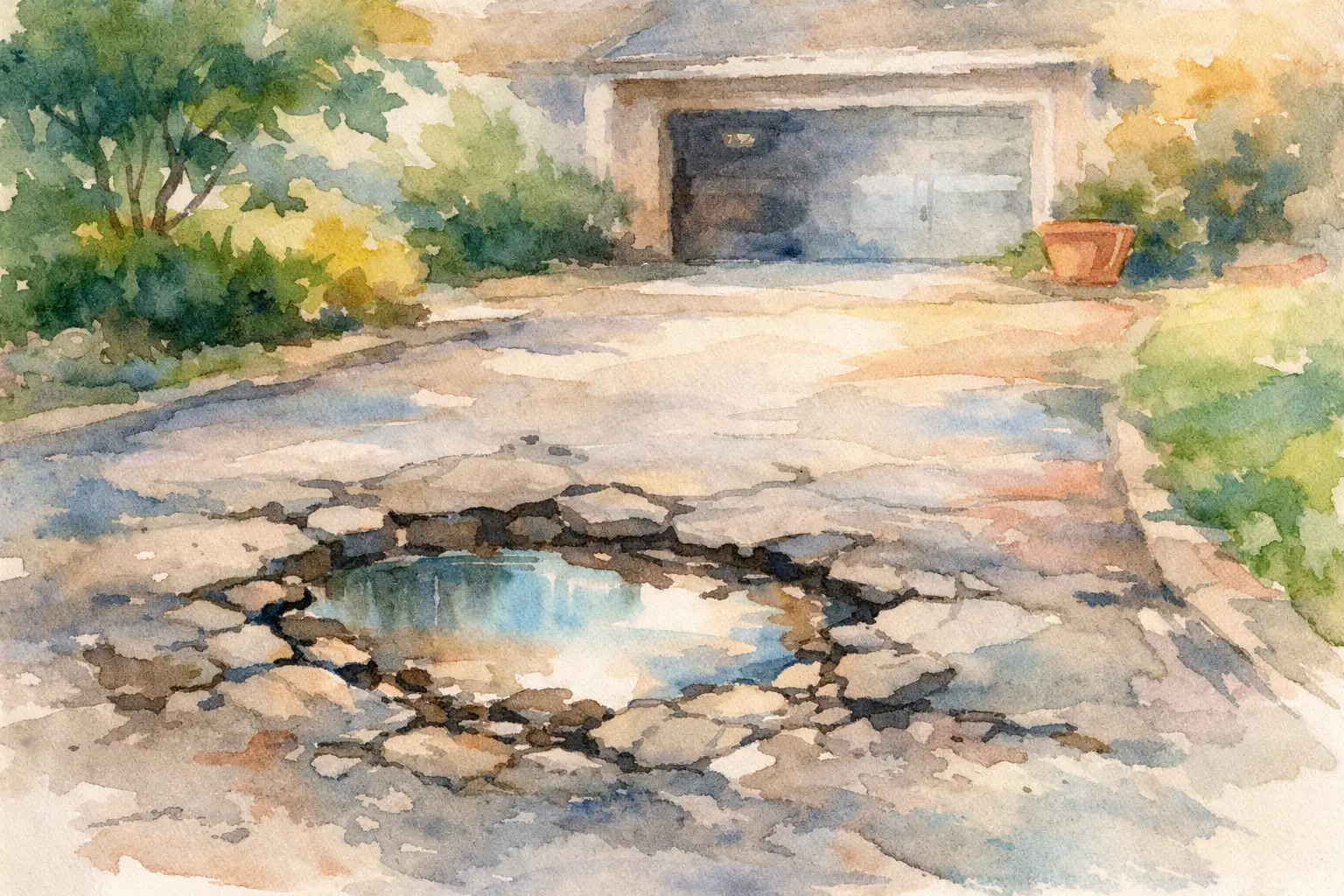
A pothole forms when the surface layer weakens and the material underneath can no longer support the weight passing over it. In practical terms, the surface cracks or shifts, water enters, the base begins to break down, and repeated traffic turns that weak spot into a hole.
On tarmac and asphalt driveways, this process can move quickly once the surface seal is compromised. On gravel driveways, potholes often appear where the stone has been displaced and the sub-base below has started to rut. Different materials fail in different ways, but the pattern is broadly the same – water gets in, the structure softens, and vehicle loads do the rest.
Poor drainage is one of the biggest causes
If water sits on a driveway, the surface is under constant stress. Standing water works its way into small cracks, along weak edges and through any area where the surface was not compacted properly. Over time, that moisture softens the underlying layers and reduces their load-bearing strength.
This is one of the most common reasons potholes appear in both domestic and commercial driveways. A driveway may look sound from above, but if the falls are wrong, gullies are blocked, or runoff has nowhere to go, the damage tends to return. Repairing the hole without correcting drainage often means the same area fails again.
In parts of Scotland and the North of England, where prolonged wet weather is a regular issue, drainage matters even more. A well-laid surface should shed water efficiently. If it does not, the driveway is already at a disadvantage.
Freeze-thaw weather speeds up deterioration
Cold weather is hard on any paved surface. Water enters small cracks and gaps, freezes, expands and puts pressure on the surrounding material. When temperatures rise, the ice melts and leaves the surface slightly weaker than before. Repeated freeze-thaw cycles turn minor defects into much larger failures.
This is why potholes often seem to appear suddenly after winter. In reality, the weakness was already there. Frost simply accelerated the damage. If the driveway also carries regular vehicle traffic, the weakened area can collapse quickly.
The trade-off here is that even a good surface will age under harsh weather. Proper installation and maintenance reduce the risk, but they do not make a driveway immune to seasonal stress.
Weak foundations often sit behind recurring potholes
A pothole at the surface often points to a problem below it. If the sub-base is too thin, poorly compacted or made from the wrong material, the driveway may not have enough structural strength to cope with traffic and weather.
This is especially common on driveways that were laid cheaply or installed over unsuitable ground without proper preparation. The surface might look tidy when new, but if the base is not stable, movement starts underneath. Cracks appear, low spots develop and potholes follow.
For heavier-use areas, such as farm access routes, shared drives, commercial yards or entrances used by vans and lorries, the build-up has to match the load. A surface designed for light domestic use will not perform well under repeated heavy traffic. That is where many pothole problems begin.
Traffic loading and turning movements create pressure points
Not all parts of a driveway wear at the same rate. Areas where vehicles brake, turn, reverse or stand still under load take far more punishment than straight runs. You often see potholes near entrances, in front of garages, at turning heads and around tight corners for that reason.
The surface in these spots is exposed to horizontal stress as well as direct weight. That extra force can pull aggregate loose, stretch the binder and expose the base more quickly. If the driveway was already starting to weaken, these pressure points tend to fail first.
For commercial premises, this matters even more. Delivery traffic, refuse wagons and frequent vehicle movements can break down a marginal surface surprisingly fast. In those cases, a simple fill may not be enough. The construction may need strengthening if you want a lasting result.
Age and oxidation make the surface brittle
As asphalt and tarmac age, the binder gradually dries out and becomes less flexible. Sunlight, air and weathering all contribute to this process. The older the surface gets, the more likely it is to crack rather than flex under pressure.
Once that happens, water has an easy route in. You may first notice loose material, faded colour or a rough texture before a pothole actually forms. Those are useful warning signs. Acting early can keep repair work smaller and more affordable.
There is no exact lifespan that applies to every driveway because usage, drainage, material quality and maintenance all make a difference. A lightly used private drive with a sound base may last well, while a poorly built surface with constant vehicle movement can fail much sooner.
What causes potholes in driveways that were repaired before?
If a pothole keeps returning in the same place, the original repair may have treated the symptom rather than the cause. Filling the visible hole can make the area safe and tidy again, but if water is still getting in or the base remains unstable, the repair will only last so long.
This is where it helps to be realistic. A quick patch has its place, especially when you need to make an area safe without delay. But for a longer-term fix, the damaged material often needs to be cut out properly, the base checked and reinstated, and the new surface compacted to the correct standard.
Repeated patching can become false economy if the underlying issue is structural. In some cases, localised repair is enough. In others, resurfacing a wider section makes more sense and gives a cleaner, stronger finish.
Edge failure can lead to potholes too
Driveway edges are vulnerable because they have less lateral support than the middle of the surface. If vehicles regularly run over the edge, or if the edge was not properly restrained during installation, the material can begin to break away.
Once that edge opens, water gets in and the failure spreads inwards. This is a common issue on narrower driveways, rural access roads and surfaces next to soft verges. It can also happen where drainage channels or kerbs have shifted.
In these situations, repairing only the centre of the pothole will not solve the wider problem. The edge detail may need rebuilding as part of the job.
How to reduce the risk of potholes forming
Prevention is always cheaper than major repair. The key is to deal with small signs of wear before they develop into deeper structural damage. Cracks, standing water, loose material and surface depressions are all worth addressing early.
Regular maintenance does not have to be complicated. Keep drainage points clear, avoid letting water sit for long periods, and do not ignore small failed patches just because the rest of the driveway still looks acceptable. If you have heavier vehicles using the area than the driveway was originally built for, it is worth having the surface assessed before repeated damage sets in.
A professional inspection usually identifies whether the issue is local, drainage-related or a sign that the overall surface is reaching the end of its serviceable life. That distinction matters because it affects cost, durability and the right method of repair.
When repair is enough and when resurfacing is better
A single pothole in an otherwise sound driveway can often be repaired successfully, provided the damaged section is removed and rebuilt correctly. If there are several potholes, widespread cracking, drainage defects or movement across the surface, resurfacing may be the more sensible option.
That is not about selling a bigger job than you need. It is about making sure the money goes into a repair that lasts. A cheap patch on a failing surface can look economical at first, but ongoing call-backs and repeat repairs soon add up.
For homeowners, the right approach protects kerb appeal and avoids avoidable costs. For site managers and commercial owners, it also reduces trip risks, vehicle damage and disruption to access.
If you are seeing repeated failures, the best next step is not to guess. Get the surface checked properly, find the actual cause, and repair it at the right level. A driveway should be built to carry traffic, shed water and stay serviceable in bad weather. When those basics are right, potholes are far less likely to take hold.
A pothole is usually a warning, not an isolated defect. Deal with it early, and you keep the repair straightforward. Leave it too long, and the problem nearly always grows underneath your wheels.