Asphalt or Concrete Driveway: Which Wins?
If you are planning a new driveway, the asphalt or concrete driveway question usually comes down to two things – how it will hold up and what it will cost you over time. The right answer is not always the same from one property to the next. A steep entrance, regular van use, poor drainage or exposure to frost can change what makes the most sense.
For homeowners and site managers alike, the mistake is treating this as a simple appearance choice. A driveway is a working surface. It needs to take weight, shed water properly, stay safe underfoot and keep looking presentable without turning into a constant maintenance job. That is why the better comparison is not which material is best in theory, but which one suits your property, usage and budget.
Asphalt or concrete driveway: the main difference
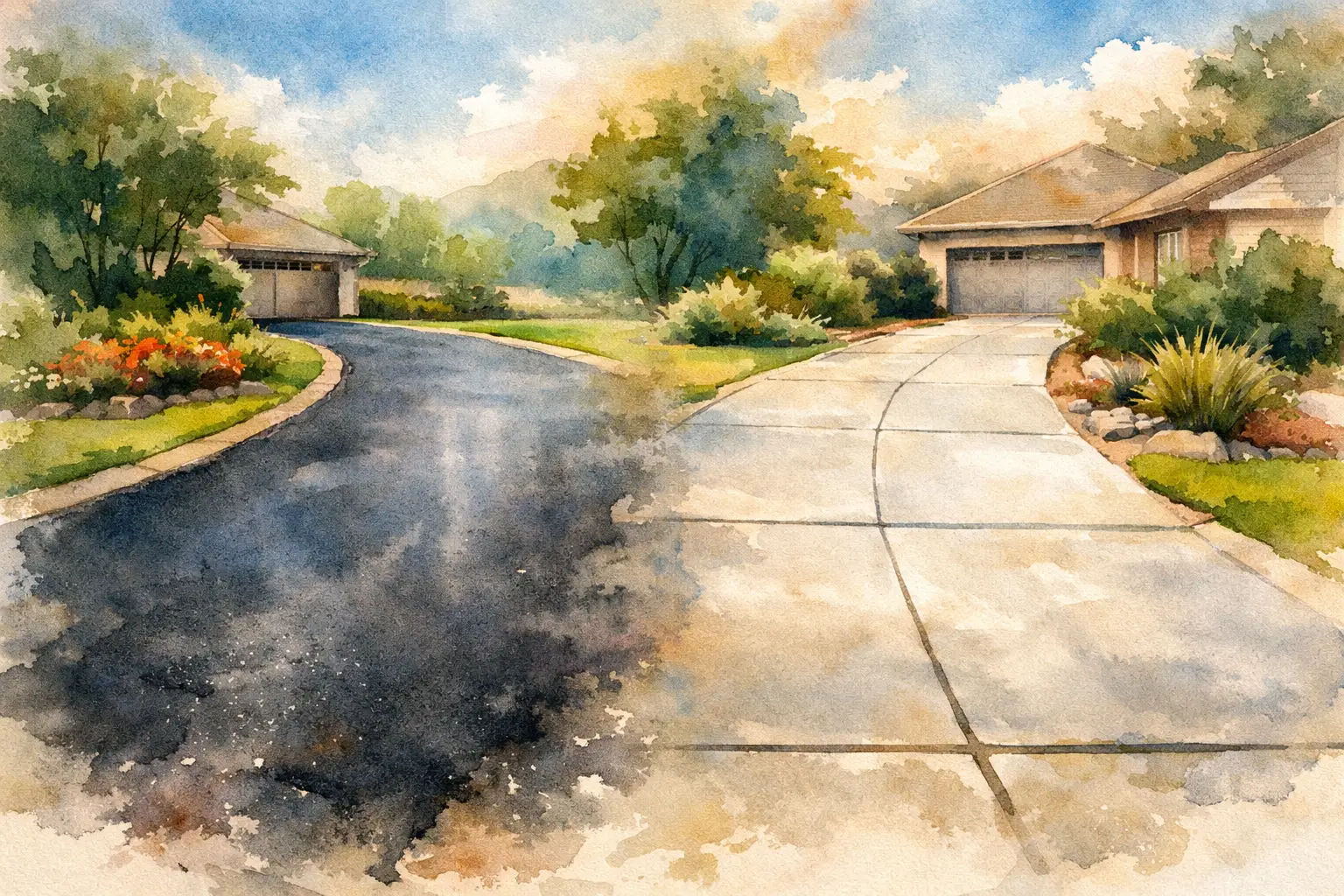
Asphalt and concrete do the same basic job, but they behave quite differently once they are laid. Asphalt is a flexible bitumen-based surface with a darker finish. Concrete is a rigid slab, usually pale grey, that can be brushed, patterned or finished in different ways.
That flexibility matters. Asphalt tends to cope better with minor movement in the ground and can be more forgiving in areas exposed to changing weather. Concrete is harder and often lasts longer when it is laid well on the right base, but it can crack more visibly if the ground shifts or if drainage has not been properly considered.
For many domestic properties, asphalt offers a faster, more cost-effective installation. Concrete often appeals to those who want a sharper visual finish or a surface that can go longer before full replacement. Neither is automatically the better choice. The detail of the job matters.
Cost: what you pay now and later
Initial cost is where asphalt usually has the edge. In most cases, an asphalt driveway is cheaper to install than concrete, especially on larger areas. If budget is tight and you need a clean, durable surface without overspending, asphalt is often the practical option.
Concrete generally costs more upfront. The materials, preparation and finishing can all push the price higher. If decorative finishes are added, the gap widens further.
But upfront cost is only half the story. A concrete driveway may last longer before major replacement is needed, while asphalt will usually need periodic sealing and can soften in hot weather or mark under point loads if it is not laid to the right specification. On the other hand, repairs to asphalt are often simpler and less expensive. Concrete repairs can be more obvious and, in some cases, patching does not blend in well with the original slab.
If you want the lowest entry cost, asphalt is often the answer. If you are looking at the longest possible service life and are prepared to spend more at the start, concrete may justify the extra outlay.
Weather performance in the UK
British weather is not kind to outdoor surfaces. Rain, frost, standing water and temperature swings all test a driveway over time. This is one reason the asphalt or concrete driveway decision needs to be made with local conditions in mind.
Asphalt tends to perform well in colder and wetter conditions because it has a degree of flexibility. That can help it resist some of the stress caused by freeze-thaw cycles. In Scotland and the North of England, where winter weather can be harsh, that flexibility can be a real advantage.
Concrete is not poor in bad weather, but it is less forgiving if water gets in and freezes or if the base below has not been properly prepared. Cracks can develop, and once they appear they are usually more noticeable than in asphalt. Surface finish also matters. A smooth concrete driveway can become slippery if it is not textured correctly, especially in wet or icy conditions.
Whichever surface you choose, drainage is critical. No driveway performs well if water is left sitting on it. A properly built sub-base and correct falls matter just as much as the final surface.
Lifespan and durability
Concrete often wins on lifespan. A well-installed concrete driveway can last several decades. That makes it appealing for property owners who want a longer-term solution and do not mind the higher initial spend.
Asphalt generally has a shorter life expectancy, but that does not mean it is short-lived. A properly laid asphalt driveway with the right base and sensible maintenance can still give many years of reliable service. The key phrase is properly laid. Failures are often caused less by the material itself and more by weak groundwork, poor edge support or drainage issues.
Usage matters here too. If the driveway will carry heavier vehicles, repeated turning movements or frequent deliveries, the specification needs to match. Commercial access routes, farm entrances and shared drives may need a more heavy-duty construction than a standard domestic drive. In those cases, what sits underneath the surface can be more important than whether the top layer is asphalt or concrete.
Appearance and kerb appeal
Concrete gives more visual options. If appearance is a high priority, concrete can be finished in a range of textures and patterns, and it can create a crisp, modern look. For some newer properties or high-end frontages, that may be the deciding factor.
Asphalt is simpler in appearance, but that is not a disadvantage for every property. A neat black asphalt driveway can look smart, tidy and practical. It suits many homes because it gives a clean finish without trying too hard. It also tends to pair well with edging, kerbs, block borders or adjacent paving if you want a more defined look.
There is also the question of how the surface will age visually. Concrete can stain, show tyre marks and highlight cracks. Asphalt can fade over time, but it often keeps a more uniform appearance, particularly when maintained correctly.
Maintenance and repairs
No driveway is maintenance-free. The difference is in what that maintenance looks like.
Asphalt usually benefits from occasional sealing to protect the surface and extend its life. Small cracks can often be repaired before they become bigger issues. This makes ongoing upkeep relatively straightforward, provided problems are dealt with early.
Concrete generally needs less routine maintenance, but when something does go wrong, repairs can be more awkward. Cracks in concrete are difficult to hide completely, and isolated patch repairs can stand out. Weed growth in joints, surface staining and edge damage can also affect the overall finish.
If you want a surface that is easier and cheaper to patch, asphalt tends to be more forgiving. If you prefer fewer maintenance interventions overall and are willing to accept that repairs may be more visible, concrete may still suit you.
When asphalt is the better choice
Asphalt is often the better fit when cost, speed and practicality come first. It is especially suitable for larger driveways, rural properties, shared access roads and homes where weather exposure is a major concern. It can usually be laid and brought into use more quickly than concrete, which helps reduce disruption.
It also makes sense where a simple, durable finish is more important than decorative appearance. For many domestic and mixed-use properties, that is exactly what is needed – a reliable surface that performs well and does not complicate the job.
When concrete is the better choice
Concrete comes into its own when appearance, rigidity and long service life are the top priorities. It can work very well on properties where the visual finish matters and where the budget allows for a higher installation cost.
It may also suit driveways where oil drips and fuel exposure are less of a concern, as these can mark certain concrete finishes. With the right design and installation, it can provide a solid, durable surface for many years.
The real deciding factor is the installation
This is the part many property owners overlook. You can choose the right material on paper and still end up with a poor result if the base preparation, drainage or finishing are substandard. An asphalt driveway laid over weak ground will fail. A concrete driveway poured without proper joints or falls will cause problems as well.
That is why the contractor matters as much as the surface choice. The right team will assess the ground conditions, expected traffic, drainage requirements and intended use before recommending a build-up. A domestic driveway is not just a top layer. It is a small piece of infrastructure, and it needs to be treated properly.
For some properties, the answer will be asphalt because it offers value, resilience and a faster turnaround. For others, concrete will make better long-term sense. If you are weighing up an asphalt or concrete driveway, the best next step is to look past the brochure appeal and focus on how the driveway actually needs to perform. A surface that suits your property from day one will save money and hassle long after the installation is finished.