Installing Dropped Kerb Surfacing Properly
A dropped kerb is only as good as the surface leading up to it. Installing dropped kerb surfacing properly gives vehicles a safe, smooth route from the carriageway to the property while protecting the pavement edge, driveway and underground groundworks. Get the levels, drainage or construction depth wrong, and a new crossing can quickly develop puddles, loose edges, cracks or rutting.
For homeowners, site managers and developers, the job is more than laying tarmac over an existing entrance. A durable finish depends on approved access, a sound sub-base, correct falls and materials suited to the traffic using the crossing. This is particularly important where vans, delivery vehicles or regular commercial traffic will use the entrance.
Start with permission and a site assessment
A dropped kerb usually alters the public pavement or verge, not just private land. In most areas, permission is needed from the relevant local authority before any work starts. The authority may also specify the kerb type, pavement reconstruction, drainage arrangements and the approved contractor requirements for work within the highway boundary.
Do not assume a lower kerb alone gives permission to drive across a footway. Driving over an unapproved footway can damage paving, services and drainage assets, and it may leave the property owner responsible for repairs. Approval should be in place before the surfacing programme is booked.
Once access is authorised, a proper site assessment establishes what the job needs. The contractor should check the existing ground levels, pavement construction, road edge condition and driveway gradient. They should also identify drainage runs, utility covers, inspection chambers, street furniture and any trees whose roots may affect excavation.
The right solution depends on the site. A simple residential driveway crossing may need only local preparation and a new tarmac connection behind the lowered kerbs. A commercial entrance often needs a heavier construction, stronger edge support and a wider turning area to accommodate repeated vehicle movements.
What installing dropped kerb surfacing involves
The finished tarmac surface is the visible part of the job, but the work below it carries the load. A reliable installation begins by setting out the crossing and establishing finished levels. This prevents the common mistake of creating a surface that looks tidy but channels water towards the building or onto the public footway.
The existing surface is then excavated to the required depth. Soft, contaminated or poorly compacted material must be removed rather than covered over. Laying asphalt on unstable ground may improve appearance for a short time, but it will not stop the surface moving under vehicle weight.
A compacted granular sub-base is installed next. Its required thickness is determined by ground conditions and expected use. Domestic cars place far less stress on a driveway entrance than vehicles serving a shop, yard, housing development or industrial unit. Where the underlying ground is weak, additional excavation or stabilisation may be needed to avoid future settlement.
A binder course and wearing course are then laid in suitable asphalt or tarmacadam. Each layer must be compacted properly and tied cleanly into the existing driveway, pavement or road surface. Good workmanship produces a consistent finish without high spots, open joints or abrupt changes in level that could catch tyres, pedestrians or wheelchair users.
Kerb lines, channel levels and surface falls all need to work together. Water should drain in a controlled direction, without collecting at the entrance or running from private land across the footway. On many sites, drainage channels or other suitable measures are necessary to keep runoff within the property boundary.
Drainage is not an optional extra
Standing water is one of the clearest signs that a dropped kerb surface has not been planned properly. It can soften the ground beneath the surfacing, accelerate deterioration in winter and create a slip risk for people leaving vehicles. Water flowing across a pavement can also cause nuisance and safety issues for pedestrians.
The driveway should generally fall away from the property, but the exact drainage solution depends on levels, ground permeability and local requirements. A linear channel positioned within the private boundary can intercept water before it reaches the highway. In other cases, a soakaway or permeable surface may be appropriate, provided the ground conditions support it.
Drainage must be designed before asphalt is laid, not added as an afterthought. Retrofitting a channel through a finished surface creates unnecessary joints and can compromise the appearance and longevity of the entrance. It is also worth checking that existing gullies and channels are clear before work begins, particularly where road runoff already affects the site.
Choose surfacing for the way the entrance will be used
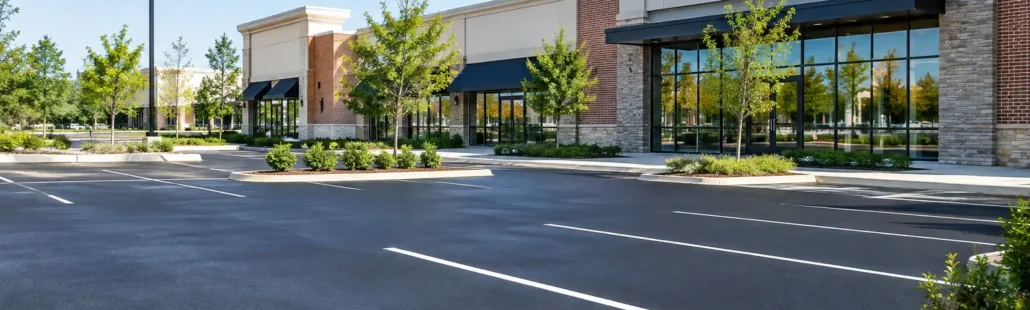
Tarmacadam remains a practical choice for many dropped kerb approaches because it is hard-wearing, neat and economical over larger areas. It creates a smooth transition from the road to the driveway and can be repaired or extended more easily than some decorative finishes.
Material choice should match the use. A standard domestic tarmac surface can perform well for cars when it has the correct base and drainage. Where wheelie bins, vans or heavier vehicles regularly turn in the same place, the construction may need strengthening. Turning forces can be more damaging than straight-line traffic, especially on warm days or at narrow entrances.
Block paving, resin-bound surfacing and gravel can also be used on private driveways, but they need careful detailing at the crossing. Loose gravel can migrate onto the pavement and road, while poorly restrained block paving may spread or dip under traffic. Decorative materials are not a substitute for proper foundations.
The surface should also meet the surrounding levels cleanly. A raised lip at a garage threshold can trap water, while a steep slope from the dropped kerb into the driveway may scrape low vehicles. Small level changes make a large difference to daily use, so they should be resolved at the setting-out stage.
Common problems that lead to early failure
Most premature defects are caused by shortcuts beneath the surface rather than the asphalt itself. Insufficient excavation leaves too little room for a proper sub-base. Inadequate compaction allows the ground to settle. Poor falls create ponding, which weakens the construction over time.
Edges are another frequent weak point. If tarmac is laid without firm edge restraint or a well-prepared tie-in, it can crumble where tyres cross it. This is common on narrow driveways where vehicles repeatedly turn across the same outer edge. A professional installation supports these vulnerable areas from below and finishes the joints correctly.
Timing matters as well. Fresh asphalt needs time to cool and firm up before it is subjected to heavy loads or sharp turning. The contractor should advise when normal vehicle access can resume and whether heavier traffic should be kept off the new surface for longer. This advice varies with weather, mix type and the construction installed.
Why professional installation pays off
A dropped kerb crossing connects private property with the public highway, so it needs a higher level of planning than an ordinary patch repair. A competent surfacing contractor coordinates excavation, sub-base preparation, drainage, kerb interfaces and final compaction as one job. That reduces the risk of paying for a smart-looking entrance that fails after its first winter.
EB Road Surfacing assesses each site on its actual ground conditions and intended use, rather than applying the same build-up to every driveway or access route. For domestic properties, that means a clean, practical entrance built for everyday use. For commercial premises, it means considering vehicle movements, safety and the need to keep disruption under control.
A better starting point for a lasting entrance
Before committing to a dropped kerb surface, ask for the proposed excavation depth, sub-base build-up, drainage approach and finished levels to be explained clearly. Those details tell you far more about the quality of the work than a quick price based only on the visible area. A properly planned entrance should feel simple to use every day – dry underfoot, smooth under tyres and built to stay that way.