Pothole Repairs That Last
A pothole rarely starts as a major defect. It begins with a small weakness in the surface, then water gets in, traffic passes over it, and the damage spreads faster than most people expect. That is why pothole repairs are not just about filling a hole. Done properly, they restore safety, protect the base beneath the surface and stop a minor issue turning into a much bigger repair bill.
For homeowners, that might mean avoiding damage to vehicles and improving the look of a driveway or private road. For commercial sites, schools, industrial yards and managed properties, it is also about reducing trip hazards, limiting liability and keeping traffic moving without unnecessary disruption. The right repair method matters because a quick patch that fails after a few weeks is not a saving. It is simply the same problem twice.
Why potholes form in the first place
Most potholes are the result of water, pressure and surface failure working together. Once cracks appear in asphalt or tarmac, rainwater can seep below the surface. In colder conditions, that moisture expands and contracts. Under regular traffic, the weakened area starts to break apart until a visible hole forms.
Heavy vehicles make the process worse, but potholes are not limited to public roads. Car parks, access roads, forecourts, farm tracks and domestic driveways all suffer from the same issue if the surface is ageing, poorly drained or already cracked. In many cases, the pothole you can see is only part of the problem. The surrounding area may also be unstable, which is why lasting repairs require more than a surface-level fix.
What good pothole repairs actually involve
There is a big difference between filling a defect and repairing it properly. A sound repair starts by assessing the size of the damaged area, the condition of the surrounding surface and whether the sub-base has been affected. If the edges are crumbling or the material beneath has softened, patching over the top will not hold for long.
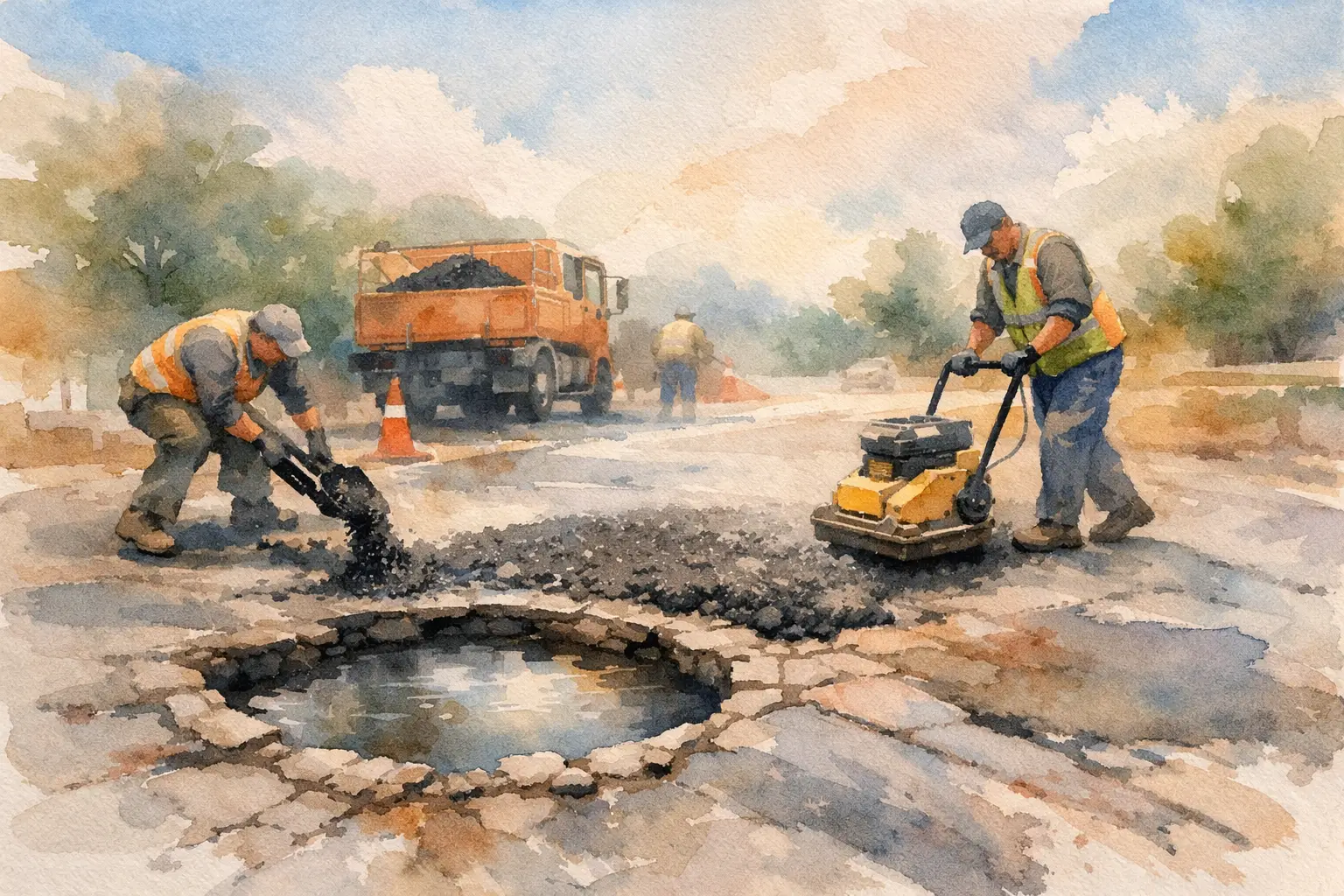
A proper repair usually means cutting back to solid edges, removing failed material and making sure the area is clean and dry enough for the new material to bond. The replacement asphalt or tarmac then needs to be laid and compacted correctly so it sits level with the surrounding surface and can withstand traffic from day one.
This is where experience makes a real difference. On a quiet private driveway, the repair approach may be fairly straightforward. On a busy car park or access road, the repair needs to account for turning vehicles, repeated braking pressure and the need to reopen the area quickly. The material and method should suit the location, not the other way round.
Temporary patch or permanent repair?
Sometimes a temporary repair is the right decision. If a pothole presents an immediate safety risk, a fast patch can make the area safe until full repairs are scheduled. That can be useful during poor weather, out-of-hours emergencies or on sites where access must be restored quickly.
But temporary and permanent are not the same thing. A short-term patch is designed to stabilise the problem, not solve it for years. If the surrounding surface is already deteriorating, or if water is still getting into the structure, the defect will usually return. For property owners and site managers, the more sensible option is often to deal with the root cause while the damaged area is still manageable.
In practice, the choice depends on budget, urgency, weather conditions and the wider condition of the surface. A small isolated pothole can often be repaired effectively on its own. If there are multiple defects across the same stretch, resurfacing a larger section may offer better value over time.
When patching is enough and when resurfacing makes more sense
Not every damaged surface needs full replacement. If the defect is localised and the surrounding asphalt is still structurally sound, a well-executed patch repair is often the most cost-effective answer. It deals with the immediate hazard, restores a tidy finish and extends the life of the surface without the expense of larger works.
Where problems become more widespread, patching can turn into a false economy. If there are repeated potholes, alligator cracking, fretting edges or signs of drainage failure, individual repairs may only chase the damage around the site. In those situations, resurfacing a lane, a parking area or an access road may be the more practical option.
That is often the point where a professional assessment saves money. A dependable contractor should tell you when a repair is worthwhile and when it is not. There is no benefit in recommending small patches if the surface is already beyond that stage.
Pothole repairs for different types of property
The right repair approach changes with the setting. A domestic driveway usually needs a neat finish, solid edge bonding and materials that match the existing surface as closely as possible. Appearance matters alongside durability, especially if the repaired area sits at the front of the property.
Commercial and industrial sites have different demands. Forklifts, delivery vehicles and constant vehicle movement place far more stress on repaired sections. Car parks and private roads also need repairs completed with safety and access in mind, often in phases to minimise disruption.
Public-facing areas bring another consideration: liability. If customers, staff, tenants or visitors use the space, potholes quickly become more than a maintenance issue. They become a safety concern that can affect operations and reputation. Prompt repair is usually cheaper than dealing with avoidable damage or complaints later.
The role of weather and drainage
In the UK, weather is a constant factor in surfacing work. Rain, standing water and winter freeze-thaw cycles are some of the biggest reasons potholes return. That is why a repair should never be looked at in isolation if drainage is poor.
If water sits on the surface after rainfall, or runs into weakened edges, the repaired area will remain under pressure. Even a well-laid patch can fail early if the underlying problem has not been addressed. Sometimes that means correcting levels, improving falls or repairing adjacent cracking so water cannot keep finding its way in.
This is especially relevant on older driveways, farm roads and commercial yards where years of wear have changed the surface profile. The pothole may be the obvious issue, but drainage is often the reason the defect formed in the first place.
What to expect from a professional contractor
A reliable contractor should keep the process simple. That starts with identifying whether the pothole is isolated or part of wider surface failure. From there, the repair method, materials and timescale should be explained in plain terms, with no unnecessary jargon.
You should also expect honest advice on durability. Good pothole repairs are built around preparation, suitable materials and proper compaction. If any of those steps are rushed, the repair is far less likely to last. Competitive pricing matters, but so does doing the work once and doing it properly.
For clients managing active sites, responsiveness matters just as much. Repairs often need to be planned around traffic flow, trading hours or resident access. A contractor with the right equipment and experience can complete the work efficiently while keeping disruption under control. That is one reason clients across Scotland and the North of England often look for a surfacing team that can handle both urgent repair work and larger follow-on maintenance if needed.
When to act
The best time to repair a pothole is early. Once the edges start breaking away, water ingress and traffic loading will accelerate the damage. What could have been a straightforward patch can become a deeper repair involving more excavation, more material and more time on site.
There is also a practical point here. Smaller defects are easier to schedule, easier to isolate and easier to repair neatly. Leave them too long, and they tend to spread into the surrounding surface, especially on heavily used routes or older asphalt.
If you are responsible for a driveway, car park, estate road or access route, regular checks make sense. You do not need a technical survey every month, but visible cracking, standing water and small depressions are usually early warnings worth dealing with before they become potholes.
Good surfacing work is not about flashy promises. It is about making the surface safe, sound and fit for use, then ensuring the repair stands up to the conditions it faces. Whether the job is a single defect on a private driveway or multiple failed areas on a busy commercial site, the right repair at the right time will nearly always cost less than waiting for the damage to spread.