Surface Dressing Curing Times and Aftercare
Freshly surface-dressed roads and driveways can look finished within hours, but surface dressing curing continues after the crew has left site. The binder needs time to develop a firm bond with the stone chippings, while controlled traffic helps press the aggregate into place. Getting this period right is what turns a cost-effective treatment into a durable, safe-running surface.
Surface dressing is often chosen for estate roads, private access roads, farm lanes, car parks and larger driveways where the existing surface remains structurally sound but has become worn, polished or weathered. It restores grip, seals the surface against water ingress and extends the life of the road without the cost and disruption of full resurfacing. However, it is not a fit-and-forget process from the first hour. Conditions during and immediately after installation matter.
What surface dressing curing actually means
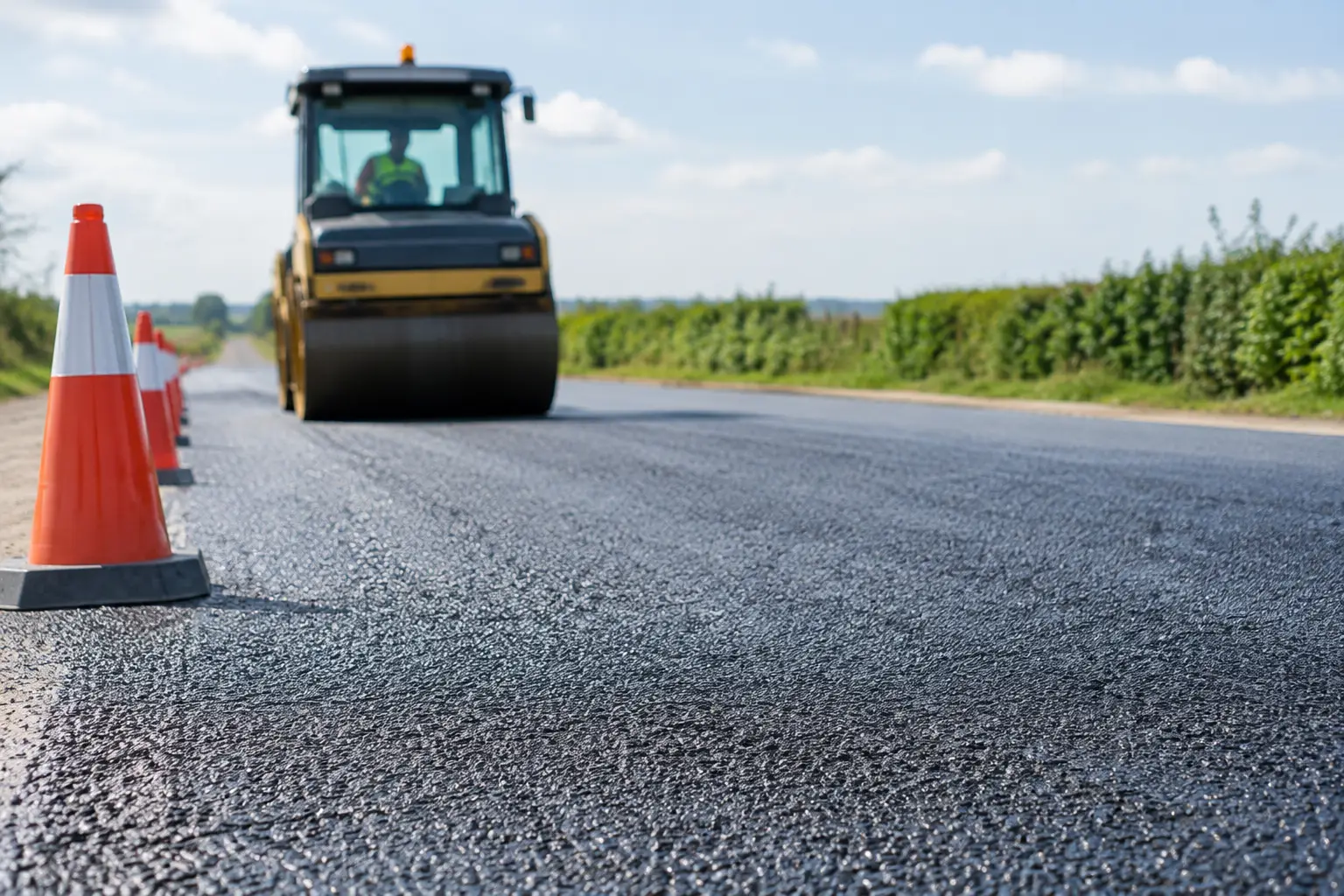
Unlike a new asphalt layer, surface dressing does not cure as one solid sheet of material. A specialist bitumen-based binder is sprayed across the prepared surface, then clean, graded aggregate is spread and rolled into it. The curing process is the period in which the binder settles, cools or breaks depending on the product used, and forms a dependable bond around the chippings.
Early traffic also has a useful role when properly managed. Vehicle tyres help seat the stones into the binder, provided speeds are kept low and the surface is not subjected to harsh braking, tight turning or heavy point loads. That is why new surface dressing may initially have a temporary speed restriction and loose chippings at the edges.
The term is useful, but it should not suggest that every site follows an identical timetable. A quiet domestic drive, a busy commercial yard and an access road carrying delivery vehicles all need different traffic management and aftercare.
How long does surface dressing curing take?
In suitable dry, mild weather, a surface-dressed area can usually be opened to carefully controlled traffic very soon after rolling. This is often necessary to help the aggregate bed in. The surface will then continue to settle over the following days, with the first week being particularly important for monitoring loose stone and avoiding damage.
A practical guide is to treat the first 24 to 48 hours as the most vulnerable period. Drivers should travel slowly and steadily, avoid aggressive acceleration and braking, and take corners gently. The binder continues gaining its hold during the next several days, while a follow-up sweep removes surplus chippings once they are no longer needed for embedment.
For a driveway, keeping traffic off the surface for as long as reasonably possible on the installation day is sensible. Where access is essential, vehicles should be driven straight on and off at low speed. For commercial roads and car parks, the reopening plan should be agreed before work starts, taking account of vehicle weights, turning areas and the level of daily use.
Full stabilisation can take longer in cool weather or on shaded sites. A professional contractor will assess conditions on the day rather than promising a fixed cure time that ignores temperature, rainfall and traffic demand.
Weather has a direct effect
Surface dressing relies on a dry surface and appropriate temperatures. Rain during installation or shortly afterwards can affect adhesion, while cold conditions can slow the binder’s ability to settle properly around the aggregate. Excessively hot weather can create a different problem, as softer binder may be more prone to tracking under slow-moving or turning vehicles.
Good planning reduces these risks. Work should be scheduled in a suitable weather window, and the existing road must be dry, clean and properly repaired before treatment begins. Surface dressing is a preventative maintenance solution, not a way to hide deep potholes, failed edges or movement in the road foundation.
Traffic type changes the programme
Cars travelling at sensible speeds help embed chippings. Heavy lorries, forklift lorries, skip wagons and vehicles that repeatedly turn on the spot can disturb a new dressing before it has settled. Sites with these demands may need phased access, temporary routes or protection of high-stress areas.
Junctions, tight bends, loading bays and entrances are also more likely to experience scuffing in the early period. In some cases, a different surfacing solution is more suitable for these locations. The right choice depends on the condition of the base, the traffic loading and how the area is used every day.
Surface dressing curing aftercare
The best aftercare is straightforward: protect the work from unnecessary stress while it beds in. On a private driveway, avoid turning the steering wheel while stationary, parking heavily loaded vehicles in one place, or using a pressure washer during the early period. If a wheel spins, stop rather than trying to power through, as this can dislodge chippings and mark the binder.
For managed sites, clear temporary signs and a sensible speed limit are worthwhile. Drivers need to know that loose aggregate may be present and that low speed is part of protecting the finished surface, not simply an inconvenience. Keeping vehicles moving steadily through the area is better than stop-start queues where possible.
Some loose stone is normal after application. It does not automatically mean the work has failed. Aggregate is deliberately spread with enough coverage to ensure the binder is properly protected, and excess chippings are removed after the surface has had time to bed in. A follow-up sweep improves the finished appearance, reduces the risk of stone flick and helps leave a clean, even texture.
Do not sweep aggressively by hand or attempt to remove loose chippings immediately. Taking them away too early can leave areas under-covered before the binder has completed its bond. The contractor should advise when sweeping is due and whether any further inspection is needed.
Signs the surface is bedding in properly
A well-installed surface dressing gradually develops an even stone finish with fewer loose chippings after trafficking and sweeping. The road should feel more textured underfoot and provide renewed skid resistance, particularly where the old surface had become smooth or slippery.
Minor variations in colour and texture are normal while the binder settles and dust is removed from the aggregate. What matters is consistent stone retention across the area. Small local defects can often be dealt with promptly if reported early, particularly around drainage covers, edges or areas exposed to repeated turning.
Warning signs include widespread loss of aggregate, binder tracking onto tyres, standing water that was present before the work, or movement and cracking in the underlying road. These issues point to site conditions, drainage or structural defects that surface dressing alone cannot correct. Early assessment prevents a small problem becoming a more expensive repair.
Preparing the existing surface is as important as curing
The life of a dressing is largely decided before the binder is sprayed. Potholes should be repaired, failed sections cut out where necessary, edges made sound and drainage checked. Dirt, vegetation, loose material and standing water all interfere with adhesion.
This is why a site survey matters. A surface that is fundamentally stable but weathered can be an excellent candidate for dressing. A road with widespread cracking, deep deformation or a weak base may be better served by patching and resurfacing. Choosing the cheaper treatment for the wrong condition rarely saves money over the long term.
EB Road Surfacing assesses the condition and use of each area before recommending a practical solution. For customers responsible for access roads, car parks or private estates, the aim is to minimise disruption without compromising the durability and safety of the finish.
When to ask for advice
If you are planning surface dressing around a business, school, housing development or working yard, discuss access requirements at quotation stage. Delivery schedules, emergency routes, pedestrian areas and peak operating times all affect the safest programme. A clear plan for curing, traffic control and follow-up sweeping prevents avoidable complaints and protects the investment.
For a domestic driveway or private road, the key question is whether the existing surface is sound enough to dress. A professional inspection will identify whether targeted repairs and surface dressing are the sensible option, or whether a new tarmacadam surface will provide better value. Allow the new dressing the time and careful use it needs, and it will repay that patience with a clean, grippy finish built to withstand the weather.