Winter Maintenance Tasks for Safer Surfaces
A single freeze-thaw cycle can turn a small crack into a pothole, particularly where standing water and regular vehicle traffic are involved. Winter maintenance tasks are therefore not just a tidy-up for roads, car parks and driveways. They are a practical way to prevent access problems, reduce slip and trip risks, and avoid a larger resurfacing bill in spring.
For property owners and site managers, the priority is simple: keep water moving, identify weak areas early, and deal with defects before cold weather makes them worse. A planned approach is usually faster, safer and more cost-effective than reacting once a surface has failed.
Why winter is hard on asphalt and tarmacadam
Tarmacadam and asphalt are durable materials, but British winter weather places them under sustained pressure. Rain enters existing cracks and open joints. When temperatures drop, that water expands as it freezes, forcing the surface apart. As it thaws, more water can enter the enlarged gap, repeating the damage cycle.
Traffic compounds the problem. Cars, delivery vans, HGVs and turning vehicles place weight on weakened sections, causing cracks to spread, edges to crumble and potholes to form. On car parks and access roads, the areas around drainage gullies, speed humps, entrances and loading points often show the first signs of failure.
Salt and grit help keep routes safer in icy conditions, but they do not repair a deteriorating surface. In fact, gritting can make loose aggregate and already-fractured edges more visible once traffic passes over them. This is why winter inspections need to look beyond obvious potholes.
Winter maintenance tasks to schedule early
The right programme depends on the age of the surface, traffic levels, drainage arrangement and the type of vehicles using it. A domestic driveway with light use needs a different response from a busy commercial yard or shared private road. However, several checks should be carried out before and during the colder months.
Inspect cracks, potholes and failing edges
Walk the full area and look for cracks that are opening, depressions where water collects, loose material and breaks along the edge of the surfacing. Pay close attention to the point where asphalt meets kerbs, ironwork, concrete channels or paving, as these joints are common routes for water ingress.
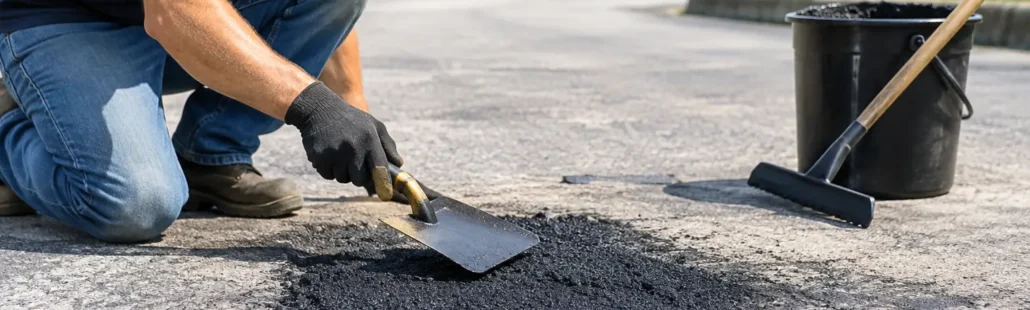
Small, stable cracks may be suitable for sealing, while localised potholes can often be cut out and repaired before they spread. If there are widespread cracks, rutting or several failed patches in one area, patching alone may only delay a more substantial resurfacing solution. A professional assessment can establish whether repairs remain the sensible option.
Clear drainage routes and standing water
Blocked gullies, silted channels and leaves around drainage points create standing water. That water is one of the main causes of winter surfacing damage. Clear leaves, litter and debris from gullies regularly, especially after high winds or heavy rain.
If water consistently sits in the same place after the drainage has been cleared, there may be a fall or level issue in the surface. It could also indicate a damaged gully connection or a local depression. Treating the cause matters. Simply filling a low spot without correcting drainage can lead to the same failure returning next winter.
Check line markings, signs and safety controls
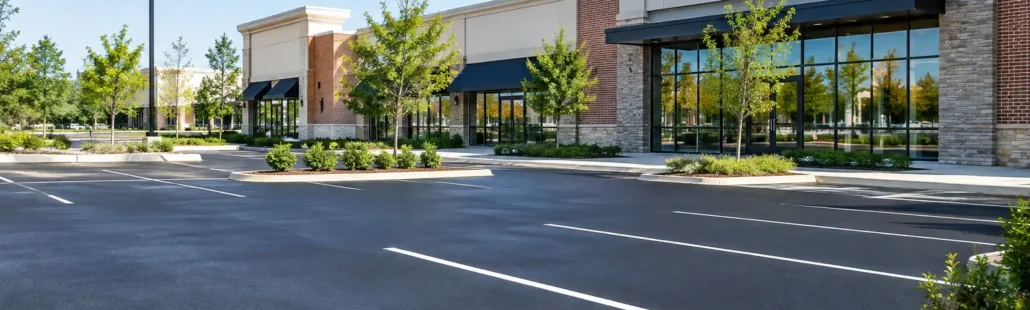
Faded line markings are more than an appearance issue when mornings and evenings are dark. Parking bays, pedestrian routes, disabled spaces, loading areas, give-way lines and directional arrows need to remain clear in wet conditions. On sites with regular public access, poor visibility can increase the likelihood of vehicle and pedestrian conflict.
Review signs, bollards, wheel stops and speed-control measures at the same time. Make sure they are secure, visible and not obscured by vegetation or dirt. A well-maintained car park is easier to use safely when rain, frost and low light reduce visibility.
Keep surface edges supported
Driveway and road edges are vulnerable where vehicles regularly mount the side of the surface or turn tightly. Look for crumbling along grass verges, loose kerbs and broken transitions between surfacing and paving. Once an unsupported edge fails, water can reach the base beneath the asphalt and the damaged area can grow quickly.
Where appropriate, reinstating the edge, repairing kerbs or improving the transition can protect the main surface. This is particularly useful on narrow access roads, rural entrances and commercial yards where larger vehicles need room to manoeuvre.
Plan gritting around the surface condition
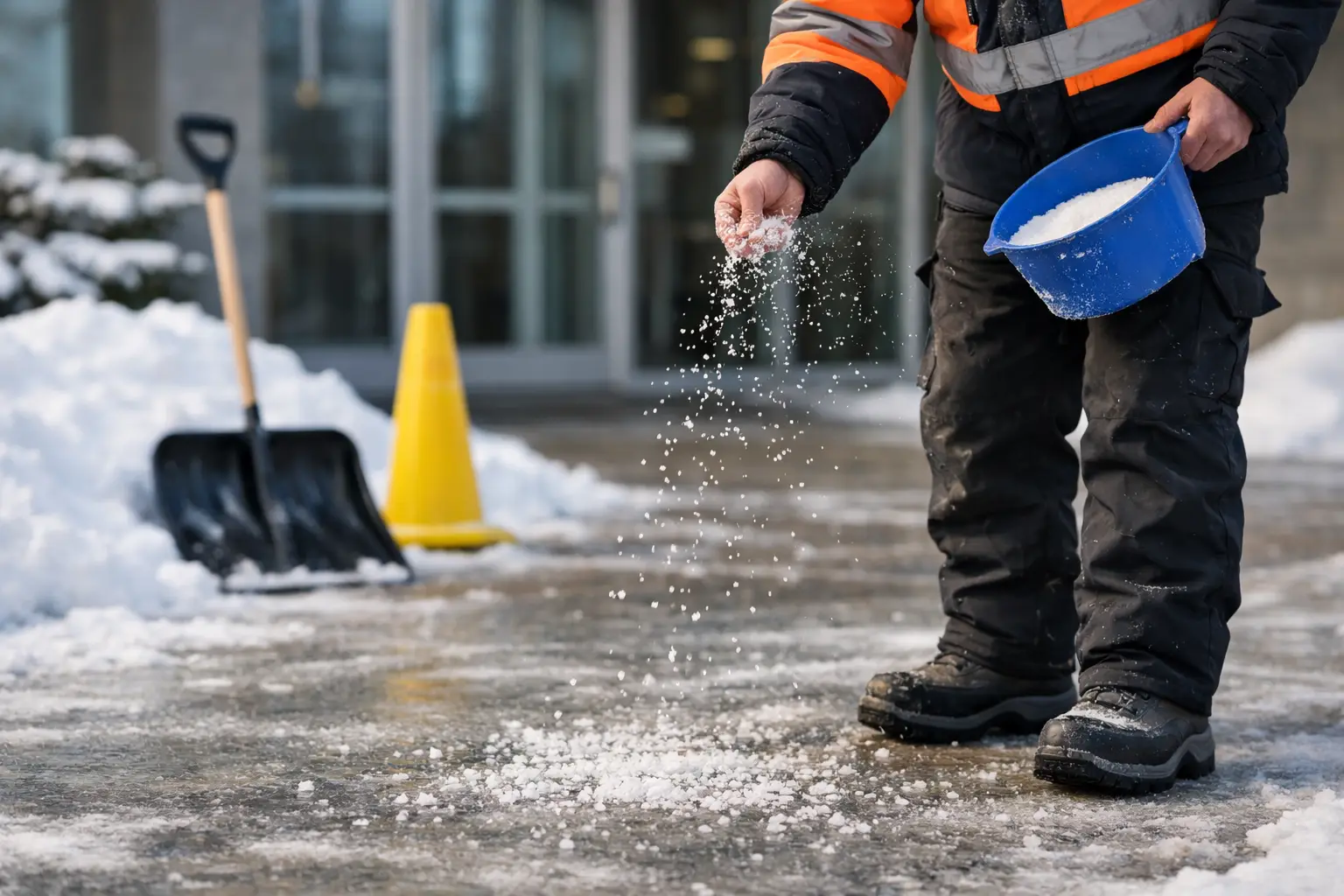
Gritting plans should focus on the routes people and vehicles actually use: entrances, slopes, pedestrian crossings, disabled bays, service yards and footways. Do not allow stockpiled salt or grit to block drainage points. After severe weather, inspect high-traffic areas again, as repeated braking and turning on wet or icy surfaces can expose defects quickly.
Gritting is not a substitute for repairing potholes, loose surfacing or drainage failures. It is one part of a wider safety plan, alongside good lighting, visible markings and sound surfacing.
When a repair is enough and when resurfacing is better
Targeted repairs are often the best value where defects are isolated and the surrounding surface remains sound. A properly prepared pothole repair removes failed material, addresses the base if required, and reinstates the area to a level finish. Quick surface fills may appear cheaper, but they are less likely to last if water remains beneath the repair.
Resurfacing becomes the stronger long-term option when deterioration is widespread. Signs include alligator-style cracking across large sections, repeated potholes, extensive fretting, uneven levels, poor drainage falls or patches that have failed more than once. In these cases, repairing each individual defect can become a false economy and leave the site looking inconsistent.
There is also a middle ground. Surface dressing may suit certain roads where the structure is sound but grip and weatherproofing need improvement. It is not suitable for every surface, particularly where there are major structural failures or deep depressions. The condition of the existing road should guide the choice, not simply the lowest initial price.
Reducing disruption on commercial sites
Winter repairs do not always need a full closure, but they do need sensible planning. For commercial premises, identify peak delivery times, emergency access requirements, pedestrian routes and areas where vehicles can be redirected. Smaller repairs can often be programmed in phases, keeping essential access open while work is completed.
Weather affects scheduling. Heavy rain, persistent frost and very cold ground conditions can limit certain surfacing activities and affect curing times. That does not mean defects should be ignored until spring. It means the contractor should select an appropriate repair method, prepare the area correctly and programme work around the forecast where possible.
For landlords, facilities teams and managing agents, recording inspections and repairs is also worthwhile. A simple record of reported defects, photographs, dates and completed works helps demonstrate that hazards have been managed responsibly. It also makes it easier to spot recurring drainage or traffic issues before they cause further damage.
A practical approach for driveways and private roads
Homeowners should not wait for a driveway pothole to become deep enough to damage a tyre or create a trip hazard. Check the entrance, turning areas and drainage channels after prolonged rain. Avoid using sharp tools to chip ice from the surface, as they can loosen aggregate or damage edges. Use a suitable de-icing method and keep drains clear instead.
For shared private roads, agree who is responsible for checks, gritting and arranging repairs before bad weather arrives. Delays often occur because several residents assume someone else will deal with the issue. A clear contact point and a planned inspection after severe weather can prevent small defects becoming a dispute as well as a repair problem.
Act before the next freeze
The best winter maintenance tasks are the ones completed while defects are still manageable. Clearing drainage, renewing markings, sealing cracks and repairing local failures protect the surface beneath them and help keep users safe. If an access road, car park or driveway is already showing signs of wear, arranging a professional inspection now gives you more options than waiting for the next freeze to make the decision for you.